2 min read

Journalism of Courage



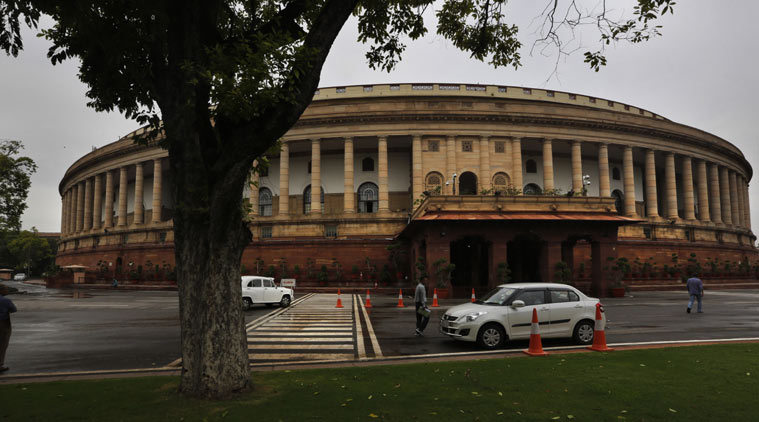 After a remarkably productive Budget session that ended in May, political storms threaten the Monsoon session, the fourth since NDA came to power. (Source: AP)
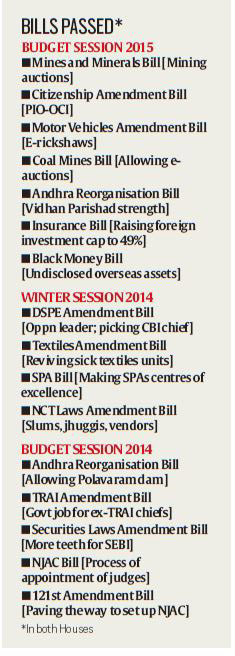
Parliament’s relatively short monsoon session starts today with a business agenda of 11 Bills pending in the two Houses together, and the prospect of a series of political storms disrupting their transaction. Two all-party meetings convened on Monday — one each by Parliamentary Affairs Minister M Venkaiah Naidu and Lok Sabha Speaker Sumitra Mahajan — ended in deadlock, with the government and the main opposition sticking to their hard lines on the controversies involving Lalit Modi and the Vyapam scam in Madhya Pradesh. Rahul Gandhi has evolved into a more aggressive avatar since returning from his sabbatical, and the last month or so has seen the Congress succeed, for the first time, in pushing the government into a visibly defensive position.
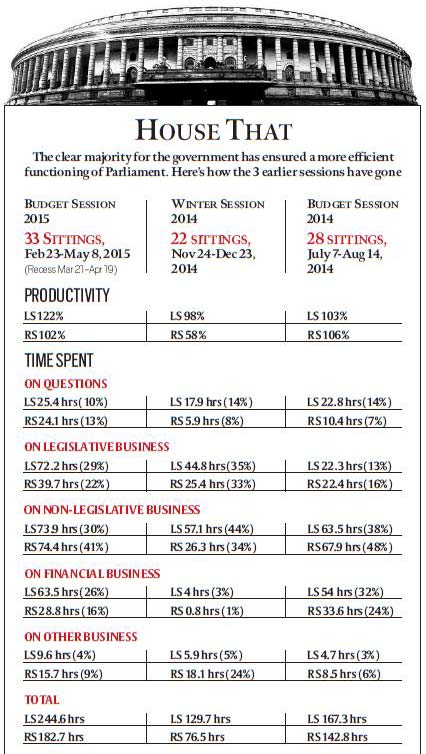
 The Budget session was the Lok Sabha’s most productive in 15 years, with the House working for 122% of its scheduled time. The productivity of Rajya Sabha, where the opposition has the upper hand, was 102%.
Thirty-one per cent of scheduled questions in Rajya Sabha were answered verbally — the highest percentage for a decade. In Lok Sabha, 22% questions were answered verbally, the same as in the two earlier sessions. Over 130 questions each were answered in the two Houses, double the average of 64 questions answered in Lok Sabha and 70 in Rajya Sabha over the last 10 years.

Among the other highlights of Parliament’s last session was the passage, in Rajya Sabha, of an amendment to the Motion of Thanks on the President’s Address. In a rare occurrence — the first in 28 years and for only the seventh time ever — an ordinance (on land acquisition) was promulgated after proroguing a House (Rajya Sabha, on March 28) while Parliament was in session. The contentious Land Acquisition Bill remains stuck in Parliament due to stiff opposition, and the Prime Minister on Monday urged parties to work collectively to break the logjam.
(Data courtesy PRS Legislative Research)