Journalism of Courage
 2 min read


Digital archives ease the academics pain. They can also be an instrument of wider change
Frequently,the biggest challenge the researcher on South Asia faces is how to access primary material. With some of the best research centres located overseas,in campuses like Heidelberg and Cambridge,the distance to the archives in India or Pakistan has proved to be a limitation. Now,digital archives have begun to ease the academics pain. The newest searchable database,created by the South Asia Research Foundation,goes online next month and,by next spring,its expected to be marketed to the world through Routledge.
This is a significant achievement,which will add to the volume of material already put online by numerous agencies like the Digital Library of India,the National Mission for Manuscripts,the National Archives,the Indira Gandhi National Centre for the Arts,Osmania University,the Indian Institute of Science and several IIT faculties. These offer mainly Indological texts while the new South Asia archive is focused on books,journals and documents from colonial and early postcolonial times. Its probably the largest regional database so far and includes important journals like those of the Asiatic Society.
The digital archive is now much more than an academic resource that simplifies access to source material. The internet is coming to be regarded as the universally accessible repository of collective memory,the closest humanity can come to an authorised version of its history. The politics of identity is on the ascendant worldwide,based on region,religion and the fiction of race. Here,the archive can have a calming influence. Original material can expose the lies at the heart of identity politics. The archive is no longer just an element of the knowledge economy. It can be an instrument of change in the service of a modern politics.

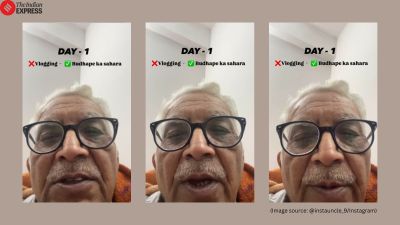
Age, as they say, should never stand in the way of new beginnings. A 70-year-old man from Uttar Pradesh has turned that belief into a living example, and his story has struck a chord online, with the internet cheering him on. At a stage of life when many choose to slow down, Vinod Kumar Sharma chose to pick up a smartphone and press record.