Journalism of Courage
 5 min read



The country celebrated its 61st birthday as an independent entity and is getting into the 62nd year. Sixty-two is the official retirement age. Some carry on until 65, and some like me stopped taking a salary at 58, but continue working. But the 8220;Midnight8217;s Children8221; generation, while playing a reflective and supportive role, should carefully hand over now to the younger generation. The Alagh Law, that the next generation is smarter than mine, helps me in JNU, at NGOs and elsewhere.
It is quite obvious that the new generation will have to power our growth. It will have to find the energy to stop this bargaining away of the future to current needs and narrower cliques. That will happen even though we may lose a year or two.
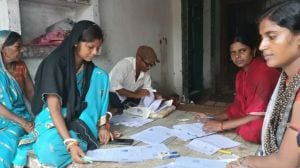
The change that is taking place is the empowerment of millions who are demanding and getting their place in the sun. Classical economic policy responses for the UPA were somewhat limited, but the NREG made a difference. In village after village, this difference shows. The middle-to-large farmer is now leasing more land from the marginal farmer and is becoming the driving force of Indian agriculture. Data shows that the largest amount of leased land is from small to large farmers. In every village, the large farmers complain of labour not being available in the peak harvesting and sowing seasons. That complaint always existed, but now it has substance. The landless labourer is increasingly hesitating to work for wages below subsistence levels, or with social conditions of ignominy.
Everything is not the way it should be. There are still parts of the country where poor landless labourers and marginal farmers are turned back. Almost everywhere, the lady of the small peasant takes advantage in the slack season of the scheme. In many places, she is influential enough politically at the local level to work for three to four hours and get her daily wage. Yet, in large parts of India, for the first time in our civilisational history, for the very poor in rural areas, there is a fall-back outside the purview of the landlord in the NREG.
The last decades were the era of the medium and large farmers, who called the tune politically and economically. The term is in a sense a misnomer: they are generally poorer than most with a job in the urban organised sector. Yet they called the tune. In Chaupal, we learned profitability was declining in agriculture, that irrigation investments were not working and that the old seeds had lost their generating capacities. The one or two marginal peasants from the Kabirwadas generally would not speak, or do so in hushed tones. If you met the young children of the village, it was the unkempt boys and girls who did not go to school even though, when asked the question, the elders would always say that almost all girls do go to school.
All that is now changing: millions will empower themselves and demand their place in the sun. Politics will be forced to recognise that.
It is interesting that our discourse does not recognise all this. Employment guarantees are inefficient. I met Sidharth Dubey recently. In his book, he described the attitude of a scheduled caste Passi family through decades. The only thing they really remember is Indira Gandhi8217;s land reform and some land for their homestead. For the rest, the world went past them. But they value the right to vote; it gives them dignity. This is a global phenomenon: Global Gallups show that the poor value democratic systems. When we think that the removal of a military dictator will impart instability to Pakistan we need to remember that Bismarck8217;s, and later Morgenthau8217;s, domino view of international interests disappeared by the 8217;70s. Some seem to not have noticed.
The attitudes of the poor question all our beliefs. They value public schools, they value the local public health dispensary and they value their ration card. For some, any sickness is a matter of life and death. Destitute households in India today are largely those where the bread-winner is dead or crippled by sickness. A few kilometres from Mumbai, in the jungles of Thane district, Adivasi communities keep no possessions locked but their ration card. When you do not have title to your home or land you know that the benefits of a smart card will be taken away by others. You want to possess something tangible which gives you leverage in the world.
We should learn and learn from the past. This is a problem that Midnight8217;s Children should have solved; at least they must leave enough knowledge with the younger generation. India at 62 is well on the way to being the future of the world. Two hundred million people empowered will be an irresistible force.
The writer, a former Union minister, is chairman, Institute of Rural Management, Anand
expressexpressindia.com