3 min read

Journalism of Courage




The Union Budget will be presented to Parliament on July 2 or July 5. Union Finance Minister P Chidambaram has directed his ministry officials to be prepared for either of the two dates, depending on the business of the House to be finalised by the government. The Budget session of Parliament will begin in the last week of June.
Chidambaram has already taken stock of the fiscal situation and is reportedly confident that he will not be required to propose any new tax imposts if he is not forced to find funds for any excessively large expenditure commitments.
The Finance Minister is beginning a series of consultations with a dinner meeting scheduled for May 28 with economists including Bibek Debroy Rajiv Gandhi Foundation, Saumitra Chaudhury ICRA, Suman Bery NCAER and Abhijit Sen JNU.
Chidambaram has invited former Union finance secretary Montek Singh Ahluwalia to come to New Delhi on June 12 for consultations. Dr Ahluwalia, who heads the Independent Evaluation Office of the International Monetary Fund in Washington DC, will stop over in New Delhi on his way to China where he is going for a pre-scheduled meeting.
The Finance Minister has decided to work with his existing ministerial team in the preparation of his first budget. Advisor to FM Vijay Kelkar will also remain in place at least till August. The ministry8217;s annual Economic Survey will be presented before the Budget. The budget group in the ministry met here on Thursday under the chairmanship of the finance secretary.
In their briefing to the finance minister, North Block officials have appraised him of the generally healthy state of central government finances. The economic turnaround underway has boosted revenues and all fiscal targets set in last year8217;s budget have either been met or exceeded upon. The bouyancy in revenues and tight expenditure management have enabled the government to meet the fiscal and revenue deficit targets.
Chidambaram has been told that if there are no undue pressures on the government to make massive expenditure commitments, and if resources for some of the social welfare, employment-oriented and infrastructure programmes promised in the Common Minimum Programme can be forked out from expected revenue bouyancy and improved expenditure management the government will not be under pressure to propose new tax imposts.
Chidambaram8217;s positive and favourable statements on the stance of the Left Front, in his comments in the 8220;Walk The Talk8221; interview with The Indian Express Editor-In-Chief Shekhar Gupta, are being interpreted by fiscal experts as a reflection of this 8220;fiscal comfort factor8221;. Chidambaram has warned, however, that if excessively populist demands are made by UPA constituents and the subsidy bill increased, this may force him to resort to additional taxation that in turn could hurt growth and the recovery underway.
It is also reliably learnt that when Chidambaram called on his immediate predecessor, former Union finance minister Jaswant Singh, Singh volunteered his unstinted support to his successor in further improving the country8217;s fiscal management. Chidambaram is, therefore, expected to stay the course on the deficit reduction targets set by the Fiscal Responsibility and Budget Management Act, even as he implements the CMPs agenda of the UPA government.

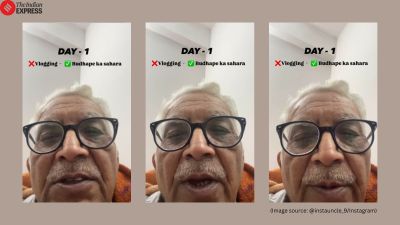
Age, as they say, should never stand in the way of new beginnings. A 70-year-old man from Uttar Pradesh has turned that belief into a living example, and his story has struck a chord online, with the internet cheering him on. At a stage of life when many choose to slow down, Vinod Kumar Sharma chose to pick up a smartphone and press record.