

 20 min read
Click here to follow Screen Digital on YouTube and stay updated with the latest from the world of cinema.
Premium
This is an archive article published on November 21, 2014
Author-backed Romance
Actor Saif Ali Khan holds his own in an uninhibited tête-à-tête on the perils and perks of playing the facetious romcom hero, his favourite authors, Wodehousian humour and more



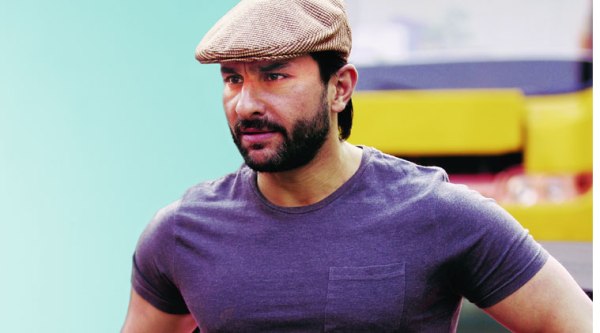 Saif Ali Khan
From what one can understand, you play a bestselling writer in Happy Ending. Tell us a little more about your character.
I don’t even know if you can call him a writer because he’s written just one book which was a huge success and made lots of money. It’s called Operation Payback and it’s like a really flimsy action thriller. The character has some problems with commitment; he’s written lots of things after that, but has never really finished them because he is unable to find happy endings for his stories. So, basically, he almost loses his job, and gets one last chance to set things right by writing a script for this star who is in trouble and wants a Bollywood script written in Hollywood style. Whether he manages to save himself or not, and get his act together is what the film is about. I guess if there’s a moral in it, then it would be, that it’s fine to let some things go, but if you keep doing that forever, then you will be left behind.
What’s interesting about the movie is how the rest of the characters have connected with each other. Ranvir Shorey brilliantly plays a kind of slightly traumatised, henpecked husband— a character we may have seen before— but he does it in a really funny manner. Kalki (Koechlin) plays a slightly psycho ex-girlfriend —the kind you often hear of, but haven’t seen on screen aside from maybe Dil Chahta Hai. Preity Zinta also plays a more peaceful ex-girlfriend which was really nice of her to do. I remember asking a couple of less successful actors that I had worked with to play the role, but they turned around and said, ‘why should we play a mother to three kids’; but Preity didn’t mind. Besides, she looks really good.
Could you describe a really funny scene from the film for us?
There are four or five scenes, or maybe it’s the scene where he’s trying to break up with Kalki for the fifth time. The conversation between them is very funny as are my scenes with Govinda. Raj and DK write these funny scenes, which become the highlight of the film. I should have signed a 13- film deal with them (laughs) because now after watching the film, anyone will sign them.
You just mentioned your scenes with Govinda—-given that both your sensibilities are like chalk and cheese, how was it sharing screen space with him?
Long ago, we had worked on half a film (Sanjay Chel’s film) because after a while, he decided not to turn up for some reason and the film was shelved. He’s such a fantastic dancer that I was a bit star-struck watching him dance. He’s a lovely actor. He was constantly improvising the lines, and the directors were becoming very nervous as he was getting David Dhawan influences into a Raj and DK film! It was great fun to watch and I was rolling with laughter.
In the film, we are from different planets; generally too our personalities are different. It’s amusing just to have us share screen space and it always works because we make such an unlikely couple. I have a lot of respect for him and I can be a good host—we were brought up to be like that —so I made sure that he felt like a star while he was on our set and was presented as such on screen. Compared to a lot of films he might be doing, this film was written with Govinda in mind by people who respect him. Both the scenes and songs have a certain quality to them. They are going to be among the best songs of the year. And he’s danced like a dream, so you’ll get your money’s worth. You will also get to see the two of us doing some retarded scenes that are hilarious.
There are a series of starry cameos in the film, the most talked about one being that of Kareena’s.What purpose do they serve?
Story continues below this ad
Again, I have to thank Kareena because there’s nothing in it for her. She has a very good sense of humour and this scene is totally making fun of us (as people who are clearly in a very public relationship) and particularly her, so it was pretty sporting of her to do it, not once but twice, because I wanted to reshoot the scene. She did it really sweetly and obediently. To have smart directors like Raj and DK cast Kareena against type, makes it the most demented kind of scene possible which people will enjoy.
It was sporting of Preity too—she has played the mother of three kids married to a very good-looking tall American, perhaps her dream guy (guffaws). In the film we are reminiscing, talking about past baggage. She’s good as an ex-girlfriend who’s moved on in life, while I am still kind of stuck in a limbo.
You play a writer in the film, so given a choice which writer would you wish to be?
I wish I could write like Salman Rushdie or Umberto Eco who has written The Island of the Day Before. So much of your personality is given away by the way you write. You can be pretentious and use words that sound good, but if it’s honest, there’s no limit to how poetic or descriptive you could be. And there’s nothing like a good first line like Charles Dicken’s in A Tale of Two Cities, “It was the best of times, it was the age of wisdom, it was the age of foolishness, it was the epoch of incredulity, it was the season of light, it was the season of darkness, it was the season of hope, it was the winter of despair.”
What about P.G. Wodehouse?
Ok, I just changed my mind, I want to write like P.G. Wodehouse, because he makes you laugh. And the Jeeve’s books — my oldest personal book that my friend gave me in 1982. Actually yes, that would be the perfect romcom material wherein the arrival of an inconvenient aunt is a big crisis that sets in motion a series of ridiculously comic events!
Story continues below this ad
Romcoms have been the flavour of the season for sometime now and you have been a part of a lot of them, so what are the ingredients essential to a successful romcom hero and a romantic comedy?
What I like about this film is that it is different and has rather unsympathetic characters —who are well off and urbane. Their only problem is a lack of commitment and focus. They don’t really have any issues so they are generally a bit shallow. It’s hard to find heroism in them because their issues are rather frivolous.
I guess the stress really is that it’s a comedy and is supposed to be fun. A romcom can be a celebration of unheroic things. It could be irreverent, definitely niche urban, that usually celebrates slightly defective characters, uncommitted guys dating three to four girls etc. In Happy Ending towards the end our characters begin to take things more seriously and get their act together. I think it’s usually the path from a misguided youth to an honourable man. This story is different, because I felt quite sympathetic towards the characters. My character was doing well, had earned a lot of money, but then he lost it all. I think that vulnerability is nice, something that I haven’t played that often. It makes it much easier for an actor if the audience is supportive of what’s happening. For instance, in this film the guy is broke, he needs money and as an actor reprising that role, I empathise with him, which is a wonderful thing. It is not your regular romcom character whom you can’t feel bad for. In Salaam Namaste, my character doesn’t want to get married just because the girl is pregnant. I could relate to that, but most people, especially women don’t, because it’s not a heroic attitude. So, ideally, a film should reflect the spirit of the country— like the hero should be a plant that has grown out of the soil of the country. It should be the personification of the values of the nation in a dramatic way—like Sherlock Holmes or James Bond — these are nationalistic figures for instance, or heroes like Amitabh Bachchan who is the Indian hero or a Salman Khan. The romcom hero not so much perhaps, but maybe the newer, younger India connects with them.
Romantic comedies should have a blend of comic energy and a colour palette. For instance, a show like Friends, is warm and friendly, where people are wearing red T-shirts, the sets are green, brown, vibrant and easy on the eye. It can change your mood no matter what frame of mind you are in, so it needs to have that inherent energy. Not like a classic or something heavy or even slapstick, but something like a friend who’s griping, or like a scene with that kind of frantic energy akin to jumping out of the second floor window to escape a clingy girlfriend. You would imagine that in a romcom, just like how you can sometimes imagine a meal in a restaurant, it’s the taste that you have in mind. So, romcoms have that funny energy because the character is making such a mess of his life and you, as the audience will find a cathartic enjoyment in that.
Who’s your favourite romcom actor?
Paul Rudd in Judd Aptow’s film This is 40 is very funny, he’s a great actor and the film is funny too. Then there’s Tina Fey from 30 Rock who is brilliant. Of course, those shows are also brilliantly written.
Oddly enough everyone complains of lack of good writing in Indian cinema, but are the powers-that- be really investing enough in setting up systems to nurture it?
Story continues below this ad
There is an intelligence to Indian cinema. I mean film-makers like Bimal Roy and Satyajit Ray were making movies and they were experienced men who knew about love and life. Whereas today, with a lot of young people in the movies, the kind of life experiences they’ve had is limited. To be a good film-maker you need to have a profound idea about life.
We need to lose that tag of being all about colour and dance show and of being an immature film industry. I don’t think this Bollywood tag is going to last forever what with films like The Lunchbox doing exceedingly well. Actors and actresses from India are going abroad on their own merit and as Indian stars. In this age of globalisation, we have to catch up. But unfortunately, while we are growing really fast, we don’t have a battery of world class writers who understand structure and drama or are experienced enough to handle everything from Valmiki to Tagore, and confidently say, ‘look buddy, this scene will work because of these reasons’.
I don’t mean to complain, we are at a really exciting phase, but there are not enough good scripts. Maybe,because the scripts I am reading aren’t perfect. I don’t know what Aamir Khan is reading or someone else is — but from what I am being offered, I just wish they were slightly better written. Because if the third act is flawed, I don’t know how to fix it as I am not a writer.
I am sure writers have their own issues, but many of our films have similar story lines, and once the actor becomes old, you just replace the lead with someone else and dole out the same stuff. Star Trek, for example is not like that. There is a basic thought there which is different from others. Every episode in an American TV show is flawlessly written; it’s got a great beginning, a crisis point, making every episode a brilliant piece of work. For how many (Hindi film) scripts can you say, ‘This script is brilliant and I can’t wait to shoot for it’. I wish there was more of that.
When we spoke around the release of Bullett Raja, you said that it was a phase of completely following the director’s vision with varied sensibility to see if that works for you. In retrospect, does it seem like a brave idea?
Did I say that? Well, going through such experience, is life. What happens at the box-office comes later. Of the many films one has done, there is a familiar feeling about good direction and good acting and that’s a nice feeling. But there are certain experiences where you feel, ok, this is not as much fun. So, those that are not fun, you try not to repeat. Those that you enjoy you don’t mind repeating. Both these directors (Tigmanshu Dhulia and Sajid Khan) unfortunately did repeat a Paan Singh Tomar and Housefull. But personally I enjoyed Bullett Raja more even though a lot more people came to see Humshakkals than they did Bullett Raja, so who knows? You have to take chances and that’s why they are called chances— you could fall flat on your face. But if you are able to pull off the biggest comic caper, people would have said, it’s the coolest thing you’ve done. When people talk of taking chances, they really forget it means 50 per cent disaster.
Given your impressive success with romcoms, is Happy Ending then a safe choice to balance it all out?
Story continues below this ad
When we were doing these experiments of extreme courage, I knew I had also signed this film (Happy Ending). I told my production team to do something that’s more stable, but within that, try to get something special. Cinematic life depends on luck, so luckily Happy Ending has those elements that are perfect for a romantic comedy—self-deprecating humour, the energy, the clingy ex-girlfriend, the friendly ex-girlfriend etc.
Normally one sees younger, newer actors take more chances than established ones. Why is that so?
I guess, it might be because the big actors have more to lose. When a film releases and it doesn’t open well, it is very disheartening. If numbers matter to you, then there is a certain kind of film that tends to get these numbers, but it also depends on your personality and what you want in life. Ideally, what I would want in life is to have a huge box-office hit and then do a beautiful film like Parineeta. If you see the kind of films I have done —they have been a mix, let’s say from Race to Bullett Raja. Sometimes it doesn’t work out and sometimes it does. After Parineeta, when I was working with director Siddharth Anand (Tara Rum Pum) he would tell me ‘You are not on a Bengali set now’.
Some successful artistes like my mother mix it up and the balance gives you longevity and respect, which is nice. The reason why new people take more chances is because they take as much work as they can get and are more receptive. This is a wonderful profession to be in despite all the hardships that a newcomer faces. But I remember Mumbai being quite friendly to strugglers in a way.
Did your early years involve any sort of struggle?
It was similar to what everyone faces. People don’t buy it when I say it; but it was pretty awful living in a rented apartment in Lokhandwala and then meeting people who are curious to meet you, but are not interested in casting you. It was Mr Yash Chopra who finally cast me. We had quite a funny conversation. He said, “I have heard you are a reckless and indisciplined chap, so do you promise to behave?’
I had replied, ‘yes. I promise to behave’.
It was only then that he agreed to sign me. The minute he signed me, everything changed. It’s like when one person takes a chance everyone falls in line suddenly. It’s the same domino effect. But, I was really bad and I had no idea what I was doing. It wasn’t necessarily something I was cut out for, so it took me a long time. It took me nearly 20 years, but I was committed to it and kept getting better.
Story continues below this ad
Since you hadn’t really trained for an acting career, what drove you to it?
I think it was because I was living in Delhi and had pretty much messed up my chances of working in England or getting a degree at college as I was not academically inclined. Of course, there are people who went to Oxford —I am the only person in my family who didn’t go there, and I hold Oxford in very high esteem. Many people who went there lived in the outskirts of London with respectable jobs but not much of an income. In Delhi, my world was all about waking up late and attending parties. It was all getting a bit directionless. So when somebody — probably friends of my parents said , ‘do you want to do a movie’? I was really excited about coming to Mumbai and working here, because the energy and pace of the city was exhilarating. I was very lucky that it all worked out eventually.
Can stardom and good acting co-exist or do they make for strange bedfellows?
There’s no reason why we can’t be the way that Hollywood actors are —their prep etc. One way or the other, it is going to happen. Within my own career span so much has changed. A lot of my work has just been accepting myself with my limitations and whatever has been offered to me. But now, I would like to take time off and have more control of my life. Maybe talk to some of the brilliant people around me and ask them how to prepare for a role. So many people I have worked with have done these things. Vishal Bhardwaj called Naseeruddin Shah to talk to us about how to prepare. It can all be done. It would so nice to have that sort of actor’s life, the good life. Often we get caught in negatives— that it’s quite competitive and stressful— but it’s quite beautiful actually. Although one problem with being a star is that image is an issue. I have met actors who say ‘I have done 5000 movies’. In my head, these are not great things to say. It’s better to do six movies that are very good, but then, I guess one has to survive too. Baggage or tons of experience is not the best thing for an actor if it’s not translated into freshness.
Story continues below this ad
A challenge certainly, because acting can’t really be spontaneous as it’s always a pre-meditated act. How much do acting workshops help?
The challenge is to be enthusiastic despite all those years of experience, and while people should not see your technique, there has to be a technique. I’d like to get a good script, a teacher go through the whole script with them and then perform. The last time I did that was for Omkara and Parineeta which turned out to be good performances.
Several actors say that theater is the best training ground for an actor. So, would you veer to the stage?
I like acting before the camera. I am sure theatre is good, but film is safer as you get to rehearse the scene as as many times as you like. I don’t know if I have that passion inside me to do that repetitive act. While I respect theatre and enjoy watching actors it’s not something I feel driven to do.
Story continues below this ad
Does the film industry favour a culture of merit over a culture of elitism?
I think this is the only democratic profession, because no matter whose son you are or whatever, nepotism might get you through the door, but unless the audience loves you, success remains elusive.
priyanka.sinha@expressindia.com
Advertisement
Loading Taboola...

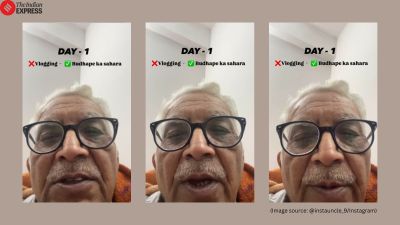
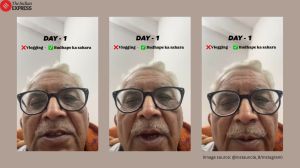
Man starts vlogging at 70 to spend time, gets over 31 million views on first reel
Trending1 hr ago
Age, as they say, should never stand in the way of new beginnings. A 70-year-old man from Uttar Pradesh has turned that belief into a living example, and his story has struck a chord online, with the internet cheering him on. At a stage of life when many choose to slow down, Vinod Kumar Sharma chose to pick up a smartphone and press record.
More Entertainment




Advertisement
PHOTOS

PHOTOS





Top Stories





Must Read







Advertisement
- 01
- 02
- 03
- 04
- 05
Advertisement
