Journalism of Courage
 3 min read



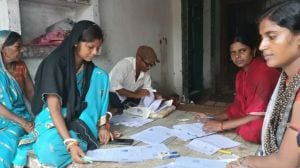
The Employment Guarantee Act EGA aims to provide wage employment to those sections of the population that have been left out of the development process. As The Sunday Express has highlighted in a report from Mayurbhang, Orissa, sections of the population which are cut off from access to productive employment, especially because of the remoteness of their location, stand to gain. So, too, the members of the working poor who have few skills, or whose work has very low productivity. While migration to towns is an option, especially for the men, the women are often the worst-hit, as they cannot leave their children behind. But migration has its negatives. For instance, it puts great pressure on already scarce urban resources such as drinking water and electricity. By providing employment in rural areas, the EGA can help reduce the speed of migration. Incidentally, this is an important reason why the scheme must not be extended to urban areas.
However, there is need for caution. First, the wages offered by the government should not exceed that of the market wage. A higher wage would not only distort labour markets, in all probability it will be siphoned off by the contractors. Workers are often innumerate, have few alternatives and are vulnerable. Higher wages are also more likely to attract the not-so-poor, who will be able to hijack jobs thanks to their relatively greater clout in village society. Second, while it is possible to create durable public assets, this can be done only with active effort as it acts against the interests of those who wish to use such schemes to fill their own pockets. Concrete roads offer smaller scope for corruption than do earth roads. The vigilance of the local community is an important element in addressing the potential corruption in the building of this infrastructure and in ensuring that they meet the required specifications.
Third, there is a case for involving local institutions so that the assets created can be need-based. The participation of panchayati raj institutions is proposed to be an element of the new scheme. The government must make sure plans are made with the participation of local communities, which require, in turn, that they be better informed and more aware.