Journalism of Courage
 3 min read



Take your pick. It8217;s either the subscribers to make it to 250 million phones or the quality of service to make subscribers happy.
Cellular operators on Tuesday hit back at telecom regulator Trai, asking it to consider why mobile networks are jammed rather than penalising operators for quality slips as they add 5 million subscribers every month.
8216;8216;India is one of the fastest growing markets of the world, there is bound to be congestion,8217;8217; the Cellular Operators Association of India COAI, which represents the GSM industry, has told the Telecom Regulatory Authority of India Trai in a letter sent on March 14.
COAI admits capacity augmentation is slow compared to subscriber growth, but says that operators cannot stop adding new subscribers. Network problems are likely to stay for 2-3 years at least, it has added.
Points of Interconnection PoIs are a key bottleneck for private telecom players, but resolving interconnect agreements in or out of court will take time, it has said.
On March 7, Trai issued showcause notices to mobile operators, asking them to explain why service quality has dipped within four weeks.
Now, COAI has sought four more weeks for a detailed explanation, citing incumbent related issues.
8216;8216;Under interconnection agreements signed by private operators, it could take upto 12 months for new PoIs to be provided. It could also take 2-3 years or more for any legal dispute to be settled after exhausting all appeals,8217;8217; the letter, written by COAI director general T.V. Ramachandran says.
With PoIs controlled by BSNL or being debated in court and subscribers being added at 5 million, the cellular players cannot assume responsibility to increase the number of PoIs through existing routes, the letter adds.
The 8216;8216;dominant player8217;8217; has virtually 90 per cent of the 8216;8216;bottleneck facilities,8217;8217; COAI has pointed out. It is 8216;8216;unrealistic8217;8217; to expect new entrants to address this problem overnight through negotiations.
Trai itself has issued several orders in 2002, 2003 and last year, asking BSNL to provide private sector operators adequate interconnection, but BSNL is opposed to these steps.
For the public sector player, the countrywide network of mobile and landline infrastructure is a USP which it would rather not share with private sector competitors.
Until this is resolved, Ramachandran has argued, Trai8217;s showcause notice is 8216;8216;shifting blame8217;8217; and 8216;8216;accusing the wrong party.8217;8217;
Trai launched action against operators whose networks have congestion above the benchmark 0.5 per cent in its interconnection points during September-December, 2005.

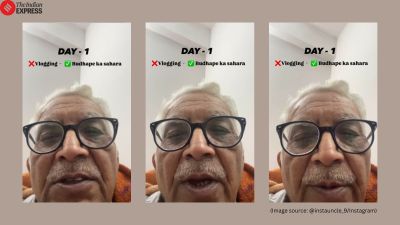
Age, as they say, should never stand in the way of new beginnings. A 70-year-old man from Uttar Pradesh has turned that belief into a living example, and his story has struck a chord online, with the internet cheering him on. At a stage of life when many choose to slow down, Vinod Kumar Sharma chose to pick up a smartphone and press record.