Journalism of Courage
 5 min read



Gerald Rudolph Ford Jr., who became the 38th president of the United States as a result of some of the most extraordinary events in US history, has died. He was 93.
Ford was the only occupant of the White House never elected either to the presidency or the vice presidency. He was sworn in as president on August 9, 1974, when Richard Nixon resigned as a result of the Watergate scandal.
8220;The long national nightmare is over,8221; Ford said in his inaugural address. 8220;I believe that truth is the glue that holds government together, not only our government, but civilisation itself. That bond, though strained, is unbroken at home and abroad.8221;
Ford had become vice president on December 6, 1973, two months after Spiro Agnew pleaded no contest to a tax evasion charge and resigned from the nation8217;s second-highest office. In the two and a half years of his presidency, Ford ended the US involvement in the war in Vietnam, helped mediate a cease-fire agreement between Israel and Egypt, signed the Helsinki human rights convention with the Soviet Union and traveled to Vladivostok in the Soviet Far East to sign an arms limitation agreement with Leonid Brezhnev, the Soviet president.
On the domestic front, the inflation rate was approaching 12 per cent. Chronic energy shortages and price increases produced long lines and angry citizens at gas pumps. The sense of optimism that had characterised the 1960s had been replaced by an increasing sense of alienation, particularly in the inner cities.
But Ford8217;s overriding priority was ending the constitutional and political crisis known as Watergate. It had begun on June 17, 1972, when five operatives of Nixon8217;s re-election campaign were caught breaking into the Democratic National Committee headquarters in the Watergate office building. The White House denied any involvement. But as the situation unfolded, the central question was whether Nixon had tried to obstruct the subsequent investigation. The House judiciary committee approved three articles of impeachment. Faced with the virtual certainty of a trial by the Senate, Nixon resigned.
Ford believed that his signal achievement was healing the national divisiveness caused by the 8220;poisonous wounds8221; of Watergate. He was 8220;acutely aware,8221; he said in his inaugural address, that he had not been elected to the position he held, and he said he had neither sought the presidency nor made any 8220;secret promises8221; to attain it.
A new spirit was soon evident in the nation8217;s leadership. The Oval Office, long a fortress for an embittered president was thrown open to members of Congress, old friends, public officials and reporters. The president8217;s approval rating reached 71 per cent but this euphoric honeymoon lasted precisely one month.
On September 8, Ford granted Nixon a full pardon for all federal crimes he had 8220;committed or may have committed8221; when he was in the White House. Ford said the pardon was necessary to bring Watergate to a close. The response was a tidal wave of criticism. A large majority of Americans opposed the pardon. It was denounced in Congress, including by members of Ford8217;s own party.
It was widely assumed that Ford had doomed his political career. By January 1975, his approval rating had plummeted to 36 per cent. Not even two assassination attempts, both in California in 1975, generated significant popular support.
The consequences included a three-month delay in confirmation of Ford8217;s choice of former governor Nelson Rockefeller of New York as vice president. Many conservative Republicans in Congress joined Democrats in opposing Ford8217;s programmes. In mid-1975, Governor Ronald Reagan of California, the darling of the right wing of the GOP, announced his intention to seek the Republican presidential nomination in 1976.
Ford beat back the Reagan challenge, but he narrowly lost the general election in November 1976, to the Democratic candidate, former governor Jimmy Carter of Georgia.
Asked in his 2004 interview with The Washington Post if the pardon had hurt him in the 1976 election, Ford replied: 8220;It probably did. It was a close election, as you know8230; there is a group of bitter people who never forgave me and probably voted against me, and the net result is that they probably helped that I didn8217;t win.8217;8217;
When he retired from the White House, Ford wrote his memoirs, established his presidential library at the University of Michigan, served on the boards of various corporations, gave hundreds of speeches, played golf and divided his time between homes in Rancho Mirage, Calif., and Beaver Creek, Colo.
He apparently had no second thoughts about his career. 8220;Once I determine to move, I seldom, if ever, fret,8217;8217; he wrote in his memoirs. It was one of the most notable aspects of his character and he never wavered from it.
The piece is co-authored by J.Y. Smith
The Washington Post

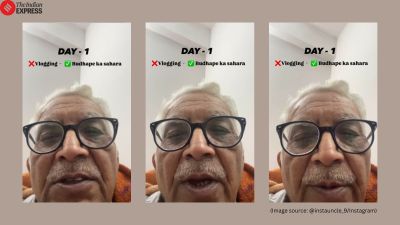
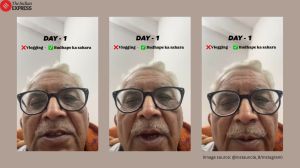
Age, as they say, should never stand in the way of new beginnings. A 70-year-old man from Uttar Pradesh has turned that belief into a living example, and his story has struck a chord online, with the internet cheering him on. At a stage of life when many choose to slow down, Vinod Kumar Sharma chose to pick up a smartphone and press record.