8 min read
Stay updated with the latest - Click here to follow us on Instagram

Journalism of Courage



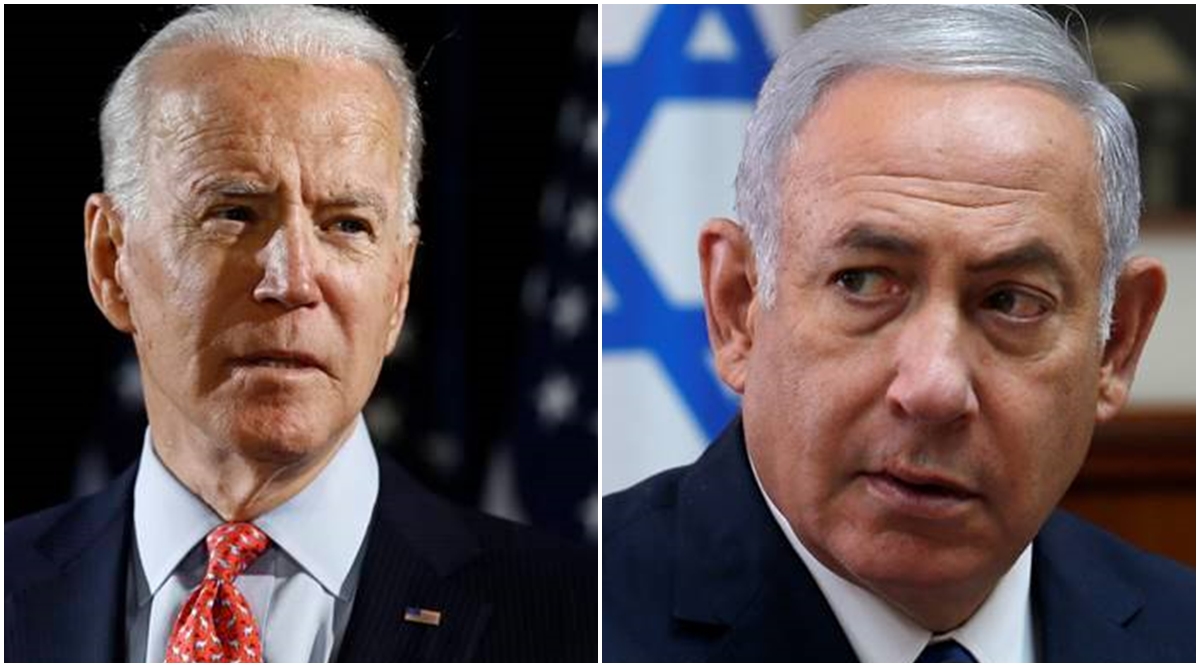 US President Joe
Biden and Israeli Prime Minister Benjamin Netanyahu.
US President Joe
Biden and Israeli Prime Minister Benjamin Netanyahu. Written by David E. Sanger
In the 48 hours before Prime Minister Benjamin Netanyahu reluctantly delayed his effort to overhaul the Israeli judiciary, his government was bombarded by warnings from the Biden administration that he was imperilling Israel’s reputation as the true democracy at the heart of the Middle East.
In a statement on Sunday night, soon after Netanyahu fired his defense minister because he had broken with the government on the judicial overhaul, the White House noted that President Joe Biden had told Netanyahu by phone a week ago that democratic values “have always been, and must remain, a hallmark of the US-Israel relationship.” Major changes to the system, Biden said, must only “be pursued with the broadest possible base of popular support.”
The statement was striking because in normal times, the standard line for a White House — whether Democratic or Republican — is that Washington does not interfere in the internal politics of its allies.
That has never truly been the case; it interferes all the time, usually behind the scenes. But in this case, Biden and his advisers dropped all pretenses, putting themselves publicly at odds with Netanyahu, even though he cast himself in conversations with administration officials as a man desperately looking for compromise.
In private, administration officials said, the conversations with Netanyahu’s government were even more blunt, indicating that Israel’s image as the sole democracy in the Middle East was at stake.
My administration is committed to strengthening democracy by restoring the proper balance between the three branches of government, which we are striving to achieve via a broad consensus.
— Benjamin Netanyahu – בנימין נתניהו (@netanyahu) March 28, 2023
The US ambassador to Israel, Thomas R Nides, who has deep roots in the Democratic Party that go back to the Clinton administration, spent the weekend passing along messages from Biden and his staff. Brett McGurk, the top Middle East official in the White House, who has worked for both Democratic and Republican presidents, was in frequent contact with the Israeli ambassador to the United States, Michael Herzog.
By Sunday night, White House officials came to two conclusions. The first was that Netanyahu had deeply miscalculated when he announced the firing of the defense minister, Yoav Gallant, who had publicly called for suspending efforts to pass the legislation that would alter how judges are appointed.
The second conclusion, they said, was that Netanyahu was looking for a way out of the crisis, and benefited from telling the right-wing partners in his fragile coalition that he could not risk losing the support of Israel’s most important ally. His message, one senior official said, was that Israel could soon face a crisis with Iran, which is creeping ever closer to a nuclear weapons capability, and that he could not afford to alienate Washington.
Israel is a sovereign country which makes its decisions by the will of its people and not based on pressures from abroad, including from the best of friends.
— Benjamin Netanyahu – בנימין נתניהו (@netanyahu) March 28, 2023
So when Netanyahu announced on Monday in Israel that “when there is a possibility of preventing a civil war though dialogue,” he would “take a time out for dialogue,” they read it as a message to the far-right members of his coalition that he had no other choice.
Netanyahu put himself in an impossible bind, one senior official said, telling US officials and the Israeli public that he was looking for compromise, and yet trying to hold together the right-wing coalition members whom he needs to remain in power — and who refused to back down.
At the crux of the dispute was a fundamental argument about the nature of democracy, involving changes Netanyahu had never before seemed particularly passionate about — but was forced to back to keep his right-wing coalition together.
 Protesters react after being sprayed by a water cannon as they demonstrate by the private home of Israeli PM Netanyahu after he dismissed the defense minister and his nationalist coalition government presses on with its judicial overhaul, in Jerusalem, March 26, 2023. (Reuters)
He insisted that stripping the Israeli Supreme Court of the power to overrule laws passed by Israel’s parliament, the Knesset, was necessary to promote true democracy — even though he had to put that effort on hold a week ago. And the changes to how judges were appointed, and to make it more difficult to remove a prime minister, seemed to many critics to place unchecked power in the hands of the government.
The proposed overhaul also came as Netanyahu is standing trial on corruption charges, and some feared he could use the changes to extract himself from his legal troubles.
Biden’s team, though, also had a more immediate concern. There was an acute awareness, one official said, that Netanyahu is expected to arrive in Washington this week for Biden’s second Summit for Democracy. One senior official said the consensus was that it would have been deeply uncomfortable to have Netanyahu speak while hundreds of thousands of Israelis were protesting that he was dismantling checks on his government’s power.
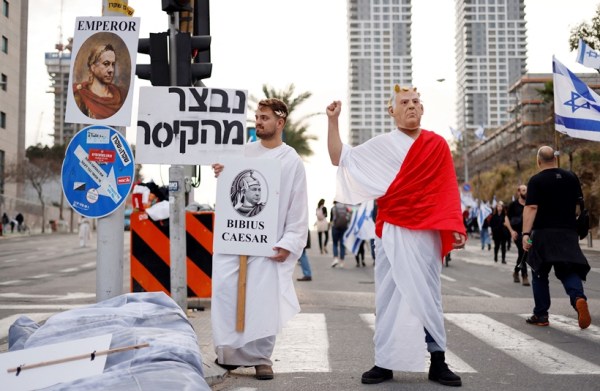 People attend a demonstration, as Israeli Prime Minister Benjamin Netanyahu’s nationalist coalition government presses on with its judicial overhaul, in Tel Aviv, March 25, 2023. (Reuters)
Dennis Ross, a longtime Middle East negotiator who has worked for presidents back to Ronald Reagan, said he was not sure how central a role Biden’s arguments played because “pressure from within counts for much more than pressure from without.” But he noted that once Gallant went public with the fact that military reservists were boycotting training missions with their units, the reaction to Netanyahu’s legislative initiative became a national security matter.
Netanyahu could argue internally, Ross said, that “the Iranian nuclear threat is becoming more acute and the Israel may have to deal with it soon and cannot afford to have the US drawing back because of the judicial reform.”
Biden was always clear that he was separating the issues of Israel’s defense and his disagreements with Netanyahu over preserving democratic institutions. US forces participated in a major military exercise several weeks ago that was clearly a message to Iran, even while protesters took to the streets in Israel.
 A line of protesters supporting women’s rights dressed as characters from The Handmaid’s Tale television seriesm and other Israelis protest against plans by PM Netanyahu’s government to overhaul the judicial system in Tel Aviv, Israel, March 25, 2023. (AP)
But questions over the depth of congressional enthusiasm for defending Israel were always lurking in the background, especially with the progressive side of the Democratic Party raising doubts about the wisdom of US military aid, at a time that Netanyahu’s government was declaring that Jewish settlements in disputed territories would be made permanent.
John Kirby, a spokesperson for the White House’s National Security Council, told reporters on Monday that Biden was “very, very forthright with Prime Minister Netanyahu” that democracies “are strengthened by the whole idea of checks and balances, as well as the fact that any fundamental change to a democratic system really ought to be pursued with the broadest possible base of popular support.”
But late Monday, as news that Netanyahu had backed away spread in Washington, the question turned to how long the Israeli leader could last. His reputation for political acumen and the ability to press for compromise had been tarnished, several officials said. The chances that his fragile, bare majority would hold seemed slim. And the prime minister had not resolved the issue as much as kicked it down the road.
Stay updated with the latest - Click here to follow us on Instagram