5 min read
© IE Online Media Services Pvt Ltd



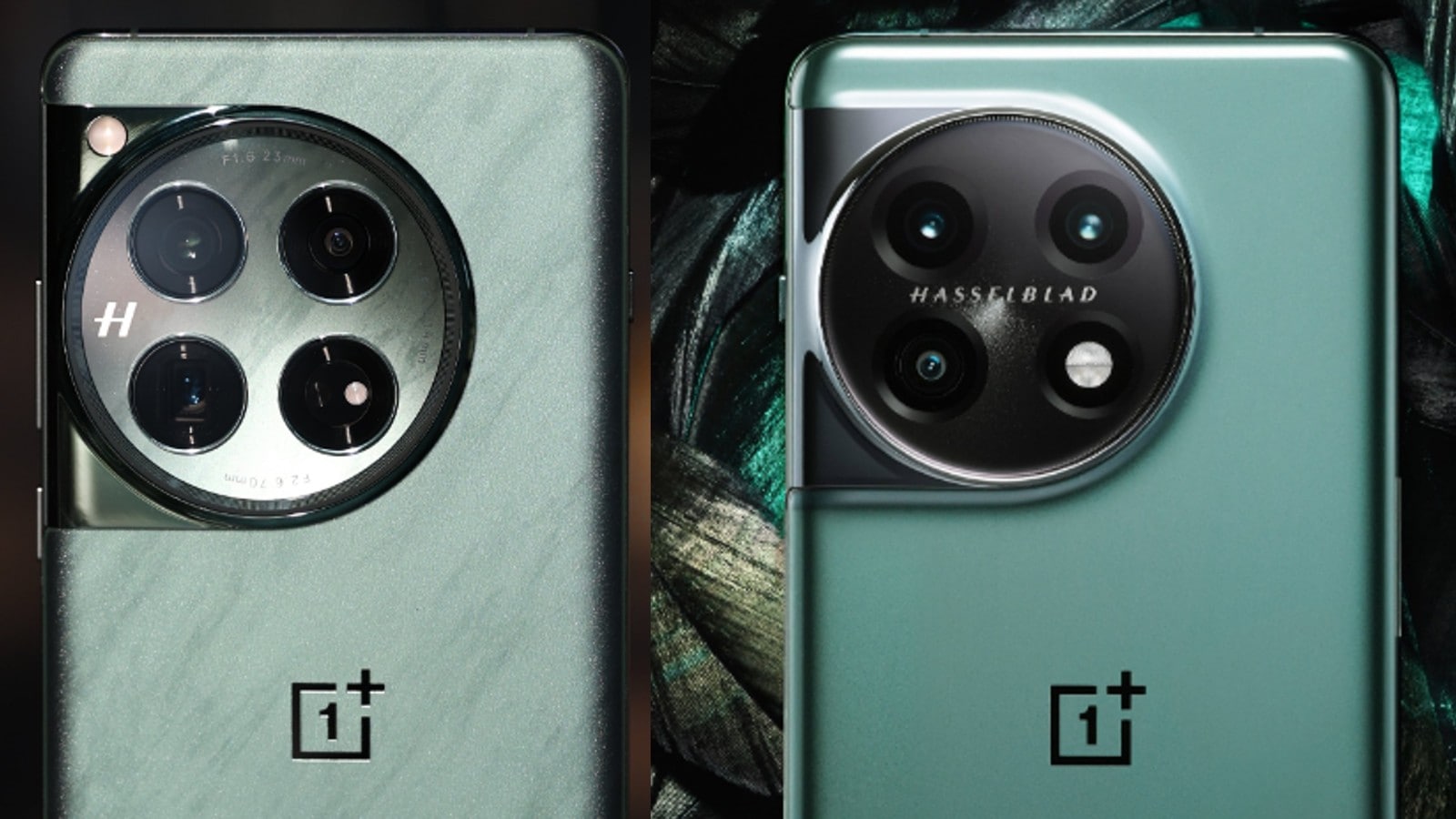 Despite the similar looks, these are two completely different phones (Express Photo)
The OnePlus 12 has arrived, boasting impressive hardware and design. Despite not hitting Indian retail shelves yet, there’s already considerable excitement surrounding it. While the OnePlus 12 is set to be a popular 2024 flagship, its comparison with its predecessor, the OnePlus 11, is inevitable. Here’s a comparison based on specifications and features to help you decide whether to stick with the existing OnePlus 11 or upgrade to the OnePlus 12.
The OnePlus 12 closely resembles the OnePlus 11, with the main difference being the introduction of new colour options. Both phones showcase a circular camera island featuring Hasselblad branding, seamlessly integrated into the metal frame. Notably, the LED light on the OnePlus 12 has been relocated outside the island to the left, and the full Hasselblad branding has been replaced by the letter H, adding a touch of class.
In terms of durability, the OnePlus 12 boasts an IP65 rating for water and dust resistance in China. On the other hand, the OnePlus 11, available with an IP64 rating in select markets, lacked certified ingress protection for the Indian variant. It remains unclear if the global variant of the OnePlus 12 will retain the Chinese counterpart’s water and dust resistance rating.
A subtle yet significant upgrade lies in the USB port. The OnePlus 12 supports faster data transfer with USB 3.2 compatibility, surpassing the OnePlus 11’s limited USB 2.0 wired data transfer rates. It’s worth noting that the OnePlus 12 is slightly heavier at 220 grams, whereas the OnePlus 11 measures 205 grams
OnePlus has always led the way in display technology, and the OnePlus 12 continues this trend. The new 2k 120Hz curved display, manufactured by BoE, might appear similar to the one on the OnePlus 11. However, the OnePlus 12’s display shines brighter, reaching up to 4,500 nits of peak brightness. Additionally, it features a centred punch hole cutout, a departure from the left-side cutout seen on the OnePlus 11 and a few previous OnePlus flagship phones.
In terms of protection, while the OnePlus 11 boasted Gorilla Glass Victus, the OnePlus 12 takes advantage of the newer-generation Victus 2, offering enhanced drop resistance. Furthermore, the OnePlus 12 sports a slightly larger 6.82-inch screen with an increased 91.3 per cent screen-to-body ratio.
The OnePlus 12 is powered by the new Snapdragon 8 Gen 3 SoC, whereas the OnePlus 11 uses the Snapdragon 8 Gen 2. According to on-paper specifications and synthetic benchmarks like AnTuTu and Geekbench 6, the OnePlus 12, thanks to its new CPU and GPU, is at least 15 to 20 per cent faster than the OnePlus 11.
The new chip in the OnePlus 12 also unlocks various generative AI capabilities, enhances camera performance, and brings about power efficiency gains. Although the difference in performance might not be readily apparent in normal day-to-day usage, the OnePlus 12 excels in tasks like gaming and video editing, offering a faster and snappier experience.
Moreover, the OnePlus 12 marks a milestone as the first phone from the company to provide up to a whopping 24 GB of RAM and 1 TB of internal storage, at least in China. In contrast, the OnePlus 11 in India is limited to 16 GB of RAM and 256 GB of storage.
The cameras on the OnePlus 12 have received a significant upgrade. The triple camera array on the OnePlus 12 now includes a 64 MP periscope telephoto lens, a 50 MP wide-angle lens, and a 48 MP ultra-wide-angle lens. Additionally, the phone features a much-needed selfie camera upgrade, and the new 32 MP sensor can now shoot 4K videos, surpassing the 16 MP sensor on the OnePlus 11, which is limited to 1080p resolution.
The primary sensor on the OnePlus 12 utilises a new dual-layer stacked sensor, aiming to enhance low-light performance. Moreover, the phone is now capable of recording videos in Dolby Vision format, marking a first for a OnePlus device
The new OnePlus 12 has a large 5,400 mAh battery, while the OnePlus 11 has a 5,000 mAh battery. Both phones support 100W fast-wired charging. However, with the OnePlus 12, the company brings back 50W wireless charging and 10W reverse wireless charging.
Although both phones look exactly similar, the OnePlus 12 is clearly better than the OnePlus 11 in almost every scenario. Be it the design (better IP rating), display (bigger and brighter), performance, camera, or battery life, the new OnePlus 12 feels like a much-needed upgrade over the OnePlus 11 in almost every possible way. However, the OnePlus 12 is also a tad more expensive than the OnePlus 11 in China, and considering the same the price of the base model of the OnePlus 12 might start around Rs 60,000 and it is expected to launch in January of 2024.


Age, as they say, should never stand in the way of new beginnings. A 70-year-old man from Uttar Pradesh has turned that belief into a living example, and his story has struck a chord online, with the internet cheering him on. At a stage of life when many choose to slow down, Vinod Kumar Sharma chose to pick up a smartphone and press record.