Journalism of Courage
 3 min read


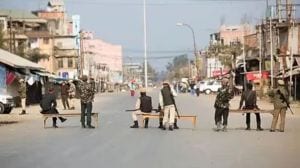
The repercussions in Punjab after an attack on a religious leader in Vienna recall the disruption that wracked the state two years ago,almost to the week. Then it was a somewhat more institutionalised reaction by the clergy to a prominent dera,Dera Sacha Sauda,one of the dozens of groups in Punjab with followings in the tens of thousands. This time,leaders of the Dera Sachkhand Balan were attacked in Vienna. Dera Sachkhand Balan is a lesser-known group that draws its adherents from more marginalised social groups. The Central and state governments have been quick to demonstrate a united resolve to contain and stop the violence. Hours after news of the Vienna attack came in,the army was called out in Jalandhar,Phagwara and Hoshiarpur. But the scale of violence and its spread to parts of Haryana demonstrate once again the social ferment in the region. It shows the enormous responsibility Punjabs politicians must bear to resist the temptation to stoke these tensions for electoral influence.
According to informed estimates,there are over 300 deras spread across Punjab,with at least a dozen claiming more than 100,000 followers each. A dera is technically the headquarters of a group that affirms devotion to a sant and keeps a strict chain of command under a living leader. While the charismatic leaderships of the deras have typically clashed with the Sikh orthodoxy,a survey of their following is revealing. Many of the deras,among them those increasing their geographical reach,have adherents,including non-Sikhs,from the under-privileged sections or those marginalised in the more orthodox hierarchies. This can set up the sort of political polarisation that was so violently visible in the aftermath of the 2007 elections to the Punjab assembly. Then the Congress was seen to court a charismatic dera leadership looking for a clear quid pro quo in this case the Dera Sacha Sauda which had a significant following in the Malwa region. The current violence is a manifestation of the tension that simmers between Sikh orthodoxy and some deras,and Punjabs experience of the late 70s and 80s is a cautionary tale to its politicians to keep away from cultivating anxious constituencies. The Akali Dal,still to affirm a breaking loose from Sikh orthodoxy,and the Congress bear the onus of showing that lessons have been learned.
Whatever be the reasons for the current violence,Punjabs image has taken a knock. An enlightened administrative and political response is needed to rectify that.