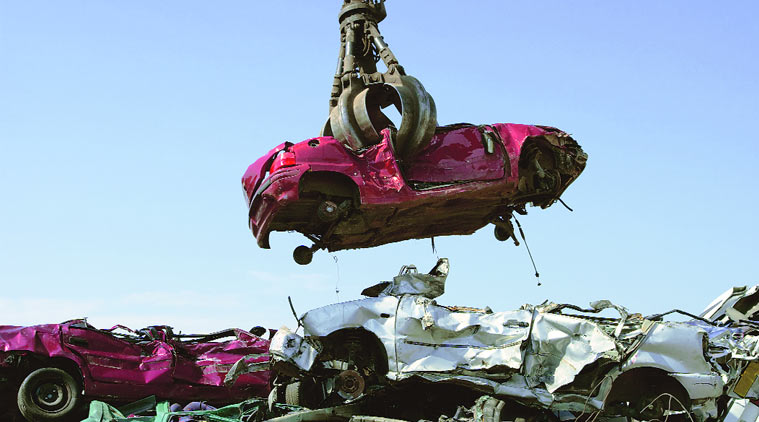
The ‘cash for clunker’ scheme was introduced after the 2008 recession
The NGT ban on diesel vehicles that are over ten years old in Delhi and NCR has come in for criticism for not giving enough time to vehicle-owners to make a switch. In comparison, most big vehicle scrappage schemes around the world — like the US’s ‘cash for clunkers’ — offer some form of incentives. Anil Sasi explains
What was the US ‘cash for clunker’ scheme?
The Car Allowance Rebate System or CARS, widely termed as the ‘cash for clunkers’ scheme, was floated as a $3 billion US federal programme aimed at providing economic incentives to American residents to purchase a new, more fuel-efficient vehicle when trading in an older, less fuel-efficient vehicle. The programme was widely promoted as providing a stimulus to the economy by boosting auto sales, while putting better, more efficient vehicles on the roads. The programme officially started on July 1, 2009. Allocated a $3 billion budget, this scrappage scheme was exhausted in only two months, between July and August 2009. The incentive offered under this scheme was up to $4,500 for purchasing a new car.
According to estimates of the US Department of Transportation, the initial $1 billion provided for the scheme was exhausted by July 30, 2009, well before the anticipated end date of November 1, 2009, due to very high demand. The DoT reported that the programme resulted in 690,114 dealer transactions submitted, requesting a total of $2.877 billion in rebates.
The scheme, though, was critisised by green lobbies on the grounds that as the incentive did not involve restrictions in terms of carbon emissions, the old vehicles (over 15 years old in the majority) were not necessarily replaced by low-polluting cars. The Department of Transportation, though, countered this by reporting that the average fuel efficiency of trade-ins was 15.8 mpg (miles per gallon), compared to 24.9 mpg for the new cars purchased to replace them, translating to a 58 per cent fuel efficiency improvement.
How successful were Europe’s scrappage schemes?
In France, a scrappage scheme was established in 2008 and extended until the end of 2010, the French scrappage incentive was valid for the purchase of a new vehicle that emitted less than a certain prespecified emission level (160 g/km of carbon dioxide) in exchange for a vehicle that was older than 10 years. According to French government data, around 600,000 vehicles were sold in 2009 thanks to this measure, which represented 26 per cent of the private car market (2.2 million in total) and a cost of Euro 600 million. The majority of the vehicles purchased in the scheme emitted between 101 and 120g/km of carbon dioxide.
In the United Kingdom, the scrappage scheme was launched in May 2009 and wrapped up in March 2010. A sum of 2,000 British Pounds, half of which was financed by manufacturers, was offered under the scheme for the purchase of a new model (private vehicle or LCV), in exchange for a vehicle aged over 10 years.
In Germany, between January and September 2009, the German state allocated Euro 5 billion to finance incentives under its scrappage scheme. This measure did not have a threshold for carbon dioxide emissions or fuel consumption. One had to swap an old vehicle, aged at least nine years, with a new car or one that was one year old at most.
Story continues below this ad
In Italy, the car market remained stable in 2009, with just over 2.1 million cars sold. Allocated a Euro 1.2 billion budget, this incentive could go up to Euro 5,000 for the purchase of a ‘green’ vehicle — including hybrid or gas (LPG and CNG) models. Average carbon dioxide emissions are reported to have dropped from 144g to 136g between 2008 and 2009, a substantial decrease of 8g in a year. After having withdrawn the scrappage scheme at the end of 2009, the Italian government decided to offer similar incentives to sectors that include two-wheelers, electrical goods and textiles.
How did the scheme fare in Japan?
In April 2009, the Japanese government announced a series of incentives aimed at its car market, including a 250,000-yen ($2,000) scrappage incentive. Based on a stringent criteria, this measure was valid for a vehicle that was more than 13 years old and for the purchase of a new model that met new standards in terms of consumption and pollution.
A 100,000-yen ($800) supplementary incentive was granted for the purchase of a hybrid vehicle or one with very low CO2 emissions. These subsidies are however cut in half in the case of “micro-cars” with engine sizes of less than 660cc, which already enjoy fiscal benefits.


 5 min read


 The ‘cash for clunker’ scheme was introduced after the 2008 recession