Premium
This is an archive article published on July 30, 2021

100 years since discovery of insulin: Import of insulin, an essential medicine, fails to meet needs of many countries, says study

While the World Health Organisation (WHO) this year has raised concerns about poor availability of Covid-19 vaccines in lower-income countries, this inequity is also echoed in this new study on insulin, an essential medicine.

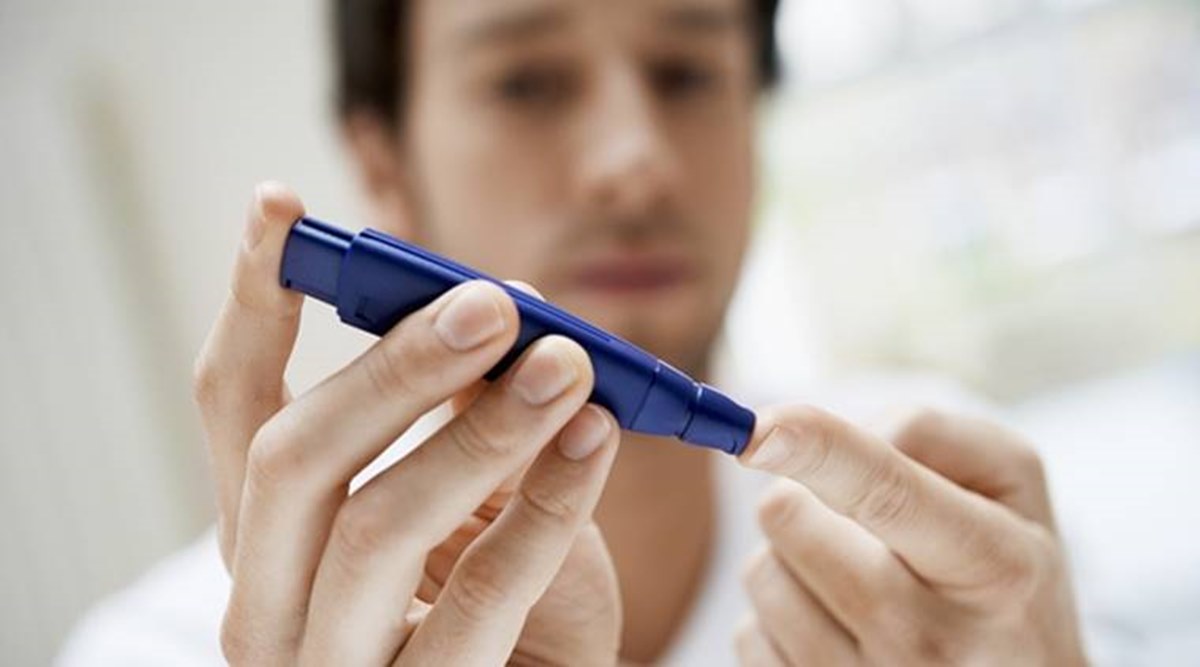
A man takes a blood test. Insulin is a medicine discovered 100 years old (File photo)A man takes a blood test. Insulin is a medicine discovered 100 years old (File photo)

Despite being a 100-year-old medicine, insulin remains inaccessible to millions around the world, due to limited availability and its high price. A new study published in Science journal on July 30 has said that insulin imports in many countries with no local production of the medicine failed to meet the needs of their populations living with diabetes

“Our previous in-country research shows that often, insulin is not available on pharmacy shelves in low- and middle-income countries. While the actual and physical availability of insulin for use by the patients depends on the myriad processes that are involved in-country, we wondered if the many countries that cannot manufacture insulin and depend on imported insulin – are actually importing enough in the first place,” Abhishek Sharma and Warren Kaplan, from Boston University of Public Health and authors of the study, told The Indian Express.

While the World Health Organisation (WHO) this year has raised concerns about poor availability of Covid-19 vaccines in lower-income countries, this inequity is also echoed in this new study on insulin, an essential medicine.

Sharma, along with co-author Kaplan, analysed both epidemiological data and global trade data for retail insulin (using the United Nations Commodity Trade, UN COMTRADE data) of 194 trading countries to provide evidence on where the countries with no local insulin production source their insulin from, and whether or not the volumes of imported insulin are adequate to meet needs of patients living with diabetes in these countries.

Insulin is manufactured in only 20 countries, so there are 174 import-dependent countries in the COMTRADE database. However, many of those 174 import-dependent countries also exported varying volumes of insulin at various times during the study period (2000 to 2018). That is why the authors limited the study to those countries lacking domestic insulin production that exported either no insulin at all or just trivial amounts (annual average of 104 kg insulin or less, which approximates insulin for less than 500 persons with diabetes) and had import and diabetes prevalence data for at least seven years between 2000 and 2018.

Of the 82 study countries, 32 were from Africa, followed by 13 each in Central and South America and in the Caribbean and Oceania regions. The remaining 24 countries were from Asia, Eastern Europe, and the Middle East. “We assessed if the insulin imports are enough to meet the need of in-country patients only for the import-dependent countries, which are those with no local production of insulin. India does not fit that profile as the country hosts insulin manufacturing units of multinational companies as well as Indian insulin manufacturers. Hence in our study, India is among the 20 countries that manufacture insulin and export to other countries/regions,” Sharma said.

African nations are importing insulin from countries that themselves can’t make it, suggesting that African imports are made through intermediaries that must first be buying from insulin-manufacturing countries and then shipping it to Africa. This has implications for insulin supply security.

Story continues below this ad

Most importantly, Africa currently lacks a regional insulin manufacturing “champion”. Until the time the continent has one, smaller manufacturers in India, Brazil and China must step up, the authors have said.

“The good news is that the gap between countries’ insulin imports and the domestic need has narrowed down… since 2000. Sadly though, this is not true for countries in Africa and Asia. Even in recent years (2012-18), there are countries in almost all parts of the world where insulin imports are just not enough to treat all those who need it,” said Sharma and Kaplan.

They have also urged that national and regional governments should develop mechanisms to generate better information about the population with diabetes and their treatment needs – and also on how the provision of diabetes treatment and access barriers vary within a country and across socio-economic strata. This is essential for improving forecasting of insulin needs, the authors said.


Anuradha Mascarenhas is a Senior Editor at The Indian Express, based in Pune. With a career spanning three decades, she is one of the most respected voices in Indian journalism regarding healthcare, science and environment and research developments. She also takes a keen interest in covering women's issues . Professional Background Education: A gold medalist in Communication and Journalism from Savitribai Phule Pune University and a Master’s degree in Literature. Author: She authored the biography At The Wheel Of Research, which chronicles the life and work of Dr. Soumya Swaminathan, the former Chief Scientist at the WHO. Key Focus: She combines scientific accuracy with storytelling, translating complex medical research into compelling public and human-interest narratives. Awards and Recognition Anuradha has won several awards including the Press Council of India's national award for excellence in journalism under the gender based reporting category in 2019 and the Laadli Media award (gender sensitivity -2024). A recipient of the Lokmat journalism award (gender category-2022), she was also shortlisted for the RedInk awards for excellence in journalism-2021. Her debut book At The Wheel Of Research, an exclusive biography of Dr Soumya Swaminathan the inaugural chief scientist of World Health Organisation was also nominated in the Popular Choice Category of JK Paper AUTHER awards. She has also secured competitive fellowships including the Laadli Media Fellowship (2022), the Survivors Against TB – New Research in TB Media Fellowship (2023) and is part of the prestigious 2025 India Cohort of the WomenLift Health Leadership Journey.” Recent Notable Articles (Late 2025) 1. Cancer & Specialized Medical Care "Tata Memorial finds way to kill drug-resistant cancer cells" (Nov 26, 2025): Reporting on a breakthrough for triple-negative breast cancer, one of the most aggressive forms of the disease. Discipline, diet and purpose; How a 97-year-old professor defies ageing'' (Nov 15, 2025) Report about Prof Gururaj Mutalik, the first Head of Department at Pune's B J Government Medical College who at 97 credits his longevity to healthy habits and a strong sense of purpose. 2. Environmental Health (The "Breathless Pune" Series) Long-term exposure even to 'moderate' air leads to chronic heart, lung, kidney issues" (Nov 26, 2025): Part of an investigative series highlighting that even "safe" pollution levels are damaging to vital organs. "For every 10 µg/m3 increase in PM2.5 level, there was 6-8% jump in medicine sales" (Nov 23, 2025): Using commercial data to prove the direct link between air quality and respiratory illnesses in Pune. 3. Lifestyle & Wellness News "They didn't let cancer, diabetes and heart disease stop them from travelling" (Dec 22, 2025): A collaborative piece featuring survivors who share practical tips for traveling with chronic conditions. At 17, his BP shot up to 200/120 mmHG; Lancet study flags why child and teen hypertension doubled between 2000 and 2020'' (Nov 12,2025)--A report that focusses on 17-year-old-boy's hypertensive crisis and reflects the rising global trend of high blood pressure among children and adolescents. 4. Scientific Recognition & Infrastructure For promoting sci-comm, gender diversity: IUCAA woman prof highlighted in Nature" (Nov 25, 2025): Covering the global recognition of Indian women scientists in gender studies and physics. Pune researchers find a spiral galaxy like the Milky Way from early universe'' (December 3, 2025)- A report on how Indian researchers discovered a massive galaxy that existed when the universe was just 1.5 billion years old , one of the earliest to have been observed so far. Signature Beat: Health, Science & Women in Leadership Anuradha is known for her COVID-19 reportage, where she was one of the first journalists to provide detailed insights into the Covishield and Covaxin trials. She has a dedicated interest in gender diversity in health and science, often profiling women researchers who are breaking the "leaky pipeline" in STEM fields. Her writing style is scrupulous, often featuring interviews with top-tier scientists and health experts from various institutions.   ... Read More


Click here to join Express Pune WhatsApp channel and get a curated list of our stories

Latest Comment
Post Comment
Read Comments
Advertisement
Loading Taboola...
Advertisement