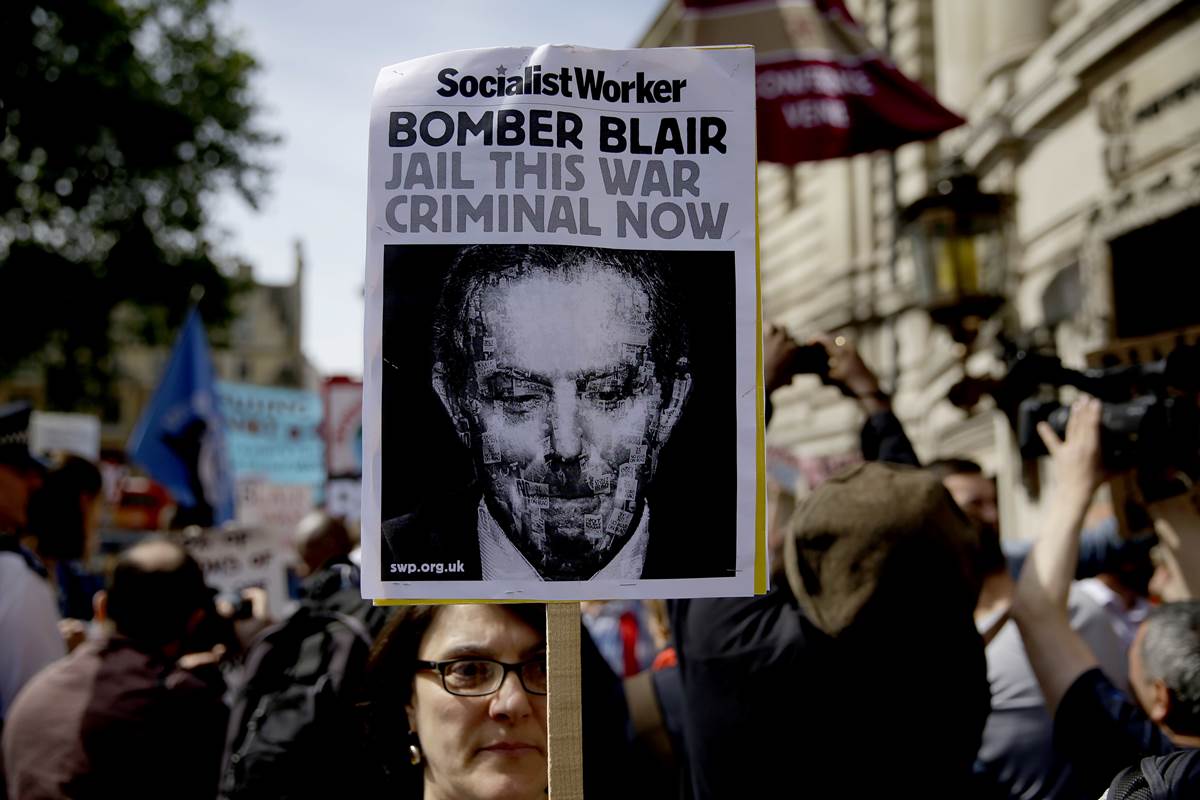

For the last seven years, Sir John Chilcot worked at investigating the United Kingdom’s role in the Iraq war — one year longer than it took to fight the war, which claimed a staggering 5,00,000 lives, and unleashed a tide of blood that continues to sweep across the world today. His 2.6 million-word report is a magisterial account of what went wrong. “The UK chose to join the invasion of Iraq before the peaceful options for disarmament had been exhausted,” it states. “Military action at that time was not a last resort.” The September 2002 dossier published by Prime Minister Tony Blair’s government, claiming Iraq held weapons of mass destruction, he goes on, presented judgments “with a certainty that was not justified”. “It is now clear that policy on Iraq was made on the basis of flawed intelligence and assessments”, he goes on. “They were not challenged and they should have been”. That is a failure Chilcot sets right in a manner that ought to be a model for democracies everywhere.
The full wrath of Chilcot’s criticism falls on Blair himself, but also on the system of institutions that ought to have contained the PM’s hubris. Sir John Scarlett, the head of the joint intelligence committee, “should have made clear to Mr Blair that the assessed intelligence had not established ‘beyond doubt’ either that Iraq had continued to produce chemical and biological weapons or that efforts to develop nuclear weapons continued.” In addition, MI16, failed to ensure that ministers were “informed in a timely way when doubts arose about key sources and when, subsequently, [that] intelligence was withdrawn”. Chilcot declines to express a view on whether the war had a sound legal basis, saying this can be determined only by an international criminal court with the necessary jurisdiction. He states, “the circumstances in which it was decided there was a legal basis for UK military action were far from satisfactory”.


