
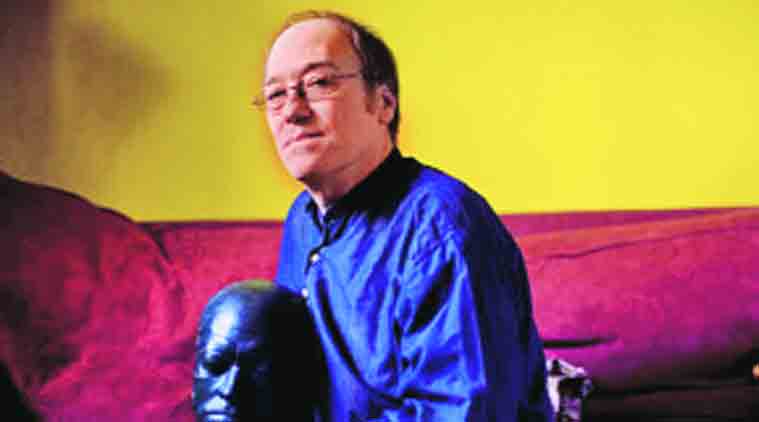
I received the news of Mike’s death with shock, even though I knew it was imminent. Diagnosed with multiple myeloma in 2007 when he was 53, and given another four years, he typically defied the odds, living twice as long. I had just booked my ticket to see him in London in early February, and to present in person the soon-to-be released copy of my latest book critiquing India’s nuclear trajectory since 1998, that is dedicated to him. It was not to be.


Whenever he came to Delhi, he would stay with us. At one level, he developed (to my amazement) a delight in listening to the intricacies of Carnatic music. At another, he connected easily with the widest cross-section of youngsters everywhere because of his passionate interest and critical appreciation of mass popular culture — music, film, TV serials of all kinds, sport — fully aware that their organisation and presentation usually went hand-in-hand with the promotion of demeaning cultural stereotypes, sexist and racist attitudes, and the reinforcement of the self-serving values of the rich and powerful. Precisely, this capacity to genuinely share in the viewer’s “enjoyment” without guilt or humbug, yet remain able to criticise these forms with authority and knowledge, left a powerful political impression on young minds. I still remember his lively interactions with my two sons on the merits and limitations of Sholay and Garm Hava.
In Britain, Mike fought within the Labour party against the authoritarian transformation of the decision-making process that was the necessary prelude to its subsequent neoliberal turn. He was also the press officer for the ‘Stop The War Coalition’ that organised over a million marchers in London in 2003 against the US invasion of Iraq. What was special about Mike was that his writings, deeply integrated with his passionately lived preoccupations, combined sophisticated functionality of analysis with great creativity of , making him a delight to read. He saw nothing odd about a white writing Redemption Song (referring to Bob Marley’s reggae classic) on Muhammad Ali and the anti-racist struggles of that time, which made the New York Public Library’s list of the year’s 25 best books. Yes, he, a baseball loving American, wrote Anyone but England, what many would call the best book on cricket since Beyond the Boundary by CLR James, whose politics mirrored Mike’s own so closely.
This made it to three shortlists as the year’s best sports book in the UK and received very warm reviews in India from Ramchandra Guha, the historian, Prabhat Patnaik, professor emeritus at JNU, Rudrangshu Mukherjee, currently VC of Ashoka University, Gulu Ezekeil, the poet, as well as the admiration of newscaster and journalist Rajdeep Sardesai. But his most lyrical works were yet to come — Chimes of Freedom (titled Wicked Messenger in USA) on the politics of Bob Dylan’s art, and the intensely personal If I Am Not For Myself that traced his evolution as an internationalist, secular, anti-Zionist Jew, deeply committed to the struggle for justice for the Palestinian people.
His last book was The Price of Experience: Writings on Living with Cancer (2014) on the British NHS that was treating him. To give a sense of the person he was, I would like to leave the reader with three snippets from it. When NHS staff had threatened strike action against government cuts, much of the mainstream media, termed it as a betrayal of patients.
This is what Mike had to say: “Finally, an appeal to NHS workers from one very grateful patient: the government takes advantage of your sense of commitment to your patients, but by letting them do so you are doing no favour for those patients…We need you to take action on our behalf, action that is a necessary extension of the sense of dedication that guides you in your daily work.” In another piece, Mike rails against pharma firms using their licensed monopoly over certain drugs to charge exorbitant prices saying “…One of the reasons I am glad to be alive is that I can have a go at these bastards.” When gravely ill, Heinrich Heine wrote, “Thank God that I have a God again so that in extreme pain I can allow myself to curse and blaspheme. The atheist is denied such solace.” Mike consoled himself otherwise – “I’ve sometimes regretted not having a divine power I can curse and blaspheme. The powers of the world will have to suffice.”
Achin Vanaik retired as professor, International Relations, Delhi University


