5 min read
Latest Comment
Post Comment
Read Comments



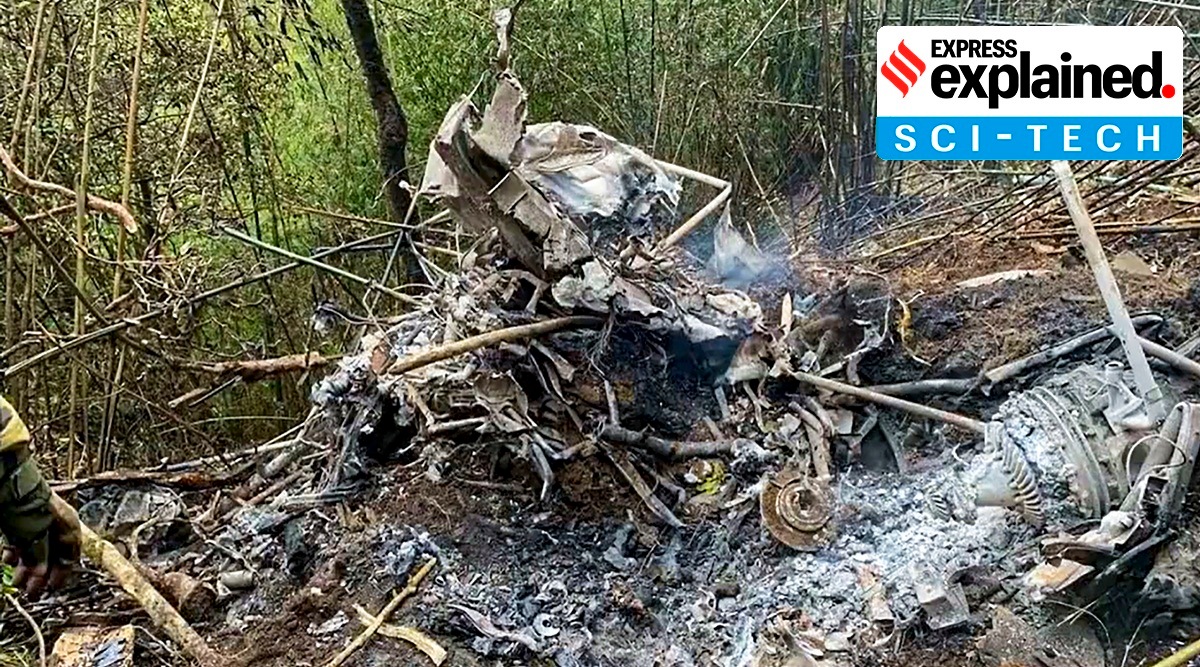 Wreckage of the Cheetah helicopter of the Indian Army which crashed near Mandala in West Kameng district, Thursday, March 16, 2023. (PTI Photo)
 Two pilots were killed after a Cheetah helicopter of the Indian Army crashed in Arunachal Pradesh on Thursday (March 16), news agency PTI reported, quoting a defence spokesperson.
The crash took place around 9:15 am near Mandala, west of Bomdila in Arunachal Pradesh, Defence PRO Lt Col Mahendra Rawat told ANI.
The HAL Cheetah is a licence-built version of the French Aérospatiale SA 315B Lama. While it is known for its capability to operate in hot tropical weather as well as high altitude conditions, it is an ageing aircraft – the SA315B Lama was first flown in 1969, over 50 years ago. Over the years, along with HAL Chetak, the Cheetah has developed a reputation of being unsafe, with the armed forces attempting to find upgrades for these rotorcraft.
According to Vertical, an aviation magazine, the Lama program was started in the late 1960s, following a request from the Indian and Nepalese militaries for a helicopter that could operate in the Himalayas as well as the hot tropical plains of India. Air density decreases with increasing temperature and altitude, affecting aircraft performance. Ways to improve an aircraft’s “hot and high” performance include reducing weight as well as increasing engine power – generally competing incentives as more powerful engines are often heavier and vice versa.
For the Lama programme, the lightweight five-seat SA 313 Aérospatiale Alloutte II airframe was mated with the dynamic components of the larger and heavier seven-seat Aérospatiale SA 316 Allouette III (which would also be built under licence in India as HAL Chetak) in an attempt to get the best of both worlds. On March 17, 1969, the SA 315B Lama, lifted off for its maiden flight.
Right off the bat, the Lama was commended for its exceptional high-altitude performance with an exceptional power-to-weight ratio, ideal for use in mountainous regions. It soon proved that it could lift slung loads of up to 1,000 kg to places a much more powerful medium helicopter could not venture – making it a useful supply as well as search and rescue helicopter in areas previously inaccessible.
The Lama’s most notable high-altitude achievement came on June 21, 1972, when Aérospatiale test pilot Jean Boulet took the aircraft to 12,442 meters – an altitude record (for its class of helicopter) that stands till date.
Hindustan Aeronautics Limited signed a licence agreement for the Lama with Aérospatiale in 1970 and christened the India-made aircraft “Cheetah”. The first Cheetah manufactured from raw materials was delivered in 1976-77. According to HAL’s website, till date, HAL has produced and sold 279 of these versatile helicopters in India and abroad.
The Cheetah has been the backbone of Indian military presence in high-altitude regions in the Himalayas. Operated by both the Indian Air Force and the Army Aviation Corps, it has been used for transporting men and material, search and rescue, and reconnaissance. Cheetahs have especially been crucial for operations in Siachen, the world’s highest battleground at over 6,000 m.
HAL also managed to arm the Cheetah with two 12.7 mm heavy machine guns and 70mm rockets, marketing this modified Cheetah as the Lancer.
While the Cheetah was a fine helicopter in its time, 2023 is more than 60 years removed from its maiden flight. Of late, Cheetahs’ airworthiness has been repeatedly questioned in the context of numerous incidents over the years. Apart from crashes, Cheetahs are also high-maintenance, with spare parts increasingly harder to find these days.
In fact, as far back as 2002, authorities had already recognised that Cheetahs were fast getting obsolete, underpowered and unreliable for the armed forces’ requirements. This prompted HAL to re-engineer the helicopter with a new, more reliable and efficient engine, producing the HAL Cheetal. However, the rotor blades HAL had built for the platform were found to be inadequate and by 2012, production had stopped with reportedly only 12 Cheetals ever built.
The reason why the Cheetah continues to be a mainstay for Indian armed forces operating in the mountains is that there is no better alternative available at the present. While there are definitely better “hot and high” performance helicopters such as the Airbus H125 available in the market, India has focussed on indigenous development and production.
Starting in 2008, HAL has been working on an indigenously developed Light Utility Helicopter (HAL LUH), to eventually replace the Cheetahs and Chetaks in the Army and Air Force’s fleet. However, development has been slow, with initial operational clearance obtained only in 2020. Currently, HAL has been given permission to manufacture 12 LUH, with deliveries set to take place in 2024.