Journalism of Courage

As per data released by the Reserve Bank of India (RBI), a current account deficit of $2.6 billion (0.4 per cent of GDP) was recorded a year ago — Q3 of FY20.

The growth rate of the eight infrastructure sectors — namely, coal, crude oil, natural gas, refinery products, fertilisers, steel, cement and electricity — had been recorded at at 6.4 per cent in February 2019.

India is the world's third-biggest carbon emitter after China and the United States and thus is vital in the fight against climate change currently focused on reaching zero emissions by mid century or thereabouts.

Given the significant uncertainty pertaining to both epidemiological and policy developments, the real GDP growth for FY21/22 can range from 7.5 to 12.5 per cent, depending on how the ongoing vaccination campaign proceeds, whether new restrictions to mobility are required, and how quickly the world economy recovers, the World Bank said.

India, according to the 'Economic and Social Survey of Asia and the Pacific 2021: Towards post-COVID-19 resilient economies', is estimated to record an economic growth of 7 per cent in 2021-22, over a contraction of 7.7 per cent witnessed in the previous fiscal on account of the pandemic's impact on normal business activity.
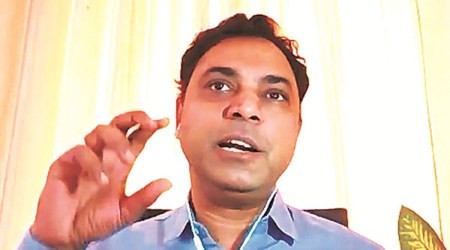
Speaking at a virtual conference by Jana Small Finance Bank, he further said that the retail inflation targeting by the Reserve Bank of India (RBI) has helped lower the volatility and level of inflation.

“22 foreign and Indian companies raised their concerns against the eligibility criteria, which are neither as per the CVC guidelines nor ITU standards due to which most of the interested companies are not able to bid,” TEMA’s letter to Prakash read.

India is the top importer of crude and products via the Suez Canal, higher than China, South Korea or Singapore, according to data from Vortexa.

“The United States is committed to working with its trading partners to resolve its concerns with digital services taxes, and to addressing broader issues of international taxation,” said USTR Ambassador Katherine Tai.
With two more trading days to go in the month, net inflow into equities stood at a six-month low of Rs 10,557 crore. By comparison, the average monthly FPI inflow into equities between October 2020 and February 2021 amounted to Rs 37,435 crore.

Union Petroleum Minister Dharmendra Pradhan on Friday said India would procure crude oil from whichever country offered the best business terms.

Piyush Goyal last month had said he would engage with the new US Trade Representative (USTR) to “try and put together a fresh package” after the old package that was close to finalisation under the Trump administration was off the table with the change of guard.
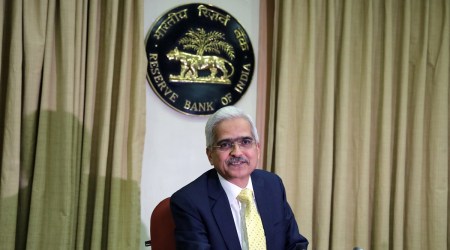
Many parts of the country, mostly from Maharashtra, are seeing a massive surge in Covid infections, roiling the equity and bond markets. GDP growth had contracted 23.9 per cent in the June quarter of 2020-21 when Covid hit the economy hard.

The new amendment brings no change for the private sector employees as their tax-exemption on interest income will remain capped on EPF contributions of up to Rs 2.5 lakh in a year.

As per the plan, if a company which is eligible to receive incentives under the PLI scheme sets up a printed circuit board (PCB) assembly itself, it will be eligible to receive incentives of up to 3 per cent from April 1, 2022, while it will come down to 2 per cent in the following financial year.

According to the RBI, the moderation in household financial savings has taken place despite an increase in financial assets, as flow of financial liabilities returned to positive territory on the back of loans from banks and NBFCs in Q2 of 2020-21.

"Taxpayers are free to utilise the Input Tax Credit (ITC) available in their credit ledger, as permissible in law, to discharge their GST dues for the month of March, 2021 — the last month of this financial year," CBIC said in a statement.
Moody's Analytics said a strengthening second wave of COVID-19 remains the key risk to recovery in 2021.

“The FDI policy is brought in only to supplement domestic capital. This will only supplement what is available in the country because what is now available is not sufficient,” Finance Minister Nirmala Sitharaman told the House.
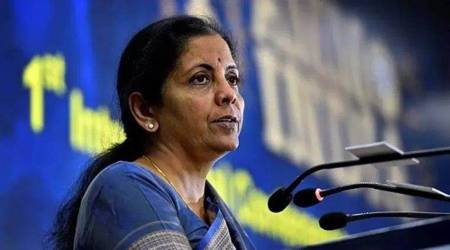
Finance Minister Nirmala Sitharaman said the capital infusion will be of Rs 20,000 crore, with initial infusion of Rs 5,000 crore.
Cabinet approved the setting up of Development Finance Institution (DFI) with an initial capital infusion of Rs 20,000 crore. Finance Minister also assures that not all banks will be privatised.

In February 2020, trade deficit was at $10.16 billion. Imports, too, rose last month, by 6.96 per cent to $40.54 billion, the data showed.
When the GST was introduced on July 1, 2017, amalgamating over a dozen central and state levies, five commodities - crude oil, natural gas, petrol, diesel, and aviation turbine fuel (ATF) - were kept out of its purview given the revenue dependence of the central and state governments on this sector.

India WPI February 2021: The wholesale price index (WPI) grew 2.03 per cent during the month of January and it rose to 1.95 per cent in December 2020, the data showed.

While bond yields have moved up in the US market recently on the back of fear of rising inflation, central bankers, on the other side, reiterated their commitment to keep interest rates stable till such time they see growth and the job market returning to normal.