11 min read





 UPSC Key 2023: Here's what you should be reading from the February 21, 2023 edition of The Indian Express.
Important topics and their relevance in UPSC CSE exam for February 21, 2023. If you missed the February 20, 2023 UPSC key from the Indian Express, read it here
FRONT PAGE
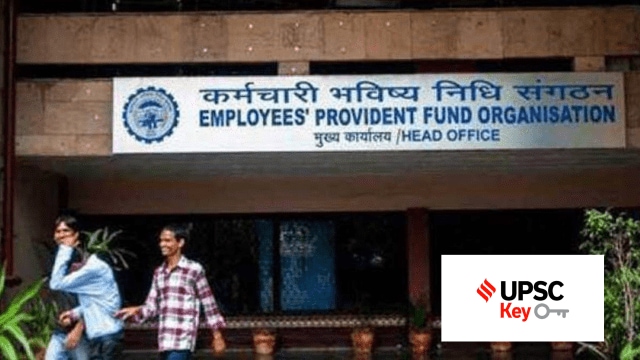
EPFO allows employees to now opt for higher pension
Syllabus:
Preliminary Examination: Economic and Social Development-Sustainable Development, Poverty, Inclusion, Demographics, Social Sector Initiatives, etc.
Mains Examination: General Studies II: Government policies and interventions for development in various sectors and issues arising out of their design and implementation.
Key Points to Ponder:
• What’s the ongoing story– Subscribers of the Employees’ Provident Fund, who had not opted for higher pension under an earlier window, have been provided another option now. In compliance with the Supreme Court’s November 4, 2022, order, the Employees’ Provident Fund Organisation (EPFO) Monday issued instructions to all its regional and zonal offices on the manner in which employees should apply for higher pensions.
• What is Employees’ Provident Fund Organisation (EPFO)?
• Employees now get a new set of instructions from the EPFO. What specifically is included in the instruction manual?
• For Your Information-AN employee and an employer can together sign up in the coming days requesting the EPFO to deduct 8.33 per cent of the higher monthly actual salary (as against the ceiling of Rs 15,000) towards the Employees’ Pension Scheme, ensuring larger accumulation towards pension over their work life.
• What is Social Security to employees?
• What is the need of Social Security to employees?
• What are the famous social security schemes in India?
Other Important Articles Covering the same topic:
📍‘EPFO guidelines on higher pension still silent on many issues’
Uddhav moves SC: EC biased, have majority in RS, Legislative Council
Syllabus:
Preliminary Examination: Indian Polity and Governance-Constitution, Political System, Panchayati Raj, Public Policy, Rights Issues, etc.
Mains Examination: General Studies II: Salient features of the Representation of People’s Act.
Key Points to Ponder:
• What’s the ongoing story- CHALLENGING THE Election Commission’s decision to recognise the Eknath Shinde-led faction as the real Shiv Sena and allot the party name and ‘bow and arrow’ symbol to it, former Maharashtra Chief Minister Uddhav Thackeray moved the Supreme Court on Monday. In his petition, Thackeray contended that the EC could not have relied on the legislative majority test as disqualification proceedings against Shinde’s supporters are still pending. If disqualified, the Shinde faction would not have legislative majority, he said.
• What exactly is the issue?
• What is Election Commission’s decision on the same?
• What exactly Election Commission said?
• Do You Know- In its 77-page order, the three-member Commission relied on the test of majority, which the Shinde faction was able to prove it had with the support of 40 out of 67 MLAs and MLCs in Maharashtra, and 13 out of 22 MPs in both Houses of Parliament. The EC said the 40 MLAs of the Shinde group had got 76% of the votes polled by the 55 Shiv Sena MLAs in the 2019 elections, as opposed to 23.5% for the MLAs in the Thackeray camp. The EC decided that the “test of party Constitution” could not be relied upon as the party had not submitted a copy of its amended Constitution in 2018 and the document itself had been changed to become more undemocratic. It also found that it could not rely on the test of majority in the organisational wing of the party as claims of numerical majority by both factions were not satisfactory.
• How election symbols are allotted?
• Election Symbols (Reservation and Allotment) Order, 1968-Know key highlights
• When parties split, how does EC decide who gets the symbol?
• Do You Know-Para 15 of the Election Symbols (Reservation and Allotment) Order, 1968, deals with the EC’s powers regarding splinter groups or rival factions of a recognised party.
• What are the Election Commission’s powers in a dispute over the election symbol when a party splits?
• But why is the Election Commission’s decision being criticised?
• How did the EC deal with such matters before the Symbols Order came into effect?
• Is there a way other than the test of majority to resolve a dispute over election symbols?
• What happens to the group that doesn’t get the parent party’s symbol?
• Election Commission of India and Article 324 of the Constitution-Know in detail
• The independent and impartial functioning of the Election Commission-How it is ensured?
• Election Commission of India- Powers and Functions
• Chief Election Commissioner and the two other Election Commissioners have equal powers-True or False?
• In case of difference of opinion amongst the Chief election commissioner and/or two other election commissioners, the matter is decided by the Supreme Court of India-Right or Wrong?
Other Important Articles Covering the same topic:
📍EC can’t dictate, should be dissolved: Uddhav
📍Shinde faction takes over Sena office in legislative building
GOVT & POLITICS
SC: Not everything said amounts to hate speech
Syllabus:
Preliminary Examination: Indian Polity and Governance-Constitution, Political System, Panchayati Raj, Public Policy, Rights Issues, etc.
Mains Examination: General Studies II: Structure, organization and functioning of the Executive and the Judiciary-Ministries and Departments of the Government; pressure groups and formal/informal associations and their role in the Polity.
Key Points to Ponder:
• What’s the ongoing story- In significant comments, the Supreme Court on Monday said that while interpreting Section 153A of the Indian Penal Code, it will have to be borne in mind that not everything that is said will amount to hate speech. A bench of Justice K M Joseph and B V Nagarathna said this while hearing a plea which raised the question of alleged inflammatory speeches made at a rally organised by the Ekal Hindu Samaj in Maharashtra on January 29.
• What exactly Supreme said?
• What is ‘Hate Speech’?
• What are the Laws restricting the freedom of expression in India?
• What are the International Legal Regime on Hate Speech?
• What is Blasphemy?
• Free Speech, Hate Speech and Hurting religious sentiments- Where and what is that thin line drawn between these three?
• In the context of Fundamental Rights, what do you understand by the term “Absolute” and “Reasonable Restrictions”?
• Absolute and Reasonable Restrictions-Where and what is that thin line drawn between the two?
• Laws restricting the freedom of expression
• Impact of Hate Speech on Freedom of Expression, Free speech and on the Right to Freedom of Religion
Other Important Articles Covering the same topic:
📍Hate speech denies right to dignity: Justice Nagarathna
THE IDEAS PAGE
Syllabus:
Preliminary Examination: History of India and Indian National Movement.
Mains Examination: General Studies I: Modern Indian history from about the middle of the eighteenth century until the present significant events, personalities, issues.
Key Points to Ponder:
• What’s the ongoing story- Manu S Pillai writes: Tipu certainly viewed himself as Muslim and where convenient might have employed fiery language against “infidels”. At the same time, to win legitimacy at home, he also issued instructions for the puja of “infidel” deities
• Between contingencies of 21st century Indian politics and the world of 18th century kings, how and where the “real” Tipu Sultan located?
• Personalities of Mysore Kingdom-Know Haidar Ali and Tipu Sultan
• ‘Tipu Sultan was the first Indian king who tried to apply western methods to his administration’-Elaborate further
• Tipu Sultan and treaty of Srirangapatnam-connect the dots
• Why Tipu Sultan is in news these days?
• What is the counternarrative to this understanding of Tipu Sultan?
• How is the mainstream narrative to be reconciled with the historical accounts of his brutality?
• How then should the historical figure of Tipu Sultan be assessed today?
Other Important Articles Covering the same topic:
📍Explained: How to read Tipu Sultan’s place in history
EXPLAINED
Syllabus:
Preliminary Examination: Current events of national and international importance.
Main Examination: General Studies II: Government policies and interventions for development in various sectors and issues arising out of their design and implementation.
Key Points to Ponder:
• What’s the ongoing story- Days ahead of the Congress plenary in Raipur, the Enforcement Directorate (ED) Monday launched searches at multiple locations in Chhattisgarh linked to Congress leaders and some officials. The searches are being conducted in a case of money laundering the central agency is probing, regarding “illegal levy” on transportation of coal in the state.
• What is the case?
• Do You Know-It has been alleged by the ED that an illegal levy of Rs 25 per tonne of coal was being collected in the state from coal-consumption companies, by certain middlemen in connivance with key politicians and bureaucrats. The agency has alleged that in the past few years, more than Rs 540 crore was collected in this manner, with part of the money going to Congress politicians.
The agency began probing the case in October last year on the basis of an FIR by the Income Tax department. It has since conducted multiple search operations, arrested nine people and attached assets to the tune of Rs 170 crore.
• Why is the case significant?
• What has the probe found?
• How was the levy collected?
• For Your Information- According to the ED, on July 15, 2020, the state’s Geology and Mining Department modified the online process of e-permits for transporting coal from Chhattisgarh’s mines, making the issuance of a manual No Objection Certificate (NOC) necessary. No SOP or procedure was circulated in this regard, the ED has claimed.
A mining company issues a Coal Delivery order (CDO) in favour of the buyer, who is then required to deposit an EMD (Earnest Money Deposit) of Rs 500 per metric tonnes with the company and lift the coal within 45 days.
• Who did the current searches target?
• The mining industry in India-Know in detail
Other Important Articles Covering the same topic:
ECONOMY
NITI Aayog appoints BVR Subrahmanyam as new chief executive
Syllabus:
Preliminary Examination: Indian Polity and Governance-Constitution, Political System, Panchayati Raj, Public Policy, Rights Issues, etc.
Main Examination: General Studies II: Statutory, regulatory and various quasi-judicial bodies.
Key Points to Ponder:
• What’s the ongoing story-The government on Monday approved the appointment of BVR Subrahmanyam as the CEO of NITI Aayog. Subrahmanyam will succeed Parameswaran lyer, who will move to the United States after being appointed as executive director of the World Bank for a period of two years. Subrahmanyam, who previously served as the chief secretary of Jammu and Kashmir, was considered to be among the few officers who were kept in the loop ahead of the Centre’s decision to abrogate Jammu and Kashmir’s special status and bifurcate the state into two Union Territories.
• National Institution for Transforming India (NITI Aayog)-Know the Background
• Why NITI Aayog replaced the Planning Commission?
• Composition of NITI Aayog-Know in detail
• Know the objectives and features of NITI Aayog
• Who is present chairperson of NITI Aayog?
• Top-down model and Bottom-up approach method in Governance-what it is and what’s the difference between the two?
• Why NITI Aayog more than a Think Tank?
• NITI Aayog has taken several initiatives-What are they?
• What are the initiatives taken by NITI Aayog to ensure Cooperative federalism and Competitive federalism?
• The Governing Council of NITI Aayog-Know in detail
• The Governing Council of NITI Aayog comprises of?
Other Important Articles Covering the same topic:
📍Who is BVR Subrahmanyam, the new NITI Aayog CEO
For any queries and feedback, contact priya.shukla@indianexpress.com
The UPSC KEY Indian Express is now on Telegram. Click here to join our channel and stay updated with the latest Updates.

Read UPSC Magazine