7 min read
© The Indian Express Pvt Ltd



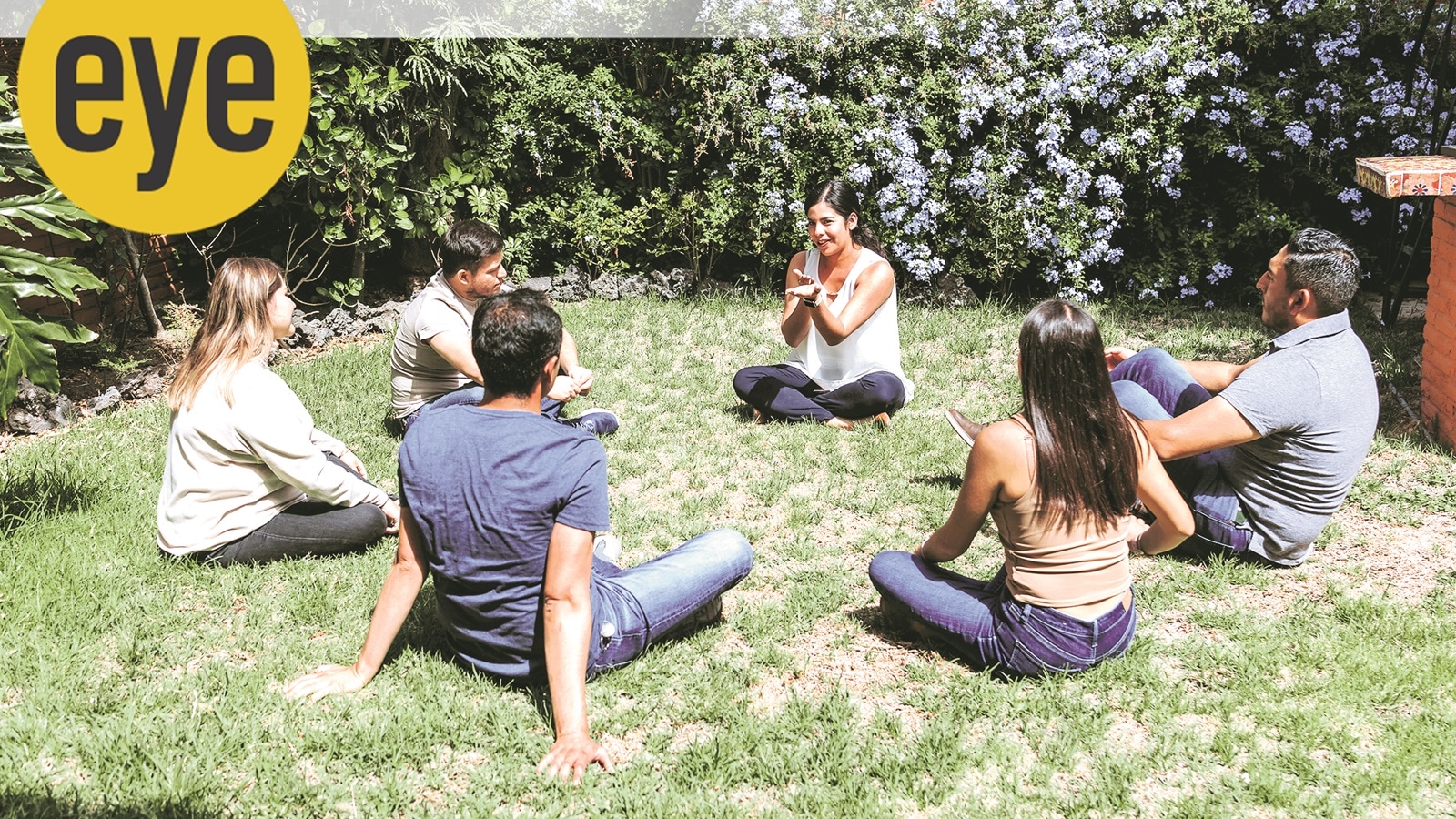 Hispanic young people seated in circle on grass and participating at group therapy session in Mexico Latin America.
“Nobody likes me. I am unlikeable.” “I am going to die alone.” “I don’t deserve to live.” How do the stories people tell themselves reach this dead-end of despair? Did it start with abuse at home for not living up to the family’s expectations? Or maybe it was the ridicule by teachers for not being fast enough? Each “not enough” being notched in the scorecard shaping their sense of who they are, their identity. Until they reach a point in their life when the burden of these problem-saturated stories is too heavy to carry. Others might look at them and wonder, “What’s wrong with them?” When the question is really, “What have they been up against and what are the adversities they have faced that have shaped their stories of themselves?”
Human beings are meaning-makers. Stories we tell ourselves help us provide structure for meaning-making. A father gives the child an angry look and the child reckons, “I have done something bad.” The father looks at the child with anger most of the time and the child reaches the conclusion, “I am bad.” Our meaning-making is influenced by the cultural soup of ‘not enough-ness’ we live in. The normative ideas of worthiness, and success that we constantly measure ourselves against.
“I keep feeling that there is something wrong with me. I am pathetic” Vani shared this with me with hunched shoulders and a trembling voice. She was 11 years old and was already talking about being a “disappointment to my teachers and a burden on my parents.” She was neurodivergent and did not fit in with the ableist pedagogies drilled out in schools. So the inevitable stories she was telling herself were what she had been told. The way we talk to our children becomes their inner voices and the way we talk about them, and subsequently, they talk to themselves become their life stories.
What stories were told about you when you were growing up and what are the stories you are telling about yourself to yourself now? These might be affirming narratives where you describe yourself as vivacious, caring, and funny alongside dismissive ones of being lazy, irresponsible or even shaming ones of being a failure, a loser etc. They can all co-exist but there is always a dominant story that starts shaping the way we see ourselves and the way the world sees us too. This story is influential as it shapes our identity.
That is the reason it becomes so significant for us to examine this dominant story as at times, like for Vani, it can become very restrictive and damaging. If Vani’s storyline of her life continues to be, “I am unworthy” as she grows and becomes an adult then that will hold her back from having faith in her abilities, seeking meaningful friendships and having a sense of agency in her own life. She might end up spending most of her life feeling ignored, isolated and invisible.
Characterise – Reflect on one problem story that might be defining your life. In this exercise, it becomes very important that we create distance between ourselves and this problem story. Since when has it been around? What situations do you feel it makes its presence felt? What name would you give it (e.g. anxiety, inadequacy, loneliness etc)? Maybe go one step further and give it a colour, a shape, a voice. If it was a cartoon character what would it look and sound like? How convincing is it? What language does it use to push these identity conclusions on you? How does it compare you to others? What predictions does it make about your future? Do you see how the problem story that you have internalised is due to the insidious pressure we all face to fit into normative ideas of success and worthiness? What if we could build mindfulness that reminds us that the “problem is not me, it is the pressure of fitting in society’s standards.” What if we could locate the problem where it belongs?
Inner compass – I came across a compelling set of questions. “What breaks your heart, what heals it and what steps can you take to be part of the healing?” What breaks my heart is injustice towards children and the steps I can take towards this healing is to amplify the message of “Children First’ in whatever I do through therapy, teaching and my writings. It shakes me up, pains me, sustains me and restores my faith in humanity. At every step. What would your inner compass be and what are the micro-actions you can take to sustain you in this journey?
Alternate voice – There will be times when the problem story will try to take charge and bring in self-doubt, inadequacy, fear, etc. That is inevitable. The turning point for us is our act of reclamation of our lives by making space for an alternate voice or story to emerge. We can give it a name, a character, a shape, a tone too. In my conversations with people, this voice has taken various names – Courage, Joy, Curiosity. Rahi, a 12-year-old lived in a home where there was a lot of violence and blame directed to him. When I met him, he had internalised the violence at home as, “Something wrong with me and I am to blame.” We externalised the blame through characterisation and then explored how much he valued compassion and care. He preferred to see the alternate voice as of a caring parent who would gently keep him safe when violence broke out at home.
At times people prefer to give it a name from mythology or an inspiring character from a book or movie. Vani preferred to call her alternate voice Durga. Every time the problem story of “You are pathetic,” chimed in, she would gently remind herself of Durga’s voice and tell herself, “You are strong, I am with you, and you can do it.” In time, her parents also started believing in Vani and became her staunch advocates.
We all have to stand alongside each other if we have to bring about change. It is not an individual responsibility but a collective one. In the words of late Aunty Barbara Wingard, First Nations Australian Narrative Practitioner, magic happens in, “Telling our stories in ways that make us stronger.”


A short clip of a car sticker has struck a chord online, turning an everyday traffic moment into a viral laugh-fest. The video, posted on Instagram by @bearys_in_dubai, captures a white hatchback navigating traffic on Circuit House Road in Mangaluru, Karnataka. What really caught viewers’ attention wasn’t the car itself, but a sticker pasted on its rear that read, “Keep distance, EMI pending.”