
Opinion Next Door Nepal: Unseeing corruption
Political instability has allowed it to spread and grow.
 Prime Minister of Nepal KP Sharma Oli



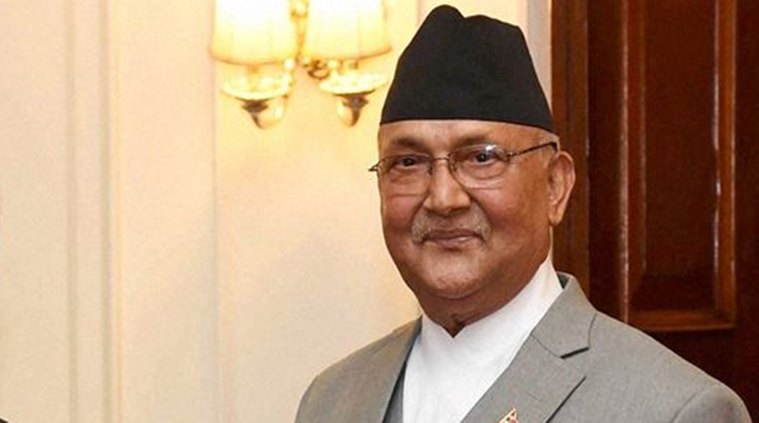 Prime Minister of Nepal KP Sharma Oli
The Nepal government has decided to spend Rs 92 billion (58 bn in Indian rupees) in the last 15 days of the current financial year that ends on July 15. It is Rs 25 billion more than the amount already spent during the year. This money is to be spend on construction and developmental activities during the peak monsoon period.
There is nothing extraordinary about this rush to spend. Corruption in high places is rampant in Nepal and the corrupt have largely enjoyed immunity. The government and major political parties have made “zero tolerance” for corruption a part of their policy. However, the Commission of Inquiry into Abuse of Authority, the anti-corruption constitutional body with sweeping powers, has not moved against anyone who is influential. And a mass mobilisation against corruption looks highly improbable now.

This political consensus to ignore corruption in high places could be because it is transparent and decentralised. Elections to local bodies have not taken place in the past 18 years. Hand-picked local leaders of parties control them and funds are channelised into the local bodies through the ministry of local development. Not surprisingly, questions are not asked about the release of massive funds at the fag end of the financial year.
The government led by K.P. Oli has now announced it will hold elections to the local bodies by December. But without local bodies election laws in place, the election commission is non-committal. The main opposition, the Nepali Congress, has opposed holding elections in December claiming that there is not enough time to prepare. However, the Communist Party of Nepal-Unified Marxist Leninist, that heads the coalition government, is insisting that the election will take place. It also wants to hold elections to the provincial parliament and the centre by December 2017.
The government, especially the CPN-UML, expects to win on a populist plank. However, there are major constitutional and practical hurdles that may derail its plan. The constitution declares the country “federal”, but the government has failed to demarcate the boundaries of seven provinces and name them. Besides some Madhes-centric parties, major political parties like the Nepali Congress, CPN-UML and the Maoists too have different formulae for province formation.
The Maoists, the second largest coalition partner in the government, recognise that Prime Minister Oli and his party will exploit the sops announced in the recent government budget — a 25 per cent hike in the salaries of government employees, 100 per cent raise in social security allowance to the elderly, and allocation of local development funds — to win over the people. Since the youth continue to migrate from the countryside, mainly to West Asia, in search of jobs, the appeasement of the elderly and government employees, many think, could have a direct impact on the electoral outcome. “We should not allow this budget to be passed before the nine-point agreement reached between Oli and Maoist leader Pushpa Kamal Dahal in April is implemented,” says Janardan Sharma, a former minister and an influential leader of the Maoists. The agreement calls for the government to withdraw all cases, including murder, torture and rape committed during the decade-long armed conflict, and legitimise property transaction enforced by the “People’s Government”.
PM Oli signed the deal, apparently, to save his chair as Dahal had threatened to withdraw support. The Truth and Reconciliation Commission, especially its head, Surya Kiran Gurung, has made it clear that no general amnesty can be granted to the Maoists, or anyone involved in the conflict. If the Maoists endorse Sharma’s plea, Oli will have to take tough decisions. Withdrawing cases against the Maoists will go against the past rulings of the Supreme Court and make Oli liable for contempt. However, refusing to honour the deal with Dahal could destabilise Oli’s government.
A populist budget with special favours to different sections of the society, generous allocation of funds to local bodies at the fag end of the financial year, the promise to dole out Rs 1,50,000 to earthquake victims to build houses, and the refusal to act against corruption seem a part of Oli’s strategy to save his government. All these may not guarantee a longer spell for the Oli government, but a hung parliament and another patchwork coalition is likely to create opportunity for more corruption.
 Share
Share


