Hichki director Siddharth Malhotra and co-producer Maneesh Sharma were very conscious of the fact that I am returning to films after my maternity leave. From the beginning, I told them that there would be certain restrictions if they cast me. But they were keen to work with me and assured me that they would work around my schedule — I could shoot only for a certain number of hours and not the whole day. Normally during shoots, a lot of time is wasted and actors sit around for hours. Even when you do a 9-6 shift, you work only for 4-5 hours. My condition was, shoot with me for those 4-5 hours without wasting time and release me before the lunch break. I was happy reporting early in the morning and leaving for home before lunch.

Did you brush up on your skills before you started shooting?
Of course, I had to, especially because I was doing such a challenging role — in Hichki, my character suffers from the Tourette syndrome. It required a lot of mental and physical preparation. After not facing the camera for two years, I thought I might not be able to act. But acting is like swimming, you don’t ever forget it. On the first day, it all came back to me naturally.
How did you prepare for this role?
For Hichki, I had to speak to Brad Cohen (the movie is based on his autobiography, Front of the Class), on whom my role of Naina Mathur is based. He lives in the US and suffers from Tourette’s. Now, he has become the principal of a school there. I did several Skype calls with him and he was very happy that we were doing a film on this subject.
You have phased out your promotions for the film.
That’s because I have to manage my time with my daughter. At the same time, I don’t want to make anyone unhappy. Since I wanted to give the team the time required for promotions, we started a bit earlier. I also wanted to promote the movie the way I shot for it — by putting in a more concentrated effort, even though the hours were comparatively less. I made the same request to the marketing team and asked them to manage my time accordingly.
How essential is it to create a conducive ecosystem for working mothers?
Story continues below this ad
Everywhere mothers are expected to be at home after delivering their baby. No one expects a father to take care of his child. Women are born to nurture and we just want to take care of our kids. I have experienced that with Adira — nothing gave me more happiness than spending time with her. I had a team and a supportive husband who pushed me to work. That was very essential. If you work in a company that values you for who you are and your work, they should make a provision for you to take care of the child and work. In certain countries, even though both parents work, there are day-cares to look after their children. Everyone has to put in a little effort to accommodate working mothers.
Early on in your career you acted in mainstream movies, before veering towards middle-of-the-road films.
Having done my first film at 16, I grew up and became a mature adult, along with my cinema. With my age and changes in my life, those were very organic choices I made. As actors, we pick up the best from what we are offered. It also depended on how writers and director started envisaging me in certain roles. They offered me those and I accepted them.
After glamorous roles in so many films, what made you choose Hey Ram (2000)?
Story continues below this ad
At that point, it was more about working with a genius like Kamal Haasan. You have a bucket list of who you want to work with, and I had always admired his craft. Working with him was an enriching experience. He wanted me to face the camera without any makeup on, and spoke to me about being confident in my own skin as well as being tall by my achievement, and not by physical height. That’s something I followed and managed to break conventions with other movies such as Saathiya (2002) and Yuva (2004).
In 2005, you did two very different roles in Black and Bunty Aur Babli.
Earlier, we used to work on multiple projects at the same time. It so happened, that I shot for Black, Veer-Zaara and Mangal Pandey: The Rising at the same time, working in different shifts. After six months, I was really tired and I left for Temptations world tour, that I did with Shah Rukh. When I returned, I was fully ready to shoot for Bunty Aur Babli — it was like a breath of fresh air after playing three demanding characters.
You are not a trained actor. How did you work on your craft?
Story continues below this ad
When Salim Uncle, as producer, offered me Raja Ki Aayegi Baraat (1997), my father thought I should train under Roshan Taneja. We only had a month before shooting began. I remember Tanejaji telling my father that there was no pill that he can give me to learn acting and it had to come from within. That’s what happened on the first day of the shoot. After I gave my shot, I felt it came naturally from within me. In later years, I went with the flow, the characters and emotions.
When Mardaani released, you spoke about the importance of self-defense for girls. Will Adira be trained too?
Once she is three, I would like to teach her some form of martial arts. Apart from being good for one’s body, it also instills confidence in oneself.
Since Aditya Chopra is so famously reclusive, do you still get asked questions about him?
Story continues below this ad
I have to deal with that. It’s a particular hichki people have. They’re more interested in the husband than the working lady.


 6 min read


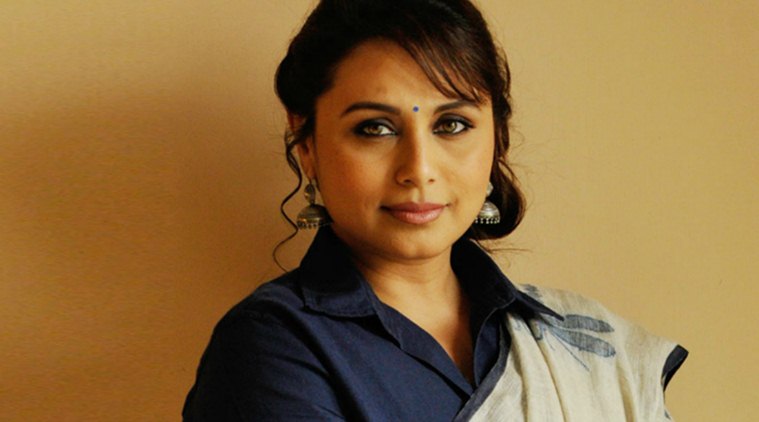 Rani Mukerji will next be seen in Hichki.