4 min read
Stay updated with the latest - Click here to follow us on Instagram
© IE Online Media Services Pvt Ltd



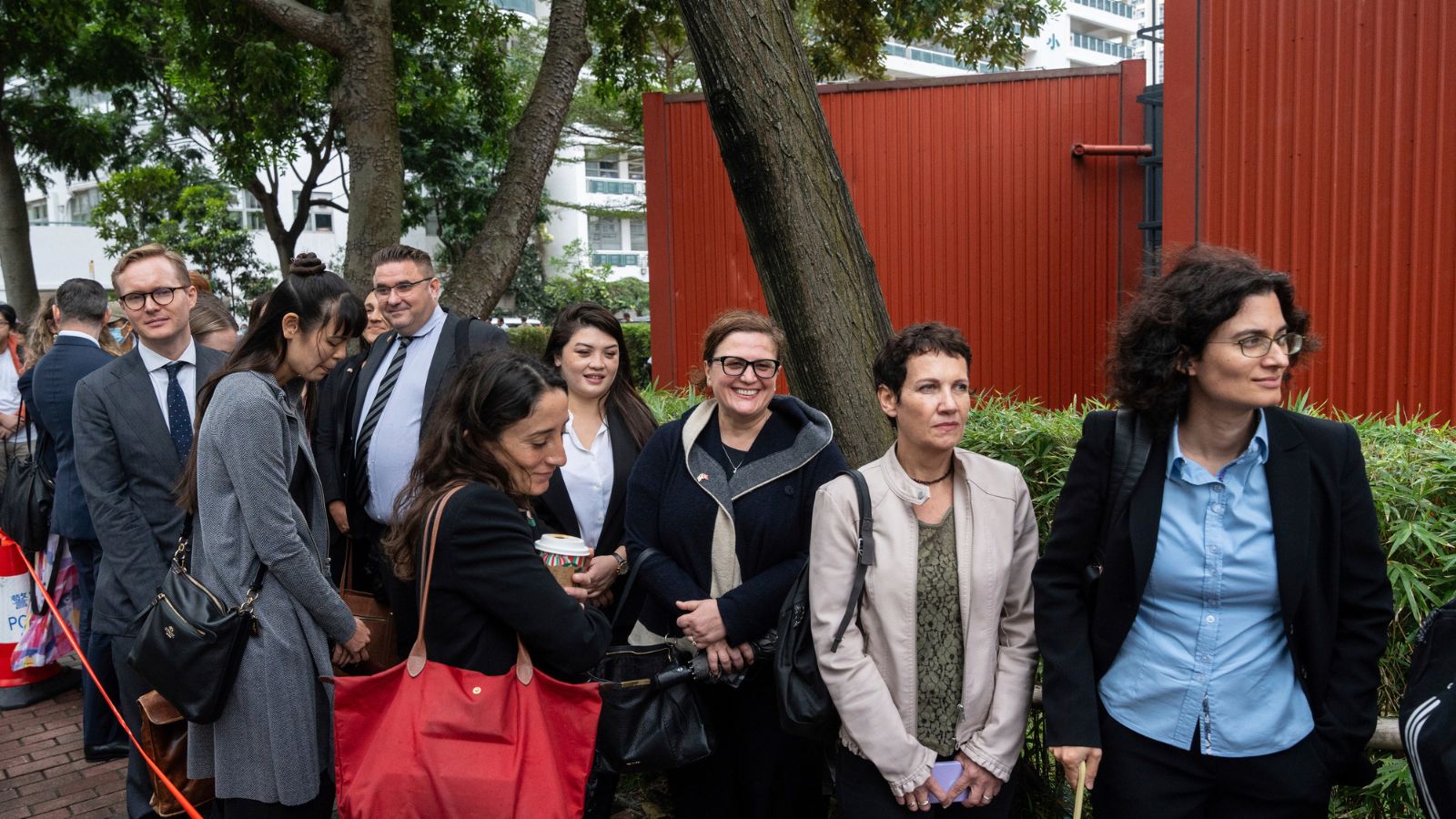 Representatives from various consulates wait in line outside the West Kowloon Magistrates' Courts in Hong Kong Tuesday, Nov. 19, 2024, ahead of the sentencing in national security case. (AP)
In the largest national security case since the imposition of Beijing’s sweeping 2020 law, 45 prominent pro-democracy activists in Hong Kong were sentenced on Tuesday to prison terms ranging from four years and two months to 10 years. Legal scholar Benny Tai received the longest sentence.
The activists were prosecuted in 2021 over their involvement in an unofficial primary election, accused of conspiring to paralyse the government and force the chief executive to resign by aiming for a legislative majority. Prosecutors argued that their plan to block government budgets could have created a constitutional crisis, reported Associated Press.
The case was decided by a panel of three government-approved judges, who ruled that the activists’ actions amounted to subversion. Two of the original 47 defendants were acquitted.
Observers view the case as a stark example of how dissent has been quashed in Hong Kong following massive anti-government protests in 2019. This suppression has extended to media crackdowns and restrictions on elections.
Critics argue it undermines Beijing’s earlier commitment to preserve the former British colony’s freedoms for 50 years after its 1997 return to Chinese sovereignty. Authorities, however, maintain that the national security law is essential for stability in the city.
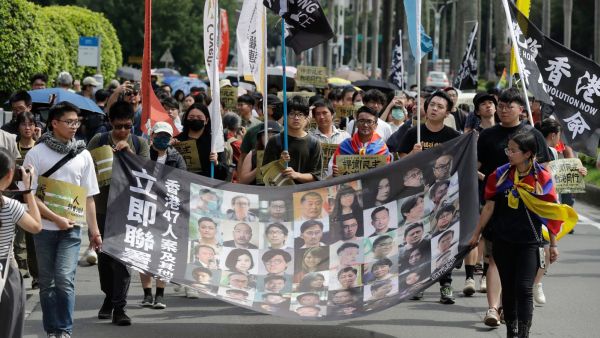 Hong Kong activists and supporters march with a banner which reads ” Unite now in solidarity with the Hong Kong 47 and other political prisoners” during a protest commemorating the 10th anniversary of the 2014 umbrella movement and the fifth anniversary of the anti-extradition law amendment bill movement in Taipei, Taiwan, June 9, 2024. (AP)
The defendants included prominent figures such as Tai, former student leader Joshua Wong, and ex-lawmakers. Most had already spent over three and a half years in detention prior to sentencing, which took a heavy toll on their families.
In court, some activists expressed remorse and apologised, while others remained defiant. Defence lawyers argued that several defendants genuinely believed their actions were lawful at the time. Thirty-one of the convicted had entered guilty pleas, potentially paving the way for reduced sentences under the law’s provisions, which range from under three years for minor offences to 10 years to life for the most serious cases.
The unofficial primary in July 2020 attracted 610,000 voters and was intended to select pro-democracy candidates for the official legislative election. At the time, the movement sought to push for demands stemming from the 2019 protests, including greater police accountability and democratic reforms. However, the government postponed the official election, citing COVID-19 concerns.
On the day of sentencing, more than 200 people queued outside the court despite rain and wind. Among them was Lee Yue-shun, one of the acquitted defendants, who said public interest in the case was vital for Hong Kong’s future.
A supporter known locally as “Grandpa Wong,” estimated to be about 100 years old, expressed his wish to see the convicted activists again. “I fear I may not live to see them when they are released,” he said, as reported by AP.
Clarisse Yeung’s friend, Wei Siu-lik, arrived at 4 a.m. despite an injured leg. “I wanted them to know there are still people here for them,” she said.
The case highlights how Hong Kong’s pro-democracy movement has been fundamentally reshaped under the national security law, with long-term implications for the city’s political landscape.
(With inputs from AP)
Stay updated with the latest - Click here to follow us on Instagram