6 min read


📣 For more lifestyle news, click here to join our WhatsApp Channel and also follow us on Instagram
© IE Online Media Services Pvt Ltd



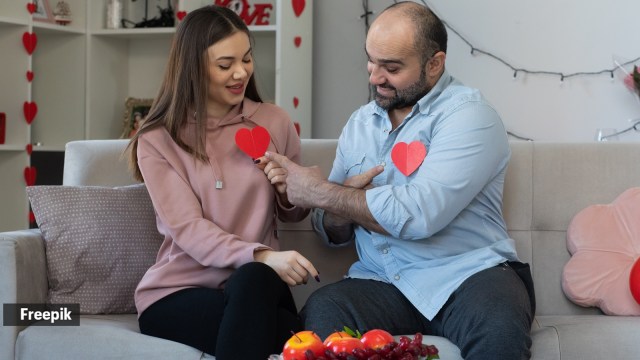 Meeting a partner with the same condition cultivates much more understanding in the relationship (Photo: Freepik)
In the heart of Mumbai, amid the city’s relentless bustle, a love story unfolded between two people who wore insulin pumps with pride.
Aarav and Isha (names changed), both in their mid-20s, had lived with Type 1 diabetes for over a decade. Their paths crossed not in a café or classroom, but in a support group run by one of India’s leading diabetologists. It was a safe space where young adults on insulin pumps shared experiences and fought the daily glucose battle together.
Aarav, sarcastic, cracked jokes about CGMs and carb-counting; Isha was quieter, methodical, always taking notes. Their friendship deepened as they messaged outside the group, discussing basal rates and boluses. When Aarav was hospitalised with diabetic ketoacidosis in a life-threatening emergency, Isha never left his side. During his recovery, she proposed: “I don’t want to be your diabetes buddy anymore. I want to be your everything.”
They married in 2018, and now, they mark each anniversary with a visit to their diabetologist, Dr Rajiv Kovil, head of diabetology at Zandra Healthcare and co-founder of the Rang De Neela Initiative, where they first met.
“Both had faced rejection in arranged setups because of their condition. Some couldn’t understand the midnight alarms, others feared the ‘complications’ of living with such a partner,” Dr Kovil told indianexpress.com. “They’d begun to wonder if love was even possible for people like them. Now they share bolus calculators, and a beautiful life.”
 Here’s what to note (Photo: Getty Images/Thinkstock)
Diabetes is a long-term condition where the body cannot process glucose properly, leading to high blood sugar levels. In type 1 diabetes, the pancreas produces little to no insulin because of an autoimmune response. “It typically starts in childhood or adolescence and requires insulin therapy for life,” said Dr Pranav Ghody, consultant endocrinologist and diabetologist, Wockhardt Hospitals, Mumbai Central. Type 2 diabetes, more common in adults, is often associated with insulin resistance, where the body does not respond well to insulin. It is affected by lifestyle and genetics and is often managed with oral medication, lifestyle changes, and sometimes, insulin.
India’s diabetic couples: Matching on insulin and empathy
India has the highest number of children and adolescents with Type 1 diabetes, according to the International Diabetes Federation. And with over 100 million diabetics overall, the country is often referred to as the “Diabetes Capital of the World.” Amid this alarming reality, some couples are choosing life partners who know the condition intimately, because they live with it too.
Vaishali and Neel Vakil, both Type 1 diabetics, met through an arranged match in 2003. “For us, diabetes was the primary eligibility criterion,” said Vaishali, now a certified diabetes educator from National Diabetes Education Program (NDEP) and Indian Society for Pediatric and Adolescent Endocrinology (ISPAE). “I was already checking blood sugars multiple times a day. After we got engaged, Neel learnt diabetes self-management and kept his levels in range.”
The couple also shares a love for adventure sports and exercise. “He’s into cricket, I prefer yoga and long walks,” she said.
But the shared diagnosis doesn’t make life easy. “If one of us has a hypo episode, the other knows how to respond immediately,” she added. “We’ve learnt to take care of each other.”
When traditional matchmaking doesn’t work, diabetic-only matrimony platforms step in
For many diabetics, finding a partner in conventional matrimonial settings is daunting. That’s what led Harsh Shah, a Type 1 diabetic, to launch Diabliss Matrimony in 2023, an online platform where diabetics can look for partners without stigma.
“I was looking for a life partner myself and realised how hard it is,” said Harsh. “So, I started a WhatsApp group with other diabetics. It grew fast. Today, we’ve helped over 16 couples get married.”
Here’s what to note (Photo: Getty Images/Thinkstock)
The platform now has over 400 members, and their website diabeticmatrimony.in lists more than 350 active profiles. While registration is free, a nominal fee is charged to access contact details, with KYC verification for privacy.
That’s where Rinkal Patel, 26, met her husband Virag, 28, both Type 1 diabetics. “I was rejected multiple times,” Rinkal said. “Society still hesitates to accept someone with diabetes, due to concerns over pregnancy, medical costs, or complications. But when both partners have it, there’s more empathy, less fear.”
Another couple, both 27, who recently got engaged, echoed the sentiment: “Life with diabetes is not so different from anyone else’s, except that we don’t fear accountability. We support each other fully.”
How couples with diabetes support each other
“Diabetes doesn’t just affect individuals, it affects relationships,” said Dr Ghody. “The key is partnership.”
Dr Chandni Tugnait, psychotherapist and founder of Gateway of Healing, said, “Like any challenge, whether financial or emotional, chronic illness requires adaptability. Managing diabetes requires adjustments, but teamwork and open communication are key to overcoming these hurdles together,” said Dr Tugnait.
Here are expert-backed ways to help future couples support each other:
Adopt routines together: Shared meals, regular walks, or fitness classes help both partners stay healthy and connected.
Avoid ‘food policing’: Respect autonomy. Support without control.
Do diabetes management as a team: Attend doctor visits together, help with insulin adjustments, and celebrate small wins.
Offer emotional check-ins: Diabetes burnout is real. A quiet “How are you feeling today?” can go a long way.
Be patient during sugar episodes: React calmly, offer quick help, and avoid blame.
Because in the end, what these couples prove is this –– love doesn’t just live in sweet moments, sometimes, it lives in blood sugar charts, 2 am, glucose checks, and a partner who always knows where the glucose tablets are.