6 min read
© The Indian Express Pvt Ltd



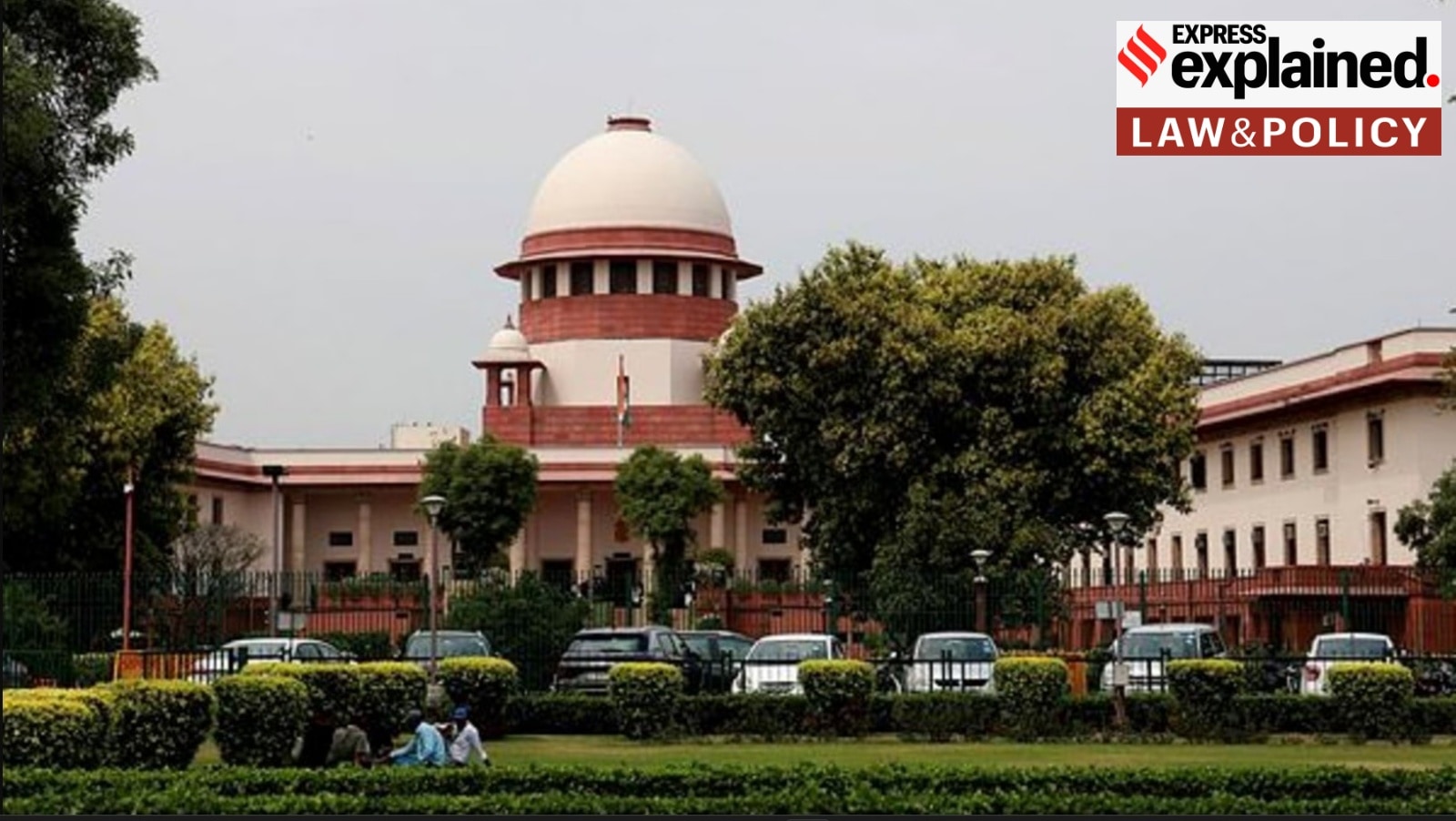 This is the second time in as many years that Harish Rana's parents have approached the Supreme Court seeking passive euthanasia for him.
The Supreme Court has asked AIIMS, New Delhi, to set up a secondary medical board to examine 32-year-old Harish Rana, who has been in a vegetative state for the last 13 years, so that it can take a call on a request for passive euthanasia.
This is the second time in as many years that Harish’s parents have approached the Supreme Court seeking passive euthanasia for him.
A bench of Justices J B Pardiwala and K V Viswanathan directed that the report be submitted to it by December 17, and fixed the matter for hearing on December 18. “We will have to do something now. We can’t allow him to live like this. That’s for sure,” said Justice Pardiwala on Thursday (December 11).
This is the latest legal movement in a case that has been at the centre of the debate around the ethics and law that defines passive euthanasia — withdrawing life-supporting treatment to allow a person to die naturally.
In 2018, a five-judge constitution bench of the SC recognised passive euthanasia and laid down conditions and safeguards regarding the execution of such a living will. In January 2023, the court modified the order to make it more workable and less stringent.
In 2011, the Supreme Court for the first time recognised the legality of passive euthanasia in the case of Aruna Ramchandra Shanbaug v Union of India.
After being sexually assaulted by a ward attendant of Mumbai’s KEM Hospital in 1973 and suffering a brain injury in the process, nurse Aruna Shanbaug was left in a ‘persistent vegetative state’ for decades, with no possibility of recovery. Journalist and author Pinki Virani, who wrote a book on Shanbaug, filed a petition at the Supreme Court in 2009 seeking an end to the life-supporting treatment the hospital was providing to Shanbaug, arguing that she should be allowed to die peacefully.
The court, while ruling out passive euthanasia in this case, held that Shanbaug was still alive as she did not require life support. However, the court recognised the legality of passive euthanasia, though it clarified that this could only be done with the approval of a High Court.
In 2018, the Supreme Court recognised the legality of ‘passive euthanasia’ for terminally-ill patients, holding that the ‘right to die with dignity’ forms a part of the right to life under Article 21 of the Constitution of India. The court also laid down detailed guidelines for passive euthanasia, both in cases where the patient left an ‘advance directive’ or a ‘living will’ stating that life support should be withdrawn if they fall terminally ill, and in cases where no such directive was left behind.
Among the guidelines was the condition that the living will must be signed in the presence of two witnesses and signed by a Judicial Magistrate. The guidelines also called for multiple approvals before the terminally ill patient’s case is cleared – from the treating physician, a suitably qualified medical board, and another external medical board, with representation from the local administration.
In the case of patients without a living will, the family has to give their consent for withdrawal of life support. In 2019, the Indian Society of Critical Care Medicine filed an application for modifying these guidelines, stating that they were cumbersome and unworkable.
In 2023, another five-judge bench allowed the guidelines to be modified in a number of ways. This included introducing timelines for each board to make a decision, and limiting the involvement of the Judicial Magistrate.
In July 2024, the Delhi High Court turned down the Harish’s parents’ plea for passive euthanasia for their son, saying he was not being “kept alive mechanically and he is able to sustain himself without any extra external aid”.
And the next month, the Supreme Court too declined their plea, with a CJI-led bench ruling that Harish’s was not a case of “passive euthanasia” as he was not completely dependent on life-support machines. The court, however, said it was “moved by the plight of the family”.
The top court has now acceded to a plea by Harish’s parents for constituting a medical board to examine if this was a viable case for passive euthanasia.
Since his fall from the fourth floor of a building in 2013, Rana has been in a ‘permanent vegetative state’, suffering from quadriplegia with “100% disability in relation to his whole body”, according to his hospital records.
According to medical experts, the financial implications are often drastic for patients in a vegetative state. Speaking of the tough decisions families are forced to make while caring for a terminally ill patient, Dr Bhavani Prasad Gudavalli, Head of the Critical Care Department at CARE Hospitals, Banjara Hills, Hyderabad, said, “It’s not as if they (the families) don’t have compassion, but when the finances come into play and you tell them that the financial implications are very high and the chance of recovery is very low, then the family will often want to withdraw treatment.”
What the court has said on the case now
On November 26, the apex court asked the Noida District Hospital to constitute a Primary Medical Board to examine Harish so that it could decide on his father Ashok Rana’s plea for permission to withdraw his medical facilities.
The court, which perused the letter, said, “The bare reading of the letter would indicate that Harish is in a pathetic condition. He was found to be lying on a bed with tubes for respiration and feeding. The photographs attached with the letter would indicate that he has suffered huge bed sores. The team of doctors are of the opinion that the chance of his recovery from the present state is negligible.”
The bench said Harish “appears to be in this condition for the past 13 years” and that “in such circumstances…we should now proceed to the next process.”