4 min read
© The Indian Express Pvt Ltd



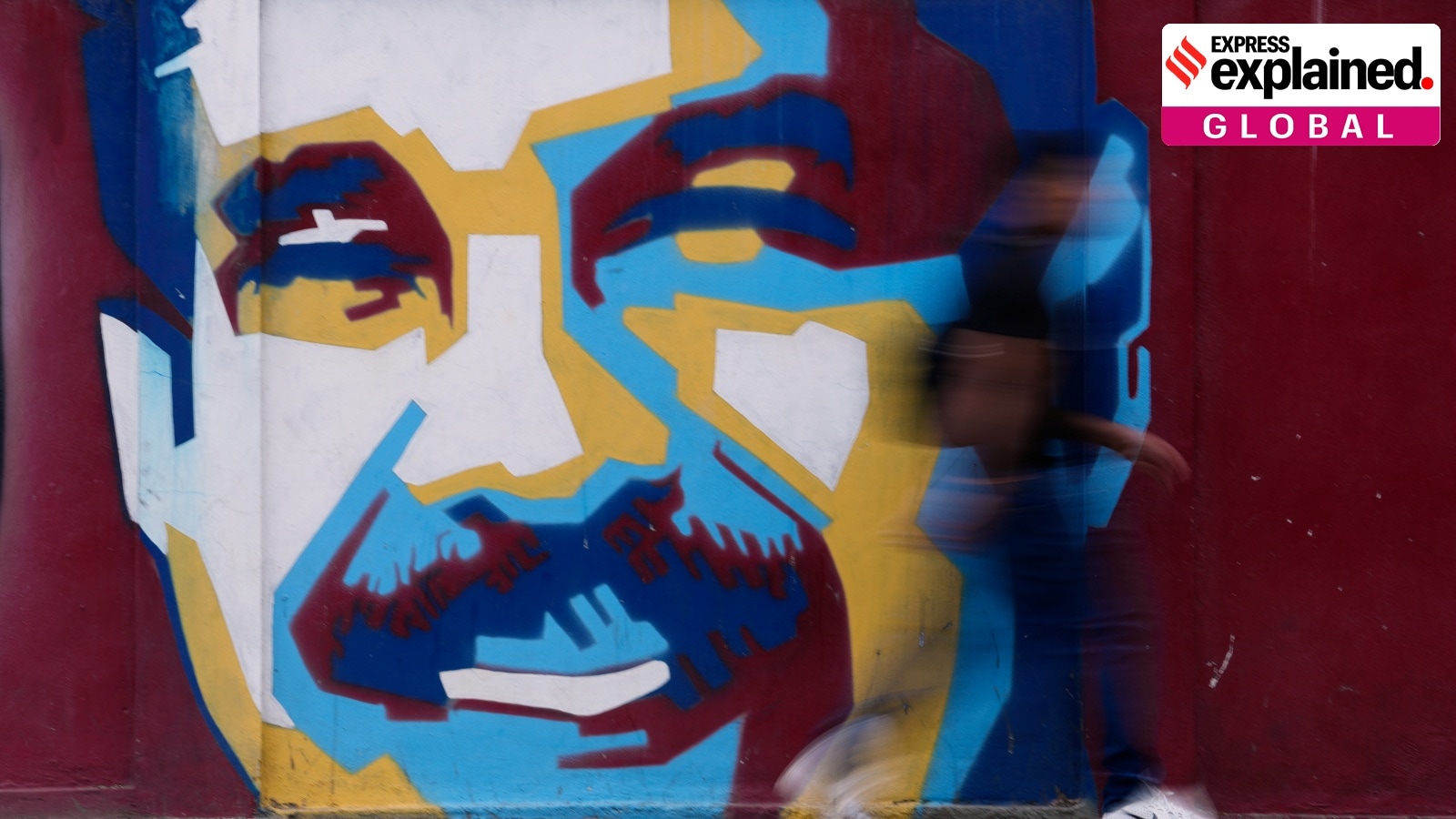 A pedestrian walks past a mural of Nicolás Maduro on Sunday. (Photo: AP)
Ousted Venezuelan leader Nicolás Maduro on Monday (January 5) pleaded not guilty in a New York court to drug, weapon, and conspiracy charges brought by the government of the United States.
During a brief arraignment, Maduro, in Spanish, said that he had been “kidnapped” and was a “prisoner of war”. “I am a decent man, the president of my country.”
The prosecution has accused the leader, his wife and son, and their accomplices of engaging in a cocaine-trafficking conspiracy and partnering with cartels designated as terrorist groups. The allegations seem to rely on intelligence and other witness testimony gathered over the course of decades. Maduro’s defence team will, of course, seek to discredit the allegations and witnesses.
Legal experts suggest that it could take years for the case to go to trial, especially since the prosecution’s allegations are partly based on classified information.
Also, Maduro’s claim of being a prisoner of war could add another layer to the complexity of the case.
Allegations against Maduro
According to the 25-page indictment, since 1999, when Maduro was first elected to public office, he, his wife, Cilia Flores, his son, Nicolás Ernesto Maduro Guerra, and his fellow indicted Venezuelan leaders participated in a “relentless campaign of cocaine trafficking”.
Hector Rusthenford Guerrero Flores, aka “Niño Guerrero,” a purported leader of the Tren de Aragua gang in Venezuela, has been indicted in the case. Note that President Donald Trump has accused Tren de Aragua of carrying out violence in the US. He has also accused Maduro of having ties with the gang. However, the indictment does not mention any specific link between the ousted President and Flores.
Maduro and his co-conspirators “facilitated the empowerment and growth of violent narco-terrorist groups fueling their organizations with cocaine profits,” including by providing “law enforcement cover and logistical support for the transport of cocaine through Venezuela, with knowledge that their drug trafficking partners would move the cocaine north to the United States,” according to the indictment.
For instance, between 2006 and 2008, when Maduro was the foreign affairs minister, he sold diplomatic passports to those he knew were drug traffickers in a bid to move drug proceeds from Mexico back to Venezuela “under diplomatic cover”, the indictment alleged.
Prosecutors allege that Maduro’s wife, who was the leader of Venezuela’s National Assembly, accepted hundreds of thousands of dollars in bribes, including kickbacks for the safe shipments of drugs.
His son is accused of regularly visiting Margarita Island off the coast of Venezuela on a plane with packages that are believed to contain drugs.
Maduro as a ‘prisoner of war’
Maduro, on Monday, claimed to be a prisoner of war in the court, signalling that his capture was not a law enforcement operation but a military action.
This is significant, as if a person is a prisoner of war, then their treatment is dictated by international law and the Geneva Convention. A report by The New York Times said, “Although a prisoner of war’s movements may be limited, they may not be held in close confinement, unless necessary for their safety, according to the convention. They are generally released at the end of a conflict, rather than being sentenced to a defined sentence by a judge. And, crucially, they do not face any accusation of personal guilt.”
On the other hand, a criminal defendant has to face accusations of personal wrongdoings and a trial under civilian laws.
Experts suggest that even if Maduro invokes international law, most likely his case would be decided as a criminal case. However, it may pose some obstructions during the hearing.
Daniel C Richman, a Columbia Law School professor, told The NYT, “A fundamental assumption of criminal cases is that the defendant will, at least provisionally, admit to the jurisdiction of the court and comport himself accordingly… And when you have somebody who completely resists that, it could be pretty obstructive.”