6 min read


© The Indian Express Pvt Ltd



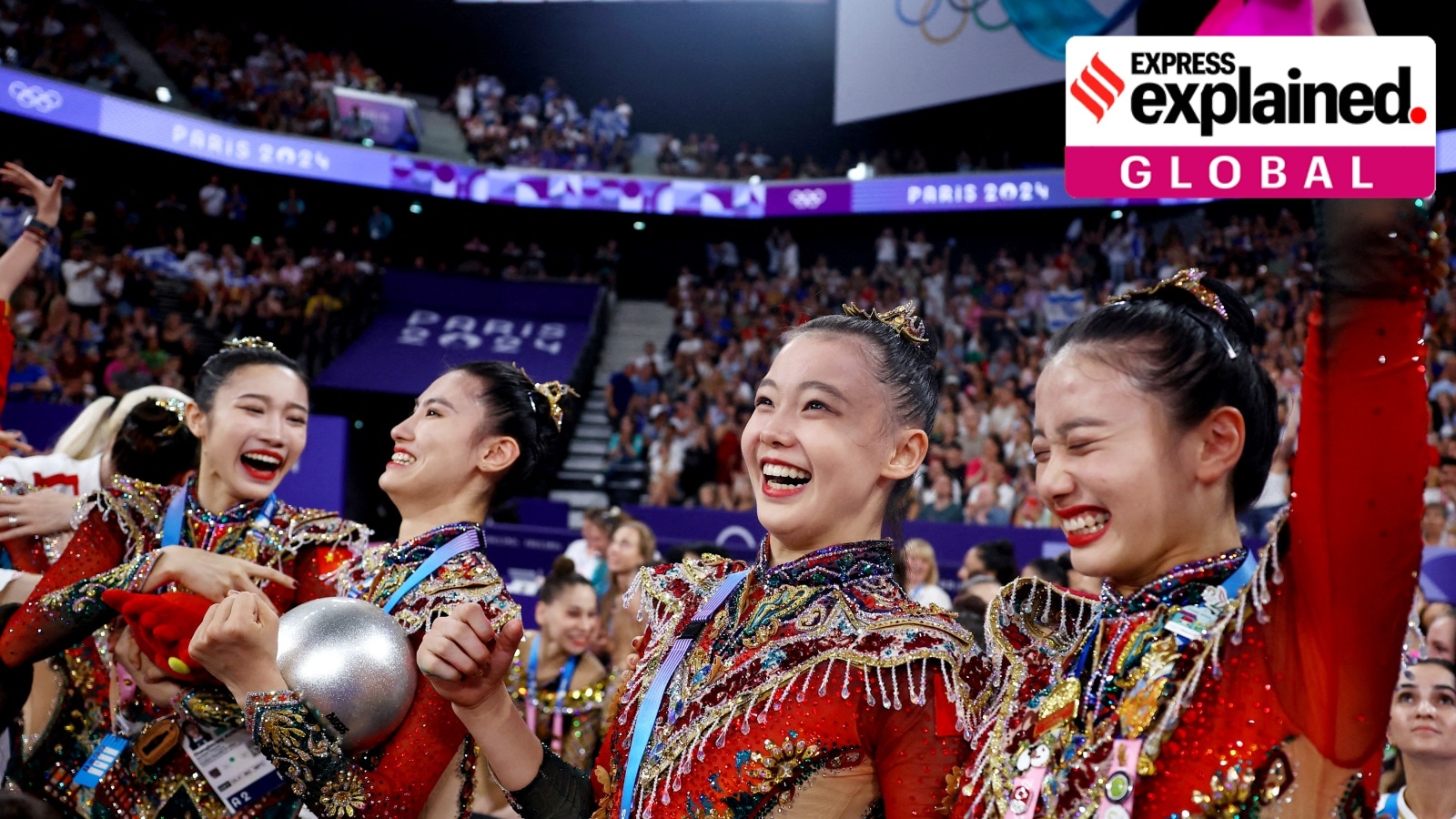 Team China celebrate winning gold in Group Rhythmic Gymnastics in the Paris Olympics. (REUTERS/Hannah Mckay)
The Closing Ceremony of the 2024 Paris Olympics will be held on Sunday (August 12) at 12.30 am, bringing 19 days of competitions to an end. The United States led the table with 125 medals while China equaled the US in gold medals, with each country winning 40.
For a long time, the People’s Republic of China (PRC) did not compete in the Olympics as it opposed the International Olympic Committee’s (IOC) recognition of the Republic of China (Taiwan). Most Western, non-communist countries recognised Taiwan as the official representative of China in international arenas then, including the United Nations.
In 1979, the same year China established diplomatic ties with the US and ended its recognition of Taiwan, a pact was signed so that both China and Taiwan could compete at the Games. The PRC’s first Summer Olympics was the 1984 Los Angeles Olympics, where it won 32 medals and 15 of them were gold.
Since then, China has been among the top-performing countries at the Olympics. Its success has been the result of deliberate policies. For the ruling Communist Party too, the event has been seen as key to its global perceptions.
Systemic focus on sports, with pitfalls
China began competing in the Olympics at a time when its economy was undergoing a monumental shift. In 1978, under President Deng Xiaoping, its economy was opened to the world. Before this, large sections of the population struggled with poverty, particularly in non-coastal and rural areas.
At an early age, children were encouraged to enroll in sports like gymnastics and table tennis at specialised training institutions. For parents from poorer and rural backgrounds, these centres were attractive options as they provided food and other necessities.
While the rigorous training produced results and medals, the pressure on athletes to win “for the country” took its toll on many. There were also cases of state-sanctioned doping. The small odds of success as a professional athlete meant that children, who spent their youth engaged in sports rather than school, often struggled to find alternative career opportunities later in life.
A party committee secretary at one such institution told Reuters in 2016, “In the 1980s and 1990s, schools like ours were extremely attractive. (But) parents are less willing now to send their children to sports schools if they perform fairly well in exams…The source of students for sports schools has shrunk as society placed more importance on cultural education.”
In 2010, a new policy was introduced to relax some rigid systems, such as the requirement to stay on campus for training. According to the state-owned media outlet Global Times, there has been an “integration of sports science, nutrition, and psychology into training regimens,” with a focus on providing “comprehensive support systems.”
For many Chinese leaders in the Communist party, the country’s entry on the world stage in the 1970s and 1980s had to be cemented through membership in international organisations, including the Olympics. However, not all leaders were in favour.
Conservative veteran leaders opposed opening up the economy and other transformative measures being undertaken by reformists like Deng Xiaoping. Marcus P Chu, assistant professor in the Department of Government and International Affairs at Lingnan University, Hong Kong, wrote in his book Greater China’s Olympic Medal Haul: Beyond Sports Excellence, “The Chinese economy skyrocketed in 1984 and 1985. Deng was thrilled and endorsed the reformists’ idea that China should seek to host the 2000 Summer Olympics.”
But the student-led protests at Tiananmen Square in 1989 led to a fall in the reformists’ standing within the party. The conservatives blamed them for introducing radical changes, which were deemed responsible for anti-communist protests. As a result, reformist plans like hosting the Olympics were shelved.
In the following years, the original goal of integrating with the global community through sports again came up, when China’s economic rise attracted scrutiny over its record on press freedom and human rights violations. Even conservative factions began to believe that “sport could be leveraged to restore public confidence in the communist regime and improve China’s international image”, Chu wrote. In 1990, Beijing hosted the Asian Games and 18 years later, it would host the Summer Olympics with a lavish opening ceremony.
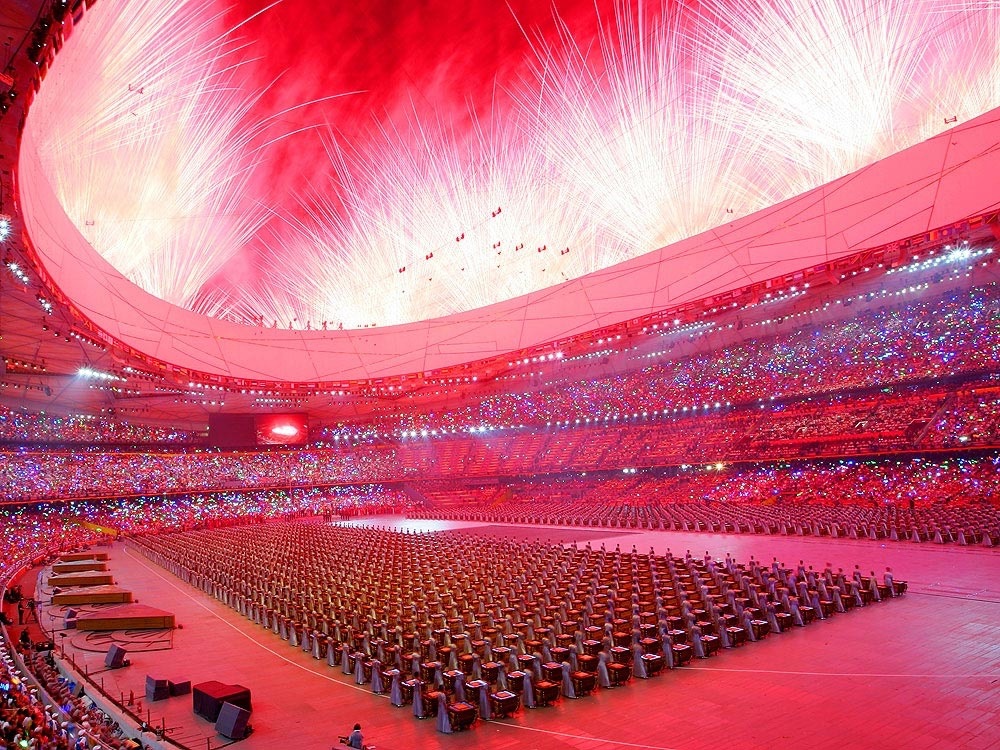 The Beijing Olympics opening ceremony from 2008. (Via Wikimedia Commons)
President Hu Jintao, who assumed office in 2003, also believed that an impressive medal haul in the 2004 Athens Olympics could “serve as a useful means to encourage the public, under government orders, to work toward rapid economic growth, transform their motherland into a prosperous society, and pursue national rejuvenation.”
“National rejuvenation” is a key concept in China, framed against its colonial subjugation at the hands of Japan and Western powers in the 19th and 20th centuries. It speaks of rising as an economic superpower, being prominent on the world stage, and invoking the “five-thousand-year” history of the ancient civilization to emerge from the “humiliation” of colonisation.
From the perspective of President Xi Jinping too, making Beijing the first city in the world to host both the Summer and Winter Olympics was part of this idea, prompting the successful bid for the 2022 Winter Olympic Games.
However, the success of this strategy may be limited today, when information on China is more easily accessible and frequently available to global audiences. Many international journalists compared the 2008 and 2022 Olympic Games in Beijing, noting a more restrictive atmosphere in the city during the latter. For many, this corresponded to trends towards a more authoritarian state in China under Xi.