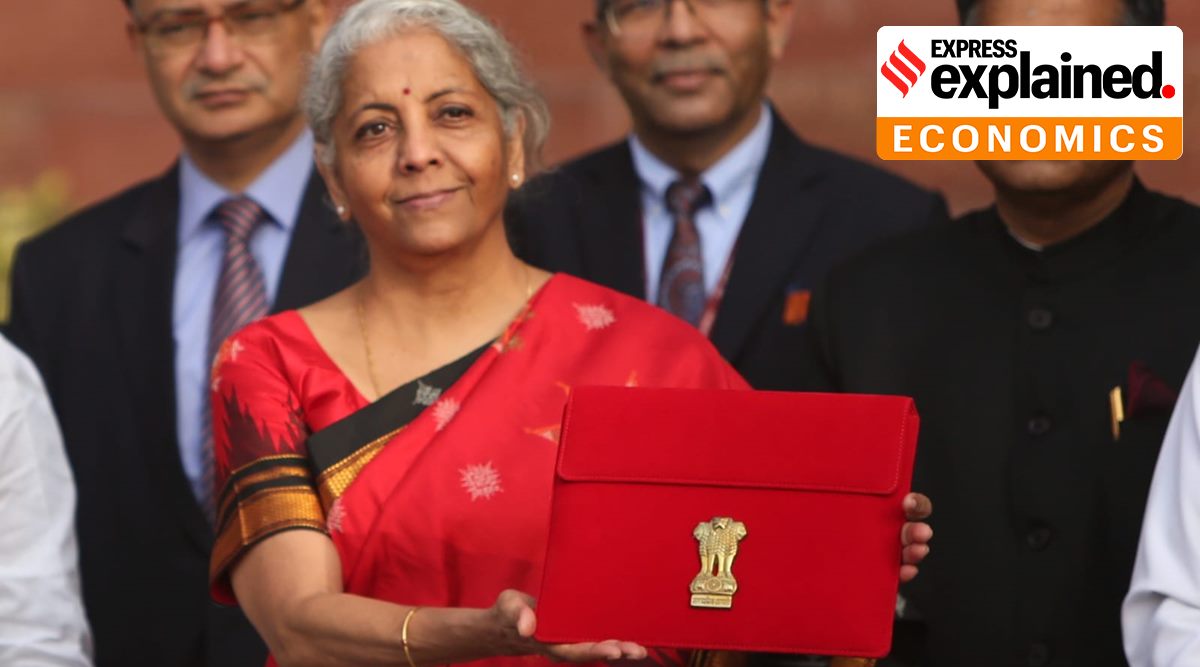
In less than half an hour from now, Finance Minister Nirmala Sitharaman will rise in Parliament to present the Union Budget for the financial year 2023-24. This is an important Budget, the last full Budget before the Lok Sabha elections of 2024, and coming at a time of moderating but still high inflation, and as the Indian economy continues to emerge from the shock of the pandemic.
Every year, Finance Ministers juggle with a bouquet of competing choices. On the macro side, there are those who believe that the Budget should focus on increasing government expenditure to boost economic growth; others are more worried about an increase in the fiscal deficit. Some others point to the gap in actual revenues accruing to the government, which constrains its ability to spend.

There are also economists who worry about the Budget numbers themselves, and argue that the first thing on the list should be to reduce the gap between numbers projected in a Budget and the real scenario.
So how does an FM go about deciding what to do in the Budget?
One way to answer this question is to go through the process of Budget-making. What are variables an FM has to work with, and what are the constraints she faces?
Speaking to The Indian Express in the past, Prof N R Bhanumurthy, Vice-Chancellor of Dr B R Ambedkar School of Economics University, Bengaluru (BASE University), had said that the nominal gross domestic product (GDP) — essentially the value of all goods and services produced in the country at current market prices — should be considered the most fundamental building block of a Budget.
“I always call nominal GDP the Lord Ganesh of the Budget,” Bhanumurthy had said. “That’s because without knowing the absolute amount of nominal GDP for the current year, there is no way one can make the Budget for the next year.”
The Budget is in essence the financial plan of the Union government for the next financial year. Essentially, it is an exercise in determining to what extent the government can exceed its expenditure over its revenues, given that it is required to meet a fiscal deficit target that is provided by the Fiscal Responsibility and Budget Management Act (FRBM) Act.
Story continues below this ad
The fiscal deficit is the level of borrowing that a government does in a year. Targets for the fiscal deficit are set in terms of “percentage of nominal GDP”. In other words, if the nominal GDP is higher, the government can borrow more money (in absolute terms) from the market to fund its expenditure.
But without knowing the nominal GDP for the current year, the government cannot project what the nominal GDP is likely to be in the next financial year. Without clarity about the absolute level of nominal GDP, the government can neither estimate the absolute amount of fiscal deficit it must not breach nor can it estimate how much revenues it will get in the coming year. And without knowing the absolute revenues it is likely to get, it cannot promise or decide how much it should spend and on which scheme.
So the first thing to understand is the importance of nominal GDP. It is the nominal GDP growth that an FM targets, not the real GDP growth.
But if that is so, why are growth rates of real GDP always taken into account, rather than nominal GDP?
Story continues below this ad
It is true that real GDP is the variable that is used for comparing the economic growth of countries. And there is a good reason for it.
The real GDP growth is derived by subtracting the rate of inflation (that is the rate at which prices are increasing in an economy) from the nominal GDP growth rate. By doing this, real GDP growth provides a better picture of economic growth between countries that may have differing levels of inflation.
Suppose in an economy that only produces apples, the total number of apples do not increase from Year 1 to Year 2, but the price of apples in this economy grows by 10%. In such a case, nominal GDP growth would be 10% but all of it would be due to the rise in prices, not actual production. Real GDP growth (in this case, 0%) would show this lack of production growth as it would remove the effect of inflated prices from nominal GDP.
But contrary to public perception, no one targets the real GDP growth rate. Bhanumurthy explained: “The real GDP is a derived number. The government, through its fiscal policy, targets nominal GDP and the RBI, through its monetary policy, targets inflation rate. The interplay of these two variables provides real GDP growth”.
Story continues below this ad
For the purposes of the budget-making, it is the nominal GDP number that is the actual observed data. It is with this data as the foundation that the whole edifice of the next year’s Budget is constructed.
So, what are the key steps in the calculation of the Budget?
There are broadly five steps that the arithmetic goes through.
* First, the Finance Ministry ascertains the nominal GDP of the current financial year.
* Second, it takes this number and “projects” the likely nominal GDP for the coming year. In the “Budget at a Glance” document that is supplied at the time of the Budget presentation, the government mentions this calculation.
Story continues below this ad
* Third, given the nominal GDP, the government looks at the FRBM Act target and figures out the absolute level of fiscal deficit (or borrowings or the difference between the expenditure and revenues) that it can have.
* Fourth, after it has a sense of how the overall economy will do in the coming year, the next logical step for a government is to figure out how much revenue it would get. The absolute amount of revenues that the government will get is calculated by looking at revenue buoyancy. A buoyancy of 1 would mean that if the nominal GDP increases by, say, 12% in the next year, the tax revenues would also increase by 12%.
* Next, once the government knows what its revenues are likely to be and its maximum allowable fiscal deficit, it goes about determining the level of expenditure. The idea is to contain the level of total expenditure in such a matter that fiscal deficit is not breached.
* Finally, after the government has the fix on the total expenditure, it can go about allocating the absolute amount of money that is to be spent on different schemes.


 7 min read


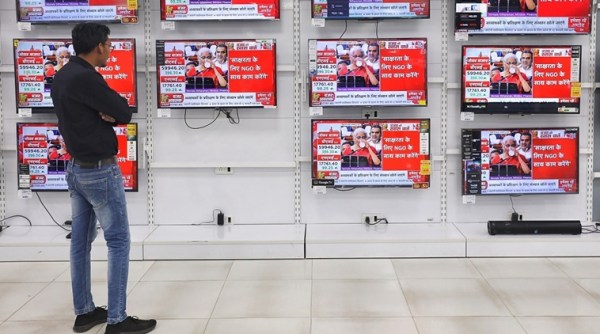 A sales representative of an electronics store watch the live telecast of Union budget 2023 on Wednesday in Ahmedabad. Express photo by Nirmal Harindran, 01-02-2023, Ahmedabad.