Journalism of Courage

Price rises are spreading across more goods and services, with nearly half of India's household consumption basket recording inflation above 4% in September, compared with just 16% in January.

The Great Depression prompted policymakers to advocate government intervention in economic crises. Robert E Hall and Michael Woodford's work refines that idea.

How 2026 Nobel Economic laureates, Robert Hall and Michael Woodford, grounded macroeconomics in real, human choices and why central banks and governments today can't make do without.
Charges like last-minute fees present multiple contradictions, including hiding the real cost of goods and services until the final step of checkout.
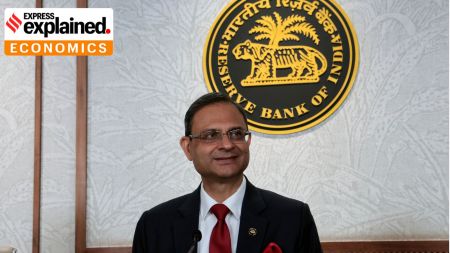
The Reserve Bank of India’s latest measures to support the rupee are seen as limiting speculative and structural demand for dollars.
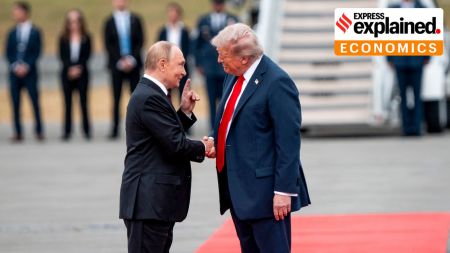
Trump’s decision to facilitate Russian diesel imports into the US is drastically at odds with the rationale Washington has used thus far to target India.
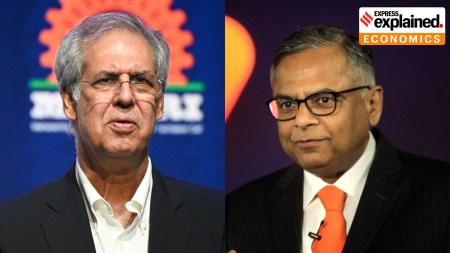
The dispute within Tata Sons, which is majority-owned by Tata Trusts, may prompt many family-owned businesses to rethink how much control a majority stake actually gives them over board decisions.

Any US measure to make CBAM more flexible could help Indian exports. This is because a clause in India’s trade deal with the EU allows Indian exporters to receive the same concessions offered to Washington.
RBI has raised its growth forecast to 7.1% for this financial year. Over the years, actual growth has repeatedly diverged from professional forecasts. What explains the gap?
Indian IT stocks rose despite the US PERM suspension, as reduced H-1B dependence, local hiring, beaten-down valuations and resilient earnings supported investor sentiment.

Experts said that India being part of the joint statement, which came amid the US’s Section 301 investigation on overcapacity, could mean that the US Trade Representative may not proceed with proposed tariffs on India under Sec 301.

GST’s next big change is not about rates, but about how businesses deal with the tax system — from registration and refunds to exports, e-commerce and arrests.

India is revisiting its bilateral investment treaty framework after terminating dozens of pacts a decade ago. New agreements show greater flexibility on when foreign investors can seek international arbitration.
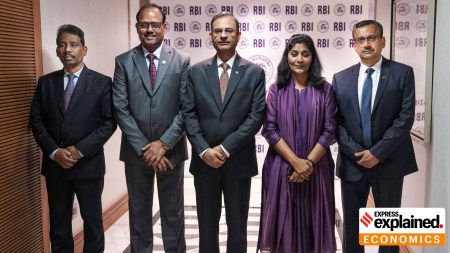
RBI is likely to tighten the monetary policy with a series of rate hikes if the situation on the price front doesn’t improve in the coming months. This means interest rates on loans will increase further, which in turn can dampen the demand conditions in the economy.

When RBI raises the price of money, borrowers pay — through higher EMIs, longer loan tenures, bigger down payments, and delayed dreams of home ownership. How is that? We explain.

Account aggregators are NBFCs that act as a secure bridge for banking data, allowing lenders to access all relevant data swiftly for faster loan disbursements, or manage consent for other companies attempting to fetch your data.
The RBI has tightened its stance from "neutral" to "calibrated tightening". But neither inflation figures nor the central bank’s own forecasts have changed dramatically since August. So what explains the shift?

Diesel is among the most important petroleum fuels globally due to its use in transportation, agriculture, construction, and other industries. This also makes it the most politically sensitive fuel amid the ongoing geopolitical crises.

The combination of El Niño and Russia-Ukraine war, coupled with aggressive biofuel mandates by major producers such as Indonesia, is impacting this commodity the hardest.
Most analysts expect the RBI to raise the policy rate, repo rate, by 25 basis points (bps) to 5.50%, potentially marking the beginning of a more aggressive rate-hiking cycle. Here is why.

India and the US have already signed a trade deal framework in February. So why is the US trade representative now saying that a deal is not imminent?
The boom in clean energy capacity is outpacing the infrastructure needed to support it. We explain why grid stability is becoming a concern, and how battery storage can help address these challenges.

Higher yields on US government bonds signal higher borrowing costs not just for the US but also for other governments and businesses. This is why rising bond yields are bad news in the current context.
From April 2027, carmakers will be judged on the efficiency of their overall vehicle portfolios rather than individual models. The final rules also reshape how weight and powertrains affect compliance.
While Essar Group’s investment pledge is one of the largest in the last few months, several Indian companies are boosting investment in the US. These include JSW Steel and Sun Pharmaceutical. What's behind this?