


Tags:


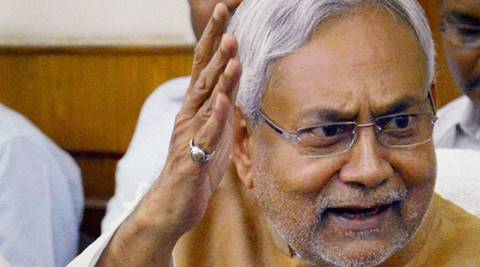

If anyone wants to engage Bihar Chief Minister Nitish Kumar in a good, long talk these days, the topic has to be about the liquor ban. When a group of journalists asked the chief minister about the second phase of the liquor ban, he did not drop any hints but said: “I will wait more about liquor on Tuesday after cabinet meeting”.
Yet, no one had a clue that he would announce a ban on IMFL within just five days of announcing the ban on country-made liquor.
This time, however, even Nitish would have surprised himself. He had been receiving an overwhelming feedback since the last one week.

“Can you imagine that people are calling us to give locations of storage of liquor? This is unthinkable reaction. An atmosphere has been built around liquor ban”, Nitish had said on Monday. Sources said he dropped idea of complete ban on Monday evening amidst a favourable response. Today, he took the plunge and surprised opposition, media and perhaps himself with the decision to completely ban liquor. Though he may have to wait for its result, one thing is sure — he wants it to be his baby and is not willing to give any chance to the Opposition BJP that had been attacking him for the initial partial ban.
[related-post]
Nitish Kumar knows he would face tough resistance from the liquor mafia, who pilferage and smuggle along inter-state and Nepal border. But he says “the number of those supporting the ban is overwhelmingly more than those opposing it”. He says there would be some resistance as any big move is likely to face a challenge.
The liquor ban move is linked not just to his Bihar plan but suits his plans beyond the state, especially after he emerged as the nucleus of anti-BJP politics post his resounding victory in 2015. He may have reasons to draw a parallel of his liquor move with some of his previous political masterstrokes such as giving 50 per cent reservation to women in panchayats and creating a constituency of Mahadalits from 21 scheduled caste groups and give them access to 19 government welfare schemes. When Nitish is reminded of drawing a lot from Gujarat model of prohibition, he disagrees by saying it’s a home delivery model.
“We will have our own model. A full-throttled preparation has gone into making Excise Act”, says the CM.
But the big question is: How can he and the state police sustain momentum? Prohibition has not been a complete success anywhere. But Nitish calls it an instrument of “social change and, maybe, a revolution”. But deep down, the hunger for this social change is driven by a political reason — Nitish has nothing to prove now in Bihar. He has looked for a statesmanly move to further buttress his claim for 2019 irrespective of the size of his party. The coming three months will reveal if it is a spirited move or is sustainable.


