Punjab and Haryana High Court reserves orders on Hind Samachar plea against govt action

While the Hind Samachar Group alleged abuse of emergency powers, the Punjab Government said the press cannot claim immunity from environmental law.

The matter was heard by a Division Bench comprising Chief Justice Sheel Nagu and Justice Sanjiv Berry.The matter was heard by a Division Bench comprising Chief Justice Sheel Nagu and Justice Sanjiv Berry. (File Photo)

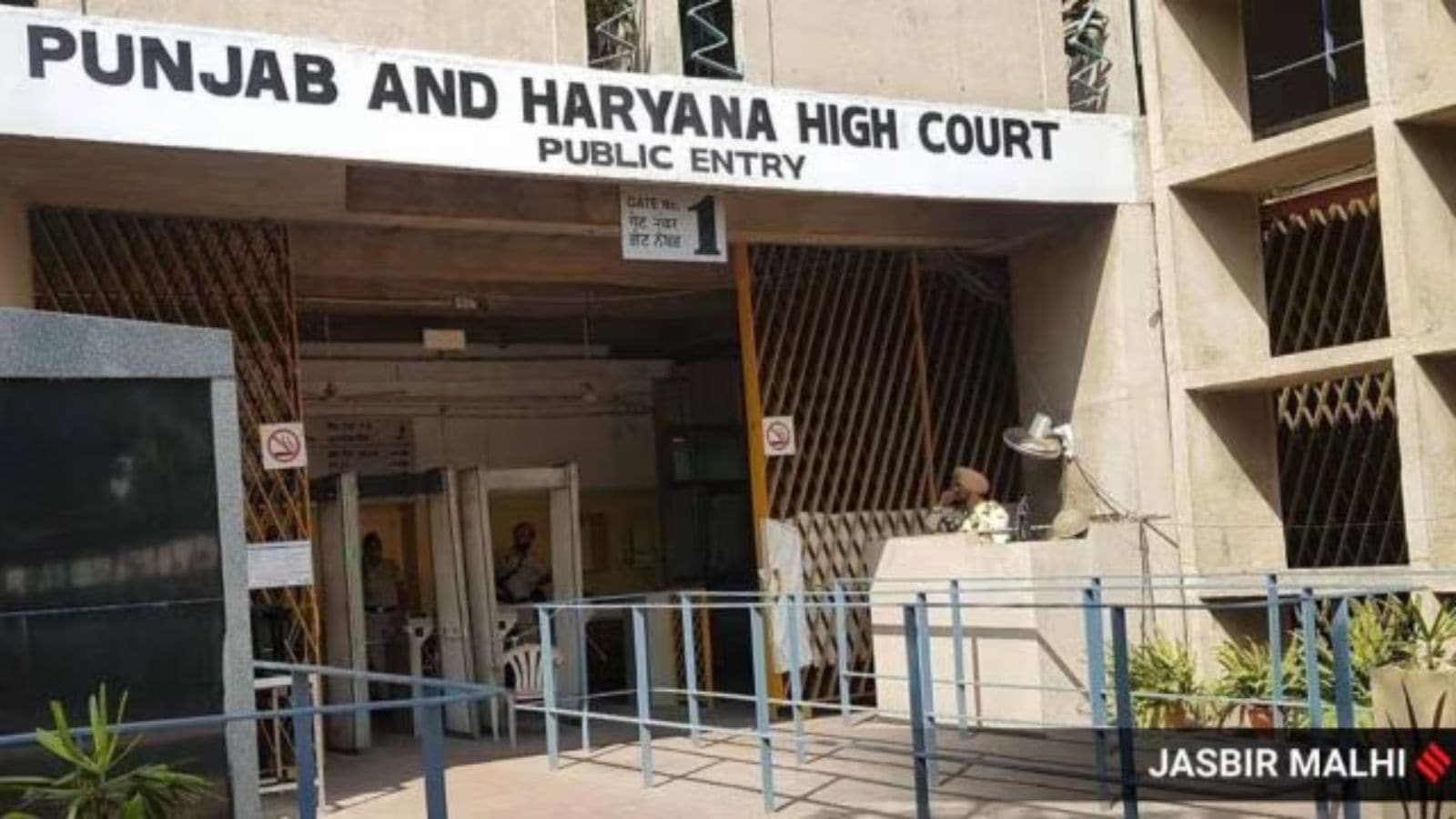
The Punjab and Haryana High Court Monday reserved orders on petitions filed by The Hind Samachar Group challenging the action by the Punjab Pollution Control Board, which disconnected electricity to its hotel in Jalandhar, after hearing detailed submissions alleging violation of statutory safeguards and counter-arguments by the state.

The matter was heard by a Division Bench comprising Chief Justice Sheel Nagu and Justice Sanjiv Berry.

Opening the arguments for the Group, Senior Advocate Chetan Mittal contended that the Punjab Pollution Control Board had acted in “undue haste” and in breach of the Water (Prevention and Control of Pollution) Act by directing immediate disconnection of electricity without issuing any show cause notice or granting an opportunity of hearing.

Mittal argued that while Section 33A of the Water Act empowers the board to issue directions, the Punjab rules mandate a minimum notice period and consideration of objections, except in cases of grave environmental injury. Even in such situations, he submitted, the law requires the competent authority to record reasons in writing, which was not done in the present case.

He told the court that the initial communication to the Punjab State Power Corporation Limited invoked only Section 33A and ordered immediate disconnection, and that a subsequent order invoking Section 32, which deals with emergency powers, was issued later to justify the action. The later order, he argued, merely reproduced statutory language without independent application of mind and was passed by an officer not competent under the board’s own delegation policy.

Mittal further submitted that the hotel was inspected, the order was passed, and electricity was disconnected within a span of two days, without waiting for laboratory analysis of effluent samples or considering explanations. He said more than 100 employees were affected and that any alleged deficiencies were curable and could have been rectified had a hearing been granted.

Placing the issue in a broader context, the petitioner submitted that The Hind Samachar Group has been publishing newspapers since 1949 and had suffered during the years of insurgency, losing the owner and his son to terrorism. He alleged that the regulatory action followed the publication of certain news reports critical of the government.

Story continues below this ad

He claimed that in November 2025, attempts were made to stop the newspaper from being circulated, and its government advertisements were stopped. The present action on January 13, he alleged, was politically motivated.

Serious violations, maintainability of plea

Opposing the petitions, Punjab Advocate General M S Bedi submitted that the petitioner could not seek special treatment by invoking its status as a media house. “A press cannot use the excuse of journalism to commit environmental violations.”

Senior Advocate D S Patwalia, appearing for the Punjab Pollution Control Board, argued that serious violations were detected during inspection, including non-functioning sewage and effluent treatment plants and discharge of untreated wastewater. Patwalia submitted that the violations posed a real risk of environmental harm, justifying immediate action under Sections 32 and 33A of the Water Act.

Patwalia also raised a preliminary objection on maintainability, submitting that the petitions were not maintainable in view of the availability of an efficacious statutory remedy before the National Green Tribunal (NGT). He argued that directions issued under Section 33A are appealable before the NGT and that the high court should not be approached as a forum of first instance in environmental matters.

Story continues below this ad

During the hearing, Chief Justice Nagu repeatedly asked the petitioners why they had not approached NGT. The bench observed that issues relating to environmental compliance, technical violations, and inspection findings fall squarely within the Tribunal’s jurisdiction.

Responding, the Group’s counsel, Mittal, argued that the petitions raised fundamental issues of jurisdiction, competence, and violation of natural justice, which justified the high court’s intervention.

Manraj Grewal Sharma is a senior journalist and the Resident Editor of The Indian Express in Chandigarh, where she leads the newspaper’s coverage of north India’s most politically and institutionally significant regions. From Punjab and Haryana to Himachal Pradesh and the Union Territory of Chandigarh, she oversees reporting at the intersection of governance, law, politics and society. She also reports on the diaspora, especially in Canada and the US. With a career spanning journalism across several countries, academia and international development, Manraj brings a rare depth of perspective to regional reporting. She is widely regarded as a leading chronicler of Punjab’s contemporary history and socio-political evolution, particularly its long shadow of militancy, federal tensions and identity politics. Her book, Dreams after Darkness, remains a definitive account of the militancy years and their enduring aftermath. Professional Background & Expertise A gold medalist in mass communication and a post-graduate in English literature, Manraj has a multifaceted career spanning journalism, academia, and international development. She was also awarded a fellowship by National Foundation of India and did several in-depth pieces on Manipur. Internationally, she has reported from Israel, US, UK, Myanmar, and Mauritius Her key focus areas include: Regional Politics, History, Agriculture, Diaspora, and Security. Of late, she has started focusing on Legal & Judicial Affairs: Much of her recent work involves reporting on high-stakes cases in the Punjab and Haryana High Court, ranging from environmental policy to civil rights. International Consulting: She previously served as a consulting editor for the Asia Pacific Adaptation Network and a publishing consultant for the Asian Development Bank (ADB) in Manila. Academia: For five years, she was the managing editor of Gender, Technology and Development, a peer-reviewed international journal at the Asian Institute of Technology, Bangkok. Recent Notable Articles (Late 2025) Her recent reportage focuses heavily on judicial interventions and regional governance: 1. Environment & Governance "‘NGT can’t test legality of policy’: HC hears challenge to Punjab’s ‘Green Habitat’ plan" (Dec 22, 2025): Covering a critical legal battle over whether the National Green Tribunal has the authority to strike down a state policy regularizing farmhouses on delisted forest land. "High court pulls up Punjab poll panel over audio clip probe" (Dec 10, 2025): Reporting on judicial concerns regarding the transparency and fairness of local body elections. 2. Legal Rights & Social Welfare "HC issues notice to Punjab, Haryana over delay in building old age homes" (Dec 22, 2025): Reporting on a contempt petition against top officials for failing to establish government-run homes for the elderly as promised in 2019. "Victims can appeal acquittals in sessions court without seeking special leave" (Dec 19, 2025): Highlighting a significant procedural shift in criminal law following a Supreme Court ruling. "HC upholds benefits for Punjab FCI officer acquitted in 20-year-old bribery case" (Dec 19, 2025): A report on the concept of "honourable acquittal" and its impact on employee benefits. 3. Human Rights & Identity "As Punjab denies parole to MP Amritpal Singh, HC asks it to submit ‘foundational material’" (Dec 1, 2025): Covering the legal proceedings regarding the radical preacher and sitting MP's request to attend Parliament. "Protecting life paramount: HC backs Muslim woman in live-in after verbal divorce" (Nov 6, 2025): Analyzing judicial protections for personal liberty in the context of traditional practices. Signature Beats Manraj is recognized for her ability to decode complex judicial rulings and relate them to the everyday lives of citizens. Whether it is a 30-year-old land battle in Fazilka or the political implications of Kangana Ranaut’s candidacy in Mandi, her writing provides deep historical and regional context. Contact @grewal_sharma on X manrajgrewalsharma on Instagram ... Read More


 

Latest Comment
Post Comment
Read Comments
Advertisement
Loading Taboola...
Advertisement
Advertisement
Advertisement