3 min read
Stay updated with the latest - Click here to follow us on Instagram

Journalism of Courage



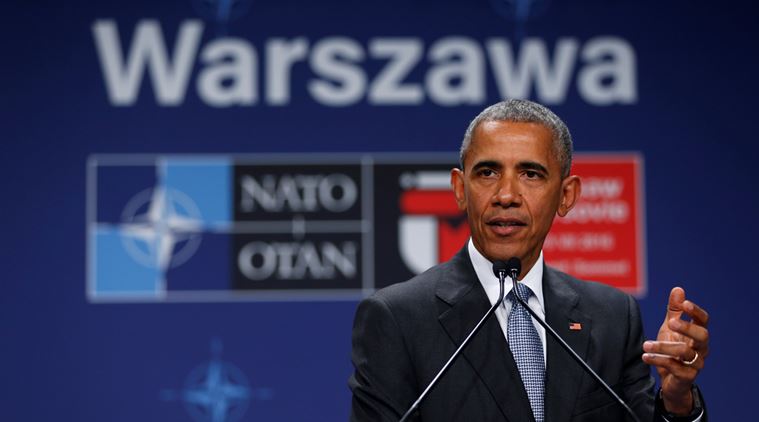 Among other things, US President Barack Obama and the other NATO leaders ordered a reinforcement of allies closest to Russia with four new multinational battalions for Poland and the Baltic states. (Source: Reuters)
Ambassadors from NATO nations met Wednesday with Russian envoys to explain decisions taken at the recent alliance summit and attempt to reduce tensions with Moscow.
The meeting at NATO’s Brussels headquarters follows last week’s gathering of alliance heads of state and government in Warsaw. Among other things, US President Barack Obama and the other NATO leaders ordered a reinforcement of allies closest to Russia with four new multinational battalions for Poland and the Baltic states.
The initial reaction from Moscow has been negative. But both sides have welcomed a Finnish idea on how to reduce chances of an incident between NATO and Russian warplanes in the Baltic Sea region.
Dutch NATO Ambassador Marjanne de Kwaasteniet said Wednesday’s session of the NATO-Russia Council, the first since April, will also discuss the situation in Ukraine and Afghanistan.
[related-post]
Watch Video: What’s making news
On Twitter, she said the meeting’s purpose is to “keep dialogue with Russia open, despite differences.”
In a joint declaration, Obama and the other leaders in Warsaw last week sternly accused Russia of “destabilizing actions and politics,” including the ongoing annexation of the Crimea region from Ukraine and what they called provocative activities near NATO borders, including repeated violation of NATO countries’ airspace.
Moscow has accused NATO of beefing up its forces near Russia and vowed to do what’s needed to defend its territory and interests. On Sunday, Russian Foreign Ministry spokeswoman Maria Zakharova accused NATO of engaging in the “demonization” of Russia and said it was living in a “wonderland” when it imagines a nonexistent “threat from the East.”
NATO’s supreme commander, US Army General Curtis M Scaparrotti, told reporters in Warsaw he’d like to speak regularly with Russian generals to defuse tensions, but hasn’t been able to establish contact since he assumed his command in May.
“We’ve said we’re transparent and we’re willing to talk, but we’ve not had that reachout from them yet,” Scaparrotti said.
Stay updated with the latest - Click here to follow us on Instagram