3 min read





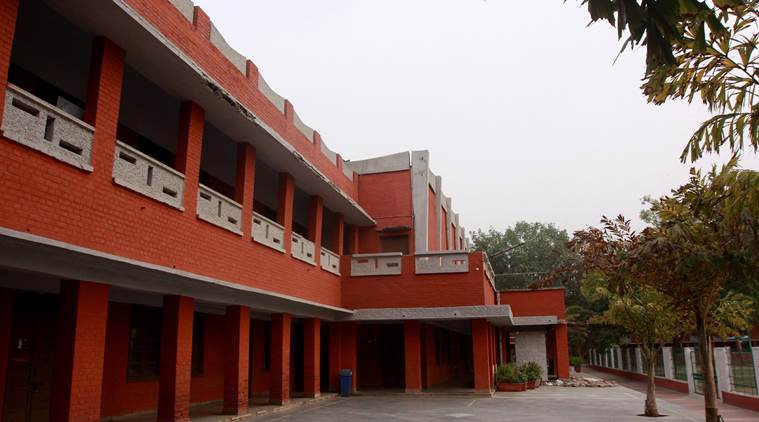 Oldest vacancy is at Hansraj College (Express Photo by Amit Mehra)
Chairpersons of 21 Delhi University colleges were summoned by the government on Tuesday and asked to appoint regular principals by July 15, after the President’s office expressed concern over such institutions being run by ‘officiating’ or ‘acting’ heads for years.
The meeting, chaired by higher education secretary R Subrahmanyam, was attended by UGC chairman D P Singh, DU vice-chancellor Yogesh Tyagi, and representatives of Hindu College, Hansraj College, Jesus and Mary College, Delhi College of Arts and Commerce, Rajdhani College, Shyama Prasad Mukherji College, Swami Shraddhanand College, Maharshi Valimiki College of Education, Vivekananda College, Bharati College, Moti Lal Nehru College, Sri Aurobindo College and the morning and evening branches of Satyawati College.
According to sources, the oldest vacancy is at Hansraj College and Vivekananda College, which have been without regular principals since 2009. The remaining colleges have been without one for anything between one and eight years. The Indian Express has learnt that all colleges, which attended the meeting Tuesday, have agreed to meet the deadline set by the government.
During the meeting, representatives of colleges owned by the Delhi government blamed the delay in appointment to the conflict between DU and AAP government over the constitution of their respective Governing Bodies (GB).
Of the 21 colleges called for the meeting, Bharti College, DCAC, Gargi College, Kamala Nehru College, Rajdhani College, Shyama Prasad Mukherji College, Swami Shraddhanand College, Vivekananda College, Maharshi Valimiki College of Education, Motilal Nehru College, Sri Aurobindo College, Maitreyi College and Satyawati College are fully or partially funded by the state government.
Ordinance XVIII, Clause 7, of the university provides that the principal of an affiliated college shall only be appointed by the GB. Both AAP and the university authorities, till recently, were sparring over the selection process of the GB in 28 government-funded colleges. The state government had accused DU of tampering with its list of nominees.
Hansraj College, which is run by a private trust, was forced to re-advertise the principal’s position after DU sat on its panel of finalists for almost a year without approving it. Hindu College and Jesus and Mary College are the other two headless institutions, out of the 21 run by private trusts.
Tuesday’s meeting was called by the HRD Ministry after the President’s office on May 25 expressed concern over the large number of vacant principal posts across DU colleges. Although President Ramnath Kovind, who is the Visitor of DU, has little to do with the colleges, he has been stressing on filling up vacant posts across educational institutions.