Journalism of Courage

As per the data, the government's total expenditure was Rs 12.92 lakh crore at October-end, or 60.2 per cent of the budget estimate which was 58.2 per cent of the budget estimate a year ago.

The Nifty, too, fell 8.95 points or 0.09 per cent to end at 10,361.30 after shuttling between 10,392.95 and 10,345.90.

The Bharat 22 ETF is a vehicle used to further the government's disinvestment programme.
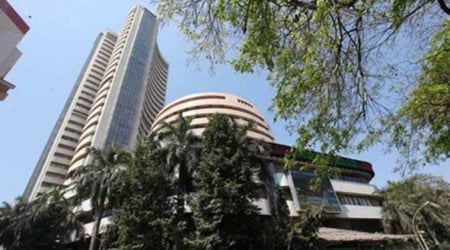
The 30-share BSE index was down 30.43 points, or 0.09 per cent, at 33,694.01 at 1045 hrs.

The NSE Nifty dropped 41.65 points or 0.40 per cent to 10,348.05.
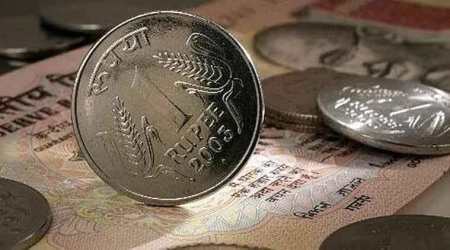
Dealers attributed the rupee's fall to increased demand for the US currency from importers and banks and a lower opening in the domestic equity market.

Chairman of Automotive Tyre Manufacturers Association said India signing free trade agreements would also give support to the industry.
Sectoral indices such as capital goods, auto, consumer durables and banking were all in the green by up to 0.47 per cent. The 50-share Nifty gained 30.70 points, or 0.29 per cent, at 10,379.45.

The market regulator’s directive on bracketing MF schemes into five broad categories is a step to make mutual funds true to their labels.
Stock markets continued to show strength that bolstered rupee sentiment, currency traders said. However, the dollar's clout overseas weighed heavy on the domestic unit.
The Sensex opened higher and went further up, but settled at 33,478.35, a gain of 118.45 points, or 0.36 per cent, due to profit-booking in the last one hour of trade.
According to an RBI statement, the exchange rates for the pound and the yen against the rupee were 86.1892 and 57.82 per 100 yens, respectively.
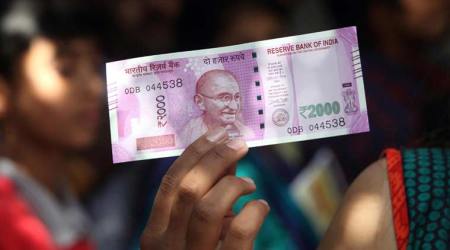
The equity markets along with exchange rate and G-Sec market welcomed this news on Friday.
Among major Sensex losers, Cipla, ICICI Bank, Infosys, Tata Steel, M&M and SBI fell by up to 0.99 per cent, pulling the index down.

On Friday, the rupee had bounced back in style to end at a one-week high of 65.01 after Moody's upgraded India's sovereign credit rating.

The inflow was further triggered with the news of India faring well in the World Bank's ease of doing business index and a jump in core sector growth.
The rating upgrade comes after a gap of 13 years --Moody's had last upgraded India's rating to 'Baa3' in 2004. In 2015, the rating outlook was changed to 'positive' from 'stable'.
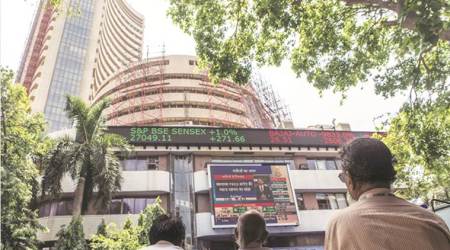
All the sectoral indices led by banking, realty and metal were trading in the positive zone, with gains of up to 2.46 per cent.

The Securities and Exchange Board of India (Sebi) is also investigating the NSE algo trading case to ascertain if brokers made unfair gains in connivance with exchange officials.
The biggest beneficiary of waning attractiveness of traditional investment instruments, thanks to multiple factors like demonetisation, govt’s cashless push and low interest rates, has been the stock markets.

A ministry’s order of August 2017 directs both NOCs to submit to the DGH all data relating to drilling activities for each petroleum exploration license (PEL) and petroleum mining license (PML) in fields given to them through nomination.
The Sensex hit the day’s high of 33,165.15 before settling up 346.38 points, or 1.06 per cent, at 33,106.82. This is the highest closing since November 10 when it had closed at 33,314.56.
Yesterday, the rupee had rebounded 21 paise to close at 65.21 against the US currency, ending its two-day slide on fresh bouts of dollar selling even as trade deficit widened alarmingly to a three-year high.

The 30-share BSE index was up 163.80 points, or 0.49 per cent, at 32,924.24. Also, the NSE Nifty rose by 50.85 points, or 0.50 per cent, to 10,168.90.
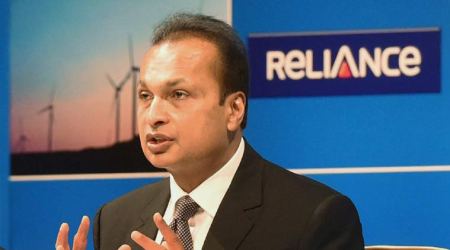
Stating that it is working on asset-monetisation, RCom said that is in standstill period till December 2018 pursuant to the strategic debt restructuring guidelines.