15 min read


© IE Online Media Services Pvt Ltd



 UPSC Key 2022: Here's what you should be reading from the November 18, 2022 edition of The Indian Express.
Important topics and their relevance in UPSC CSE exam for November 18, 2022. If you missed the November 17, 2022 UPSC key from the Indian Express, read it here
FRONT PAGE
Centre to SC: Review order freeing Rajiv convicts… error, miscarriage of justice
Syllabus:
Preliminary Examination: Indian Polity and Governance-Constitution, Political System, Panchayati Raj, Public Policy, Rights Issues, etc.
Mains Examination: General Studies II: Structure, organization and functioning of the Executive and the Judiciary
Key Points to Ponder:
• What’s the ongoing story- Six days after the Supreme Court ordered the release of the remaining six convicts serving life terms for the 1991 assassination of former Prime Minister Rajiv Gandhi at Sriperumbudur in Tamil Nadu, the Centre Thursday moved the top court, seeking review of its order. In its review petition, the Centre said the “order was passed without affording” it an “adequate opportunity of hearing”, that the order suffers from “errors apparent on the face of record” and falls “foul of principles of natural justice”.
• Quick Recap-On November 11, the Supreme Court set free the six convicts — Nalini Sriharan, T Suthendraraja alias Santhan, V Sriharan alias Murugan, Robert Payas, Jayakumar and Ravichandran alias Ravi, extending to them the benefit of its May 18 order releasing co-convict A G Perarivalan.
• Why Supreme Court has freed all convicts
• The Supreme Court’s judgment in 1999-Know in brief
• What was the basis for the release?
• Who is Nalini, convicted in Rajiv Gandhi assassination case?
• What’s her role in the Rajiv Gandhi assassination case?
• What were the charges against her?
• And who are the other convicts freed by Supreme Court?
• What is Article 142 of the Indian Constitution?
• What do you understand by the term ‘Complete Justice’? Do you think that the term ‘Complete Justice’ is Subjective?
• Principles of Natural Justice in Indian Constitution-is it Implicit or Explicitly given through Article 14 and Article 21 of the Constitution?
• Article 21 and Due Process of Law
• What do understand by the expression ‘Due process of Law’?
• What do understand by the expression ‘Procedure Established by the Law’?
• ‘Procedure Established by the Law’ and ‘Due process of Law’-Compare and Contrast
• Article 142 of the Constitution and ‘complete justice’-How Article 142 ensures ‘Complete Justice’?
• Know the instances where Supreme Court of India had invoked Article 142 like in Ayodhya Case, Bhopal Gas tragedy case, Liquor sale ban case, Coal Block Allocation Case etc.
Other Important Articles Covering the same topic:
📍The Rajiv Gandhi assassination case, and why Supreme Court has freed all convicts
14% conviction in POCSO; in a fourth of cases, accused known to victims, says study
Syllabus:
Preliminary Examination: Indian Polity and Governance-Constitution, Political System, Panchayati Raj, Public Policy, Rights Issues, etc.
Main Examination: General Studies I: Indian Constitution—historical underpinnings, evolution, features, amendments, significant provisions and basic structure.
Key Points to Ponder:
• What’s the ongoing story- Ten years after the enactment of the Protection of Children from Sexual Offences (POCSO) Act, an analysis by an independent think-tank of cases under this legislation in eCourts across the country has found that 43.44 per cent of trials end in acquittals and only 14.03 per cent lead to convictions.
• The analysis, titled “A Decade of Pocso’’, was carried out by the Justice, Access and Lowering Delays in India (JALDI) Initiative at Vidhi Centre for Legal Policy, in collaboration with the Data Evidence for Justice Reform (DE JURE) program at the World Bank-What are the key takeaways from the analysis, titled “A Decade of Pocso”?
• For Your Information-Incidentally, according to data published by the National Crime Record Bureau (NCRB) in 2021, the accused was a person known to the victim in 96 per cent of cases filed under POCSO. In the 138 judgments analysed by the Vidhi initiative, 5.47 per cent victims were under 10 years of age, 17.8 per cent between 10-15 years and 28 per cent between 15-18 years. The age of victims in 48 per cent of the cases were not identified.
• What are the other issues and challenges as per the analysis related to Child Sexual Abuse?
• Protection of Children from Sexual Offences (POCSO) Act, 2012- Know the Salient features of the Act and its amendment
• Who is regarded as child as per the provisions of POCSO Act, 2012?
• Why Protection of Children from Sexual Offences (POCSO) Act, 2012?
• What are the challenges associated with child sexual abuse?
• What are the Initiatives, legislations and laws taken by the Government of India in this direction?
• What are the Rights of a child in India as per the Indian Constitution?
Other Important Articles Covering the same topic:
📍Explained: How the POCSO Act has been amended
Court clears way for plea seeking right to worship ‘Shivling’ in Gyanvapi complex
Syllabus:
Preliminary Examination: Current events of national and international importance and History of India
Mains Examination: General Studies II: Structure, organization and functioning of the Executive and the Judiciary
Key Points to Ponder:
• What’s the ongoing story- A Varanasi court Thursday rejected the application of the Anjuman Intezamia Masjid Committee challenging the maintainability of a suit seeking court direction to worship the “Shivling” said to have been found in the Gyanvapi mosque complex.
• Vishwanath temple-Gyanvapi mosque controversy- What is the issue thus far?
• What are the historical claims made by petitioner with respect to Gyanvapi mosque?
• What are the Historical debates associated with Kashi Vishwanath temple-Gyanvapi mosque?
• Why the Places of Worship (Special Provisions) Act 1991 is in News?
• Under what circumstances was the Places of Worship Act, 1991 law enacted, and how did the government justify it?
• The Places of Worship Act, 1991-Know the Key Provisions
• What Section 3 of the Places of Worship Act, 1991 is all about?
• Section 4(1) and Section 4(2) of the Places of worship act, 1991-Know the provisions
• Ayodhya Ram Janmabhoomi Verdict and Section 5 of the Places of Worship Act, 1991-Connect the Dot
• What did the Supreme Court say about the Places of Worship Act, 1991 in its Ayodhya judgment?
• Gyanvapi Mosque-Know the Style and Architecture
• Kashi Vishwanath Temple Architecture-Know in detail
• Ahilyabai Holkar and Kashi Vishwanath Temple-Connect the dots
• Know about Kashi Vishwanath Corridor Project
Other Important Articles Covering the same topic:
📍 Court order on Kashi Vishwanath Temple-Gyanvapi Mosque site in Varanasi: history and context
THE EDITORIAL PAGE
Syllabus:
Preliminary Examination: Indian Polity and Governance-Constitution, Political System, Panchayati Raj, Public Policy, Rights Issues, etc.
Mains Examination: General Studies I: Role of women and Social empowerment
Key Points to Ponder:
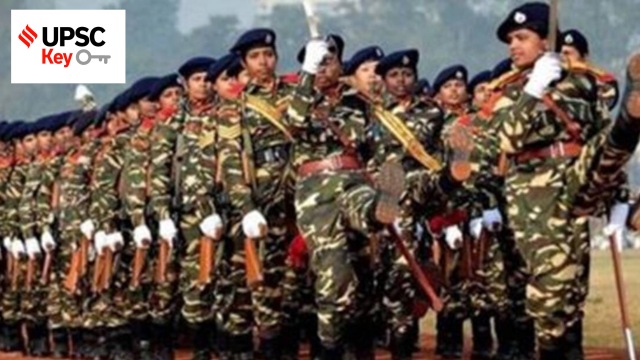
• What’s the ongoing story- Anupama Joshi Writes: The military opened its doors to women in 1992 when the Air Force inducted its first batch. It’s been three decades, and that women are still at the mercy of the courts is something to reflect upon.
• Quick Recall-The Supreme Court recently directed the Centre and the Indian Air Force to consider granting Permanent Commission to 32 retired women Short Service Commission (SSC) officers based on their suitability with the purpose of giving them pensionary benefits. The military opened its doors to women in 1992 when the Air Force inducted its first batch. It’s been three decades, and that women are still at the mercy of the courts is something to reflect upon.
• What was the Supreme Court’s Verdict in Ministry of Defence vs Babita Puniya and others in February 2020?
• Women in armed forces and their right to equality of opportunities-connect the dots
• How Principle of non-discrimination on the ground of sex under Article 15 and Right to equality of opportunity for all citizens in matters of public employment under Article 16 is applicable in the armed forces?
• What is the present scenario for the women entry in the Indian armed forces?
• first of all, what is permanent commission?
• Permanent Commission and Short Service Commission-Compare and contrast
• What is the procedure for granting permanent commission?
• After Supreme Court’s directive, how exactly women will be benefitted?
• What is number and percentage of women officers in Indian Army, Airforce and in the Indian Navy?
• Know the timeline of induction of women in the Indian Defence forces
• Why Women in the Indian defence forces should be given Permanent Commission?
Other Important Articles Covering the same topic:
📍Army criteria systemically discriminates against women: Supreme Court
THE IDEAS PAGE
Syllabus:
Preliminary Examination: Current events of national and international importance.
Main Examination: General Studies II: Government policies and interventions for development in various sectors and issues arising out of their design and implementation.
Key Points to Ponder:
• What’s the ongoing story- Faizan Mustafa writes: Anti-conversion laws are framed on the dated premise that women, SCs and STs need protection, cannot take vital decisions on their own. They perpetuate social hierarchies of a casteist and patriarchal society.
• Recently Supreme Court said, “forced conversions may ultimately affect the security of nation and freedom of religion and conscience of citizen”-How?
• “The issue with respect to the alleged conversion of religion, if it is found to be correct and true, is a very serious issue which may ultimately affect the security of the nation as well as the freedom of religion and conscience of the citizen”-In what context, the Supreme Court of India said so?
• Religious conversion is more of a political agenda-do you agree with the same?
• Why the Niyogi Commission (1956) and Wadhwa Commission (2000), was constituted?
• Where is the hard data on cases filed under these laws and convictions made by courts of law and upheld by higher courts?
• If the state laws have not succeeded, what is the guarantee that a central law would put an end to forced conversions?
• What is forced religious conversions?
• What is religious conversion in India?
• Forced conversion in religion and religious conversion-what is the difference?
• Force vs Will (Choice)-How forced conversion in religion is defined in India?
• Article 25 of the Indian Constitution guarantees what?
• Is religious conversion part of Article 25 of the Indian Constitution?
• What Articles 25, 26, 27 and 28 of the Indian Constitution says?
• According to the Article 25 of the Constitution, “Subject to public order, morality and health and to the other provisions of this Part, all persons are equally entitled to freedom of conscience and the right freely to profess, practise and propagate religion”-Does “to profess, practise and propagate religion” is concurrent to religious conversion?
• But the Constitution guarantees my right to religious freedom, what is the issue with conversion?
• What is the Union or State Government’s policy on religious conversion?
• What are the societal repercussions of religious conversion?
• What the Supreme Court had said in the 1977 ruling in the Rev Stainislaus versus State of Madhya Pradesh case?
• Anti-conversion law in other States-Know in detail
• Why many states are introducing Anti-Conversion Laws?
• Know the Landmark Judgements of Supreme Court and High Courts on Conversion
• What Supreme Court of India, said in the Lily Thomas and Sarla Mudgal cases regarding religious conversion?
Other Important Articles Covering the same topic:
📍Forced religious conversion dangerous, may affect nation’s security: Supreme Court
EXPRESS NETWORK
Climate talks deadlocked over loss & damage finance
Syllabus:
Preliminary Examination: General issues on Environmental ecology, Bio-diversity and Climate Change – that do not require subject specialization.
Mains Examination: General Studies III: Conservation, environmental pollution and degradation, environmental impact assessment.
Key Points to Ponder:
• What’s the ongoing story- THE CLIMATE change conference remained deadlocked on Thursday night over a proposal to create a new financial facility to fund countries damaged by climate disasters. An Indian proposal to call for a phase-down of all fossil fuels had also run into trouble because of reservations from China and some other developing countries. But the main fight was happening over the setting up of a new facility for loss and damage finance, the subject that has attracted the maximum attention at this meeting.
• What is the main agenda in COP27?
• What were the expectations from COP27?
• What is climate change ‘Loss and Damage’?
• What is the extent of loss and damage?
• “The demand for loss and damage finance is quite old, but it has faced strong resistance from the rich and developed countries”-Why?
• How does the Paris Agreement address the loss and damage associated with climate change?
• What is the apprehension over the setting up of a new facility for loss and damage finance?
• The developed countries, led by the US, do not support the creation of a new infrastructure for loss and damage finance-know the reasons why?
• A new finance facility is not the only point of contention-what are the other major point of contention?
• What is the meaning of climate finance?
• What is the financial mechanism? What are the other funds?
• What is the Standing Committee on Finance? What is the long-term finance process?
• Green finance and climate finance-Compare
• What do you understand by “climate disasters” and “climate negotiations”?
• Why “climate disasters” and “climate negotiations” are much talked in the COP27?
• What are the major climate change agreements?
Other Important Articles Covering the same topic:
EXPLAINED
Syllabus:
Preliminary Examination: Current events of national and international importance.
Mains Examination: General Studies II: Bilateral, regional and global groupings and agreements involving India and/or affecting India’s interests.
Key Points to Ponder:
• What’s the ongoing story- A group of countries including India has opposed the carbon border taxes policy at the COP27 in Sharm El Sheikh, saying it could “result in market distortion”. The BASIC group, comprising India, China, Brazil and South Africa, said in a joint statement dated November 15, “Unilateral measures and discriminatory practices, such as carbon border taxes, that could result in market distortion and aggravate the trust deficit amongst Parties, must be avoided.
• What is a carbon border adjustment tax?
• What is driving the EU in that direction?
• ‘Carbon leakage’: Why need for tax was felt?
• What are the other reasons given for Imposing Carbon Tax?
• EU’s Carbon Border Adjustment Mechanism-How would the EU scheme work?
• What was India’s stand on this policy proposal?
• How are other countries responding?
Other Important Articles Covering the same topic:
📍What is a carbon border tax and what does it mean for trade?
Baliyatra: Celebrating Odisha’s ancient SE Asia links
Syllabus:
Preliminary Examination: History of India
Mains Examination: General Studies I: Indian culture will cover the salient aspects of Art Forms, literature and Architecture from ancient to modern times.
Key Points to Ponder:
• What’s the ongoing story-In his address to the Indian diaspora in Bali on the sidelines of the G20 summit, Prime Minister Narendra Modi mentioned the annual Baliyatra on the banks of the Mahanadi in Cuttack, which celebrates the ancient trade relations between India and Indonesia. This year’s Baliyatra, which concluded on Thursday, also found a place in the Guinness World Records for achieving an impressive feat of origami, the creation of beautiful paper sculptures.
• What is the Historical significance of Baliyatra?
• Why is Baliyatra famous?
• Who organises this festival?
• Besides the cultural and historical aspects, Baliyatra has an important commercial dimension-How?
• Map Work-Ancient Kalinga (today’s Odisha), Bali, Java, Sumatra, Borneo, Burma (Myanmar) and Ceylon (Sri Lanka)
Other Important Articles Covering the same topic:
📍Bali Yatra
For any queries and feedback, contact priya.shukla@indianexpress.com
The UPSC KEY Indian Express is now on Telegram. Click here to join our channel and stay updated with the latest Updates.

Read UPSC Magazine