27 min read


© IE Online Media Services Pvt Ltd



 UPSC Key December, 2024: Here's what you should be reading from the December 20, 2024 edition of The Indian Express
 Important topics and their relevance in UPSC CSE exam for December 20, 2024. If you missed the December 19, 2024 UPSC CSE exam key from the Indian Express, read it here
FRONT PAGE
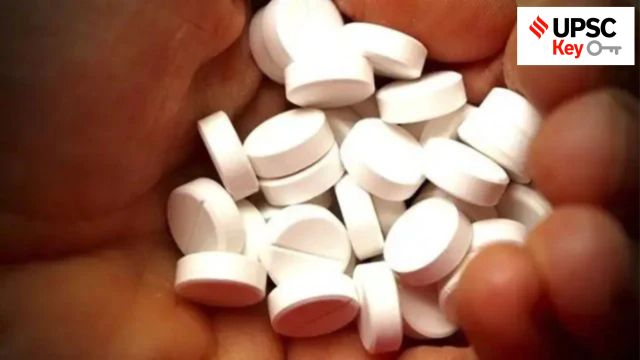
Popular drugs for weight loss endorsed by WHO scientists
Syllabus:
Preliminary Examination: Current events of national and international importance.
Mains Examination: General Studies II: Issues relating to development and management of Social Sector/Services relating to Health, Education, Human Resources.
What’s the ongoing story: In a first, scientists at the World Health Organisation (WHO) have endorsed a new class of medicines known as GLP-1 receptor agonists, which mimic a hormone that regulates appetite and blood sugar levels, for managing obesity.
Key Points to Ponder:
• What you know about GLP-1 receptor agonists?
• Why Scientists at the World Health Organisation (WHO) endorsing GLP-1 receptor agonists?
• Why is this significant?
• Will WHO also release guidelines for use?
• What are popular diabetes cum weight loss drugs?
• WHO raised red flags too—what are those?
Key Takeaways:
• Scientists at the World Health Organisation (WHO) argue that while current policies promoting healthy eating and physical exercise are scientifically sound, they have failed to curb the obesity pandemic. The new class of GLP-1 receptor agonists, that included drugs such as semaglutide and tirzepatide, “have the potential to be transformative,” they say.
• This endorsement comes at a time when patents for the popular drug semaglutide are set to expire over the next couple of years in several countries, including India and Brazil.
• In India, several manufacturers of generic compounds have already started bioequivalence trials for their products so that they can be ready for use once the patents expire.
• Bioequivalence trials are conducted to ensure that generic versions of the products are as safe and effective as the branded versions. Several new medicines in this category are also under trial globally.
• The WHO is currently in the process of drafting guidelines for the use of GLP-1 receptor agonists in adults with obesity to provide clarity on “clinical indications, application and programmatic considerations globally.” These guidelines are likely to be published in July 2025.
Do You Know:
• Globally, one in eight people were living with obesity in 2022. There were 890 million adults and 160 million adolescents living with obesity in 2022. The prevalence of obesity has doubled in adults since 1990 and quadrupled in adolescents, according to the WHO.
• In India, there were 44 million women and 26 million men living with obesity in 2022.
• In the three decades between 1990 to 2022, the prevalence of obesity in women increased 8.6 percentage points and prevalence in men increased 4.9 percentage points.
• There has also been a significant increase in childhood obesity in the three decades. While 0.2 million boys and 0.2 million girls were obese in 1990, 7.3 million boys and 5.2 million girls were obese in 2022.
• WHO scientists say that global costs associated with obesity are likely to reach $3 trillion by 2030.
• In countries with 30 per cent prevalence of obesity, it could absorb up to 18 per cent of the national health expenditure.
• Scientists also argue that obesity adds to mortality — there were five million obesity-related deaths from non-communicable diseases in 2019. This accounted for 12 per cent of all deaths from non-communicable diseases worldwide.
• Novo Nordisk’s Ozempic, originally approved in 2017 for type 2 diabetes, gained immense popularity as doctors prescribed it off-label for obesity, sparking a social media frenzy and supply shortages.
• While the new therapies have shown to reduce body weight between 10 and 25 per cent, experts have said it should not be used by all as there are severe side effects such as gastroparesis (stomach paralysis), pancreatitis (inflamed pancreas) and thyroid cancer.
• Another important consideration is that a person is likely to gain weight when they stop using the medicine and it is yet to be seen whether the drug can keep working over several years.
• Given the high costs of the products, the high demand and the production and supply challenges, scientists have also raised the issue of “counterfeit products” and grey markets. However, the medicines are likely to become more readily available as they get off patents.
Other Important Articles Covering the same topic:
📍Obesity real risk for blood sugar: Why weight loss drugs are preventing other diseases too
UPSC Practice Prelims Question Covering similar theme:
1. Consider the following statements regarding the World Health Organization (WHO) and its stance on weight loss drugs:
1. WHO scientists have recently endorsed the use of weight loss drugs for controlling obesity.
2. The endorsement signifies that these drugs are now part of the essential medicines list for obesity treatment.
3. This marks a shift in global health policy toward medical management of obesity alongside lifestyle interventions.
Which of the statements given above is/are correct?
(a) 1 only
(b) 1 and 3 only
(c) 2 and 3 only
(d) 1, 2, and 3
GOVT & POLITICS
India, France sign pact for grand museum in North, South blocks
Syllabus:
Preliminary Examination: Current events of national and international importance.
Main Examination:
• General Studies I: Indian culture will cover the salient aspects of Art Forms, literature and Architecture from ancient to modern times.
• General Studies II: Bilateral, regional and global groupings and agreements involving India and/or affecting India’s interests.
What’s the ongoing story: India and France on Thursday signed an agreement towards the “adaptive reuse” of the North and South blocks for the ambitious new national museum project, dubbed to be the largest museum in the world.
Key Points to Ponder:
• What is Central Vista Redevelopment Project?
• How Central Vista Redevelopment Project draws the line between creating new heritage and taking care of existing heritage?
• India-France Bilateral Relations-Know background
• What are the major areas of cooperation between India and France?
• Evaluate the significance of India-France collaboration in shaping the new national museum project, with reference to global best practices in heritage conservation and museum development.
• Yuge Yugeen Bharat National Museum-Know its objectives and key components
• What is ‘Adaptive Reuse’ in this context?
• What is the role of a Museum?
• How museums play a crucial role in preserving culture and heritage?
• Why museums are important?
• What are the major issues and challenges with museums in India?
Key Takeaways:
• It is a part of the Central Vista Redevelopment Project and is set to span approximately 1.55 lakh square metre, overtaking The Louvre in Paris, presently the world’s biggest.
• It will be implemented in two phases — the first comprising the retrofitting of North Block into a museum space, with an estimated deadline of June 2026.
• The initial mapping of the building has already been done in consultation with officials from the France Museums Development, who will advise on best practices towards the reuse of heritage buildings without having to disturb its character.
• As part of the agreement, India and France are collaborating on a comprehensive feasibility study, encompassing museum case studies, interpretive planning, and building programming.
Do You Know:
• According to PIB release, The Ministry of Culture has announced a landmark partnership with France Museums Développement (FMD) to develop the Yuga Yugeen Bharat National Museum as a world-class cultural institution. This ambitious project is an integral part of the Central Vista Redevelopment Project and is set to span approximately 1,55,000 square meters across the iconic North and South Blocks in New Delhi.
• The Yuga Yugeen Bharat National Museum will be developed through Adaptive Reuse, in collaboration with France, renowned for its expertise in such projects, exemplified by the Louvre, Grand Palais, and Hôtel de la Marine. This approach mirrors France’s “Grands Projets” initiative, which saw the transformation of government buildings into iconic cultural spaces, most notably the Louvre. This historical precedent, where a government ministry vacated a landmark building to create a world-class museum, provides a valuable framework for the development of the Yuga Yugeen Bharat National Museum.
• Divided into eight thematic zones, the museum will showcase historical events, personalities, ideas and achievements related to India’s past that have contributed to the making of India’s present. It will tell the story of 5,000 years of Indian civilisation, said officials, adding that the name signifies the civilisation’s “perennial” nature.
• The museum will be designed to have 950 rooms across three storeys and a basement, which will showcase India’s ancient town planning systems, the Vedas, Upanishads, ancient medical knowledge, and a number of empires including Mauryan, Gupta, Vijayanagara and Mughal. Though the project is slated for completion by 2026, no concrete deadline has been set yet. Sources said that North and South Block, where the museum will come up, are office buildings and will take time to be converted into visitor-friendly spaces.
Other Important Articles Covering the same topic:
📍Central Vista Project: What happens to the cultural institutions on Janpath?
Previous year UPSC Mains Question Covering similar theme:
📍Safeguarding the Indian art heritage is the need of the moment. Discuss.(2018)
📍Indian Philosophy and tradition played a significant role in conceiving and shaping the monuments and their art in India. Discuss. (2020)
After 13 yrs, Protected Area Regime set to be back in Manipur
Syllabus:
Preliminary Examination: Current events of national and international importance.
Mains Examination: General Studies III: Security challenges and their management in border areas
What’s the ongoing story: The Manipur government announced Wednesday that the Centre has re-imposed ‘Protected Area Regime’ or ‘Protected Area Permit’ in the state as well as in Mizoram and Nagaland, all three of them bordering Myanmar.
Key Points to Ponder:
• What is ‘Protected Area Regime’ or ‘Protected Area Permit’?
• Discuss the rationale behind the implementation of the ‘Protected Area Regime’ in India.
• ‘The reintroduction of the Protected Area Regime in Manipur has implications for India’s internal security and foreign policy’—Analyse
• Protected Area Regime and its impact on socio-economic development, tourism, and cultural exchanges in the north-eastern states of India—Discuss
• “Balancing national security with developmental priorities is a recurring challenge in the north-eastern states of India.”—How far you agree with the same?
• Analyse the role of special administrative mechanisms like the Protected Area Regime in safeguarding India’s strategic and cultural interests in sensitive regions.
Key Takeaways:
• The statement by government in Manipur said the move, bringing back the restrictions after 13 years, was necessitated in the light of security concerns over influx from neighbouring countries.
• The Manipur government has held alleged illegal immigration from Myanmar as one of the prime factors responsible for the ongoing conflict in the state.
• The Manipur government said the Centre had reimposed PAR via a communication sent to Chief Secretaries of the three states, saying relaxations were being withdrawn “with immediate effect”
• Through the course of the ongoing conflict, the Manipur government and most sections of Meitei civil society have alleged that an uncontrolled influx of “illegal immigrants” from the Chin community — which shares an ethnic bond with the Kuki-Zomis and Mizos — from neighbouring Myanmar was one of the key reasons for the instability in the state and the present conflict.
• The Manipur government earlier pressed upon the Union government to scrap the mutually agreed Free Movement Regime (FMR) with Myanmar, which allowed tribes living along the border on either side to travel up to 16 km inside the other country without a visa and to stay up to two weeks.
• In January this year, the Centre announced that the FMR was being cancelled, and that the entire length of the porous Indo-Myanmar which runs along Manipur, Mizoram, Nagaland and Arunachal Pradesh would be fenced.
• While the Manipur government welcomed these decisions, they were stiffly opposed in Mizoram and Nagaland as the international boundary cuts through Naga and Kuki-Zo-Chin communities residing on both sides of it. The FMR had been conceived to protect their traditional rights of free movement across the border.
• Reintroducing the PAR would further restrict movement in these states.
Do You Know:
• According to the Union Home Ministry’s guidelines, a foreign national is not allowed to visit a ‘Protected Area’, as laid down in the Foreigners (Protected Areas) Order, 1958, “unless it is established to the satisfaction of the Government that there are extraordinary reasons to justify such a visit”.
• The guidelines also specify certain areas within the Protected Areas which can be visited by tourists with a permit. For grant of Protected Area Permits for reasons other than tourism, prior permission is needed from the Union Ministry of Home Affairs.
• Prior permission from the Ministry is also required for permits for tourism in areas not opened for tourism
• Till 2011, this regime extended to all of Arunachal Pradesh, Sikkim, Manipur, Mizoram and Nagaland, and to parts of Jammu & Kashmir, Himachal Pradesh, Rajasthan and Uttarakhand, all of which are border states.
• However, in 2010, this had been relaxed for the entire area of Manipur, Mizoram and Nagaland, first for a period of one year, and periodically extended after that. The PAR remains in place in the other areas.
• This relaxation was made with an eye on boosting tourism in these states, with the UPA government in the Centre at that time stating that the lifting of the restrictions had been requested by the state governments.
• But even with this relaxation, certain restrictions continued to be in place. For instance, citizens and foreign nationals of Afghanistan, China and Pakistan origins still needed prior approval from the Union Home Ministry for entry into these states.
Other Important Articles Covering the same topic:
📍Centre reimposes Protected Area Regime in 3 Northeastern states, including Manipur
UPSC Practice Prelims Question Covering similar theme:
2. Consider the following statements regarding the ‘Protected Area Regime’ (PAR) in India:
1. The Protected Area Regime restricts the entry of foreign nationals into designated areas.
2. It is primarily implemented under the Foreigners (Protected Areas) Order, 1958.
3. The regime has been reintroduced in Manipur after 13 years.
Which of the statements given above is/are correct?
(a) 1 only
(b) 1 and 3 only
(c) 1, 2, and 3
(d) 2 and 3 only
THE EDITORIAL PAGE
Syllabus:
Preliminary Examination: Current events of national and international importance.
Mains Examination: General Studies II: Bilateral, regional and global groupings and agreements involving India and/or affecting India’s interests.
What’s the ongoing story: Samir Saran Writes: The ability to partner with nations that are deeply divided by geopolitics has been a feature of Indian diplomacy since Independence. The India-Russia relationship serves not just the two countries in question, but the world
Key Points to Ponder:
• Indo-Russia Relations-Know the background
• Russia plays a very important role in logistical as well as technological support when it comes to defence forces-Know India and Russia Military trade
• How much trade does India have with Russia?
• How Indo-Russia Relations contributes to the preservation of the global order?
• How India’s engagement with Russia prevents the latter from becoming entirely dependent on China?
• “India’s ability to maintain partnerships with nations divided by geopolitics has become essential to prevent the fracturing of the global order.” Critically examine this statement in light of India’s foreign policy in 2025.
Key Takeaways:
• The global community is watching New Delhi’s efforts to restore stability to its troubled relationship with China, and wonders whether the Indo-US dynamic will recapture the energy that characterised it in Donald Trump’s first term. In spite of all this, the most consequential bilateral relationship in 2025 will be between India and Russia.
• The strength of ties between New Delhi and Moscow matters to both countries. It touches core mutual areas: Trade in energy, technological co-development, and strategic interests.
Do You Know:
India-Russia closeness will have deeper implications in 2025, a year in which it will be recognised as a global public good. Here are five ways in which this relationship is vital for the preservation of global order.
• First, it serves as a bridge between the rest of the world and a Russian polity that has been alienated by, and has set out to further alienate, the Western ecosystem. India’s commitment to multilateralism and the global order anchors Russia, its close partner, to a system that it otherwise seeks to disrupt.
• Second, the India-Russia relationship prevents the Russian bear from totally entering the dragon’s den. A Russia locked into servitude to Beijing’s interests would be profoundly inimical for the world order, the West in particular.
• Third, trade between India and Russia in fossil fuels is designed to be compliant with sanctions meant to limit Russian profits. This too provides broader benefits to the world. It brings valuable price stability and predictability to energy markets, which is vital for the West and for Europe in particular.
• Fourth, the relationship allows for new possibilities in the crucial Arctic region. Without India’s increasing strategic presence in the Arctic, in partnership not just with Russia but also with European and Nordic friends, a new Russia-China axis would have shaped the region’s future.
• Fifth, India’s presence in groupings with growing power and influence like BRICS and the Shanghai Cooperation Organisation ensures that these are not weaponised against the West. The entry of New Delhi’s candidates — and Western friends — such as the UAE, Egypt and Vietnam into BRICS as either members or partners has further moderated that grouping.
Other Important Articles Covering the same topic:
📍Express View on Jaishankar in Moscow: Not zero-sum
Previous year UPSC Prelims Question Covering similar theme:
3. Recently, India signed a deal known as ‘Action Plan for Prioritization and Implementation of Cooperation Areas in the Nuclear Field’ with which of the following countries? (2019)
(a) Japan
(b) Russia
(c) The United Kingdom
(d) The United States of America
Previous year UPSC Mains Question Covering similar theme:
📍What is the significance of Indo-US defence deals over Indo-Russian defence deals? Discuss with reference to stability in the Indo-Pacific region. (2020)
THE IDEAS PAGE
Don’t invoke Babasaheb Ambedkar selectively
Syllabus:
Preliminary Examination: Current events of national and international importance.
Mains Examination: General Studies I: Social empowerment
What’s the ongoing story: Aditi Narayani Paswan Writes: The sheer number of ideas and the vision Ambedkar left behind is not just useful for Dalits but also for the nation. Selective acceptance of his principles and disproportionate representation of matters concerning marginalised groups dilutes his mission statement.
Key Points to Ponder:
• “The fight for Dalits is no longer about identity but about dignity, recognition, opportunity, and equality”-Discuss
• Analyse the role of Dr. B.R. Ambedkar’s ideology in shaping modern India’s discourse on caste-based discrimination.
• Discuss the historical significance of B. R. Ambedkar and his contributions to social justice and nation-building in modern India. Why is his legacy central to the current debates on caste and equity?
• “Appeasement politics has been a double-edged sword for marginalized groups in India.” Critically analyse this statement with examples.
• Discuss the shift in Dalit discourse from identity to aspiration and equity. How has this transition influenced national politics and governance?
• Evaluate the contributions of Dalit leaders such as Jagjivan Ram, Kanshi Ram, and Mayawati in championing the cause of marginalized communities.
• How has the worship of Dalit icons challenged the traditional caste hierarchy?
Key Takeaways:
• According to the writer, the present controversy is an insult to our collective intelligence. The intensity with which the INDIA bloc has raised this belies the fact that people in power still do not understand the real issues of Dalits or other marginalised groups.
• It was wrapped in appeasement politics for the last several decades and sprinkled with dole-outs. The downside of appeasement politics is that it is meant to keep the concerned demographic at marginal deprivation, ensuring that their demands are met but their hopes and aspirations crushed. Despite budget allocations, political relevance and vote-bank politics, dismal efforts in basic amenities like education, health and employment have ensured that the biggest minority in India is facing the same issues that they did 50-60 years ago.
• Ambedkar is not just for the Dalits but for anyone who is marginalised. We have moved on from ourfight for identity and existence. We know that no party can ignore us now whether in power or in opposition. Our fight is for aspiration, equal opportunity and equity in ideation, administration, and governance.
Do You Know:
• On August 30, 1947, the Drafting Committee had its first meeting and within 165 days, the committee prepared a draft of the Indian Constitution. It took 11 sessions spread over 165 days for the committee to bring about 395 articles, eight schedules, 7,635 amendments (tabled) and 2,473 amendments (moved). These were the facts mentioned by BR Ambedkar in the Constituent Assembly in 1949.
• Ambedkar, the Father of India’s Constitution, had stressed several times that the efficacy and impact of the Constitution would depend on those implementing it. “…however good a Constitution may be, it is sure to turn out bad because those who are called to work it, happen to be a bad lot,” he had said.
• Being the chairman of the Drafting Committee, Ambedkar had faced criticism for ‘delays’ in finishing its work and ‘wasting public money’ in the entire exercise. But defending the time taken for preparing the draft, Ambedkar said, “I mention these facts because at one stage it was being said that the Assembly had taken too long a time to finish its work, that it was going on leisurely and wasting public money. It was said to be a case of Nero fiddling while Rome was burning.”
• Ambedkar had to justify his stance as the chairman of the committee and gave illustrations of other countries consuming more time while drafting their Constitutions. Second reason he told the assembly was that unlike all other countries, the Indian Constitution was the most extensive and lengthy.
Other Important Articles Covering the same topic:
📍Amit Shah’s comments on Ambedkar: They want to turn the clock back
Previous year UPSC Prelims Question Covering similar theme:
4. Which of the following parties were established by Dr. B. R. Ambedkar? (2012)
1. The Peasants and Workers Party of India
2. All India Scheduled Castes Federation
3. The Independent Labour Party
Select the correct answer using the codes given below:
(a) 1 and 2 only
(b) 2 and 3 only
(c) 1 and 3 only
(d) 1, 2 and 3
Ans: (b)
Previous year UPSC Mains Question Covering similar theme:
📍Mahatma Gandhi and Dr. B.R. Ambedkar, despite having divergent approaches and strategies, had a common goal of amelioration of the downtrodden. Elucidate. (2015)
EXPLAINED
Taxing coconut oil: Why SC said it is for eating, not hair care
Syllabus:
Preliminary Examination: Economic and Social Development
Mains Examination: General Studies III: Indian Economy and issues relating to planning, mobilization, of resources, growth, development and employment.
What’s the ongoing story: Is coconut oil an edible oil or a hair care product for the purposes of taxation? After the judiciary at several levels pondered this question for more than 15 years, the top court has made its decision: coconut oil is an edible oil, and should be taxed at a lower rate. And it does not matter that coconut oil, like personal care products, is sometimes sold in small packets.
Key Points to Ponder:
• “The classification of goods for taxation purposes has significant implications for businesses and consumers.” Discuss
• Analyse the role of the Harmonized System of Nomenclature (HSN) norms and the Common Parlance Test in resolving disputes related to tax classification in India.
• The Supreme Court’s rejection of the “Common Parlance Test” in the coconut oil case reflects the need for consistency in tax classifications-Discuss
• Evaluate the challenges faced in applying uniform tax rates to products with dual uses, such as coconut oil, under India’s GST regime.
• How do judicial interventions in tax classifications influence India’s indirect tax regime?
Key Takeaways:
• Before 2017, when the GST regime was implemented, provisions of the Central Excise Tariff Act, 1985 (CET Act) were applied to coconut oil.
• After 2005, when the CET Act was amended, coconut oil was included under Section III – “Animal or Vegetable Fats and Oils and their Cleavage Products; Prepared Edible Fats; Animal of Vegetable Waxes” – and carried an excise duty of 8%.
• “Preparations for use on the hair” appeared under Section VI (“Products of the Chemical or Allied Industries”) of the Act, and carried an excise duty of 16%.
This was in line with the Harmonised System of Nomenclature (HSN), international taxation norms published in 1988 by the World Customs Organization, an intergovernmental body representing 186 customs administrations around the world.
• In June 2009, the Central Board of Excise and Customs under the Department of Revenue of the Union Ministry of Finance, issued a circular classifying coconut oil sold in containers of less than 200 ml as hair oil, so it could be taxed at the higher rate of 16%.
• The circular was withdrawn in October 2015 after rulings by Tribunals and courts to the effect that “just because the retail packs of coconut oil were in sizes of 200 ml or less, the same could not be presumed to be meant for use as hair oil”.
• In the GST regime, coconut oil is taxed at 5%, while products under the “Preparations for use on the hair” category carry an 18% tax.
Do You Know:
• In 2007, central excise authorities issued show-cause notices to Madhan Agro Industries (India) Pvt Ltd, a company that sold coconut oil in packets of 5 ml to 2 litres, proposing to impose a higher tax, classifying the oil as a hair care product.
• On Madhan Agro’s challenge, the Customs Excise and Service Tax Appellate Tribunal (CESTAT) in Chennai held that following the 2005 amendment to the CET Act, coconut oil was an edible oil and not a hair care product. The Tribunal passed similar orders in challenges involving several Puducherry-based companies that sold coconut oil in small containers.
• The Commissioner of Central Excise, Salem, challenged these orders before the SC.
Other Important Articles Covering the same topic:
📍Roti vs parotta, biscuit vs chocolate, fryum vs papad
ECONOMY
States need to contain, rationalise subsidy outgo, says RBI report
Syllabus:
Preliminary Examination: Economic and Social Development
Mains Examination: General Studies III: Indian Economy and issues relating to planning, mobilization, of resources, growth, development and employment.
What’s the ongoing story: Raising concerns over a sharp rise in their expenditure on various subsidies, including farm loan waivers and cash transfers, a Reserve Bank of India (RBI) study on Thursday asked states to rationalise such grants.
Key Points to Ponder:
• Analyse the challenges posed by such spending and suggest measures to ensure fiscal prudence.
• Discuss the implications of high subnational debt levels on India’s macroeconomic stability.
• What strategies can states adopt to align their debt levels with FRBM recommendations?
• “Outcome-based budgeting is essential for improving public expenditure efficiency.” Examine how this approach can enhance fiscal transparency and public trust in governance.
• How can the rationalization of centrally sponsored schemes (CSS) improve state-specific fiscal flexibility?
• “Too many subsidies and populist schemes can crowd out productive expenditures like education, health, and infrastructure.”-How far you agree?
• How can states integrate climate budgeting into their fiscal planning to address environmental concerns while ensuring fiscal discipline?
Key Takeaways:
• “An area of incipient stress is the sharp rise in expenditure on subsidies, driven by farm loan waivers, free/subsidised services (like electricity to agriculture and households, transport, gas cylinder) and cash transfers to farmers, youth and women,” a report titled – “State Finances: A Study of Budgets of 2024-25”, released by the RBI said.
• The concern comes as many states, Delhi being the latest one, have announced monetary assistance schemes in the recent past.
• “States need to contain and rationalise their subsidy outgoes, so that such spending does not crowd out more productive expenditure,” the report said.
• The RBI report also raised concerns over persistently high levels of subnational debt and said there was a need for a credible roadmap for debt consolidation.
• Too many Central government schemes reduce flexibility of state government spending and dilute the spirit of cooperative fiscal federalism, the report stated.
Do You Know:
• The overall debt of states declined from 31.8 per cent of GDP at end-March 2004 to 28.5 per cent of GDP at end-March 2024. However, it remains well above the level of 20 per cent recommended by the Fiscal Responsibility and Budget Management (FRBM) Review Committee (2017).
• The report highlighted that timely availability of reliable and comprehensive data is crucial for fiscal risk assessment of states. It also said that consistent reporting of off-budget borrowings would enhance fiscal transparency and discipline with potential benefits like lower borrowing costs.
• The RBI’s report suggested improving public expenditure efficiency by implementing outcome budgeting, i.e., linking spending to measurable outcomes, to foster accountability, and targeted resource use is crucial to generate maximum developmental impact.
Other Important Articles Covering the same topic:
📍GST Council to meet on September 9, rate rationalisation talks likely to be on table
Previous year UPSC Prelims Question Covering similar theme:
5. With reference to fiscal federalism in India, consider the following statements:
1. Too many centrally sponsored schemes (CSS) dilute the flexibility of state spending.
2. Rationalisation of CSS can reduce the fiscal burden of both Union and state governments.
3. States are mandated to adopt outcome-based budgeting under the Constitution.
Which of the statements given above is/are correct?
(a) 1 and 2 only
(b) 2 and 3 only
(c) 1 and 3 only
(d) 1, 2, and 3
| PRELIMS ANSWER KEY |
| 1. (b) 2. (c) 3. (b) 4. (b) 5. (a) |
For any queries and feedback, contact priya.shukla@indianexpress.com
Subscribe to our UPSC newsletter. Stay updated with the latest UPSC articles by joining our Telegram channel – IndianExpress UPSC Hub, and follow us on Instagram and X.

Read UPSC Magazine