23 min read


© IE Online Media Services Pvt Ltd



 UPSC Key August 2023: Here's what you should be reading from the August 3, 2023 edition of The Indian Express (Express archive photo by Tashi Tobgyal)
 Important topics and their relevance in UPSC CSE exam for August 3, 2023. If you missed the August 2, 2023 UPSC CSE exam key from the Indian Express, read it here
FRONT PAGE
28% GST stays on online gaming and casinos but review after six months
Syllabus:
Preliminary Examination: Current events of national and international importance
Mains Examination: General Studies II: Government policies and interventions for development in various sectors and issues arising out of their design and implementation.
Key Points to Ponder:
• What’s the ongoing story-Although some states differed on the valuation norms and tax levy on online gaming and casinos, the Goods and Services Tax (GST) Council, in its 51st meeting via videoconferencing Wednesday, decided to levy 28 per cent tax at face value at entry level. The Council, however, gave some relief by deciding not to impose the tax levy on the amount entered into games/bets out of winnings of previous games/bets in online money gaming or on total value of each bet placed, as would be the case in casinos.
• The Goods and Services Tax (GST) Council, in its 51st meeting decided to levy 28 per cent tax at face value at entry level-Why?
• “Face value at entry level”-What do you understand by the this statement?
• At face value or on face value-what’s the difference?
• Online gaming so far has been a state subject-true or false?
• How big is the online gaming market in India?
• ‘In May 2022, Group of Ministers (GoM) were formed to look into the tax rate on casinos, online gaming and race courses, has arrived at a broad consensus to levy a flat rate of 28 per cent on these services under the Goods and Services Tax (GST) regime’-But, why 28 percent?
• Why it is economically unwise to look at online games from a purely GST perspective?
• GST on online gaming-brainstorm the pros and cons
• What is your opinion on this entire issue?
• GST Council and Article 279A of the Constitution-Key Provisions
• GST Council and Members-Know in detail
• What is the role of GST Council?
• For Your Information-The GST Council is learnt to have received various representations for a mechanism for the state governments to reimburse balance 42 per cent of the CGST and 21 per cent of IGST paid by them to make the projects located in Himalayan and north-eastern states economically viable. States are learnt to have communicated that they are not in a position to reimburse the remaining portion of CGST, with Uttarakhand and Meghalaya saying that GST revenue growth was not satisfactory to provide additional incentives to these units. The Council is also expected to discuss the second report of the ministerial panel on online gaming to draw a consensus on whether the tax would be levied on full value of bets placed or gross gaming revenue. Earlier, the Group of Ministers was of the same view of levying a uniform 28 per cent rate on online gaming, casinos and horse racing. Later when the decision was put up for review, the GoM could not reach consensus on whether the tax levy should be on full face value of bets or GGR and hence, the final decision would be taken by the GST Council.
• What is the Goods and Services Tax (GST)?
• The Kelkar Task Force on the Fiscal Responsibility and Budget Management (FRBM) Act, 2003 and the Genesis of Goods and Services Tax (GST)
• Goods and Services Tax (GST) and 101st Amendment Act, 2016-Know in detail
• What are the different types of Goods and Services Tax (GST)?
• Know the differences between Central GST (CGST), State GST (SGST), Union territory GST (UTGST) and Integrated GST (IGST)
• How would a particular transaction of goods and services be taxed simultaneously under Central GST (CGST) and State GST (SGST)?
• What are the benefits of Goods and Services Tax (GST) in India?
• Goods and Services Tax (GST)-Issues and Challenges
Other Important Articles Covering the same topic:
📍GST Council: 28% tax on online gaming, casinos and horse-racing
Adopt WHO-standard good manufacturing practices: Govt sets deadline for pharmas
Syllabus:
Preliminary Examination: Current events of national and international importance.
Mains Examination:
• General Studies II: Issues relating to development and management of Social Sector/Services relating to Health, Education, Human Resources.
• General Studies II: Important International institutions, agencies and fora- their structure, mandate.
Key Points to Ponder:
• What’s the ongoing story- Following recent incidents of several countries reporting deaths allegedly linked to “contaminated” India-manufactured drugs, the government has set a deadline for mandatory implementation of the Good Manufacturing Practices (GMP) which were revised in 2018, bringing them on par with World Health Organisation (WHO) standards.
• Why the government has set a deadline for mandatory implementation of the Good Manufacturing Practices (GMP)?
• Do You Remember-An alert for the first instance of contamination in India-manufactured syrups was raised by the World Health Organization (WHO) in October last year. The deaths of 70 children with acute kidney injury were linked to the consumption of four syrups manufactured by Indian pharmaceutical company Maiden. The second alert from WHO came in December, with the deaths of 18 children in Uzbekistan being linked to two syrups manufactured by Marion Biotech. In the third instance, the WHO raised an alert in April this year, with contaminated products being reported from the Western Pacific countries of Micronesia and Marshall Islands. The manufacturer, however, maintained that they did not sell their product to these countries. In all three instances, contaminants diethylene glycol and ethylene glycol were detected in the samples tested by other countries.
• What is Good Manufacturing Practices (GMP)?
• What are the basic principles of Good Manufacturing Practices (GMP)?
• For Your Information-ONLY 2,000 of the 10,500 manufacturing units in the country have been found to be compliant with the global WHO-GMP standards. Now, all will have to implement the revised GMP, ensuring quality medicines for the domestic market and abroad. The decision is important as only 2,000 of the 10,500 manufacturing units in the country were found to be compliant with the global WHO-GMP standards, he said. The move comes after a risk-based inspection of 162 such units and 14 testing labs found several deficiencies, including absence of testing of raw materials before use, absence of quality failure investigation of its products, faulty design of manufacturing and testing areas, said officials. According to officials, this will lead to at least 11 specific changes in the manufacturing process on the ground, including introduction of a pharmaceutical quality system, quality risk management, product quality review, and validation of equipment.
• How World Health Organisation defines Good Manufacturing Practices (GMP)?
• For Your Information-According to the WHO Website, Good Manufacturing Practices is the aspect of quality assurance that ensures that medicinal products are consistently produced and controlled to the quality standards appropriate to their intended use and as required by the product specification. GMP defines quality measures for both production and quality control and defines general measures to ensure that processes necessary for production and testing are clearly defined, validated, reviewed, and documented, and that the personnel, premises and materials are suitable for the production of pharmaceuticals and biologicals including vaccines. GMP also has legal components, covering responsibilities for distribution, contract manufacturing and testing, and responses to product defects and complaints. Specific GMP requirements relevant to classes of products such as sterile pharmaceuticals or biological medicinal products are provided in a series of annexes to the general GMP requirements. The first WHO draft text on GMP was adopted in 1968. In 1969, when the World Health Assembly recommended the first version of the WHO Certification Scheme on the quality of pharmaceutical products moving in the global market, it accepted the WHO GMP as an integral part of the Scheme. A supplementary annex on biological medicinal products was adopted by the Expert Committee on Biological Standardization (ECBS) in 1991 and establishes the general approach to the quality control of biological medicines that include products such as vaccines, blood and blood products, antigens, cell and tissue therapies, biopharmaceutical products, and others. More than 100 countries have incorporated the WHO GMP provisions into their national medicines laws, and many more countries have adopted its provisions and approach in defining their own national GMP requirements. The WHO GMP continues to be used as a basis for the WHO Certification Scheme and prequalification of vaccines for procurement by UN agencies.
• How is cough syrup manufactured in India?
• Why is cough syrup restricted?
• What is the role of Central Drugs Standard Control Organization (CDSCO)?
• What and who is Drugs Controller General of India?
• Central Drugs Standard Control Organization (CDSCO) and Drugs Controller General of India-Connect the dots
• Why are the syrups not sold in India?
• How this incident impacted India’s Pharma sector?
• Do You Know-Under the Drugs and Cosmetics Act, CDSCO is responsible for approval of Drugs, Conduct of Clinical Trials, laying down the standards for Drugs, control over the quality of imported Drugs in the country and coordination of the activities of State Drug Control Organizations by providing expert advice with a view of bring about the uniformity in the enforcement of the Drugs and Cosmetics Act.
• World Health Organization (WHO)-Know in detail
• World Health Organization (WHO)-What are the Objectives?
• What are the global impacts and contributions of the World Health Organisation (WHO)?
• WHO and India-Know in detail
Other Important Articles Covering the same topic:
📍How India’s drug regulatory regime can ensure greater credibility for our pharma industry
26 years after deadly Uphaar blaze, court orders desealing of building
Syllabus:
Preliminary Examination: Current events of national and international importance.
Mains Examination: General Studies III: Disaster and disaster management
Key Points to Ponder:
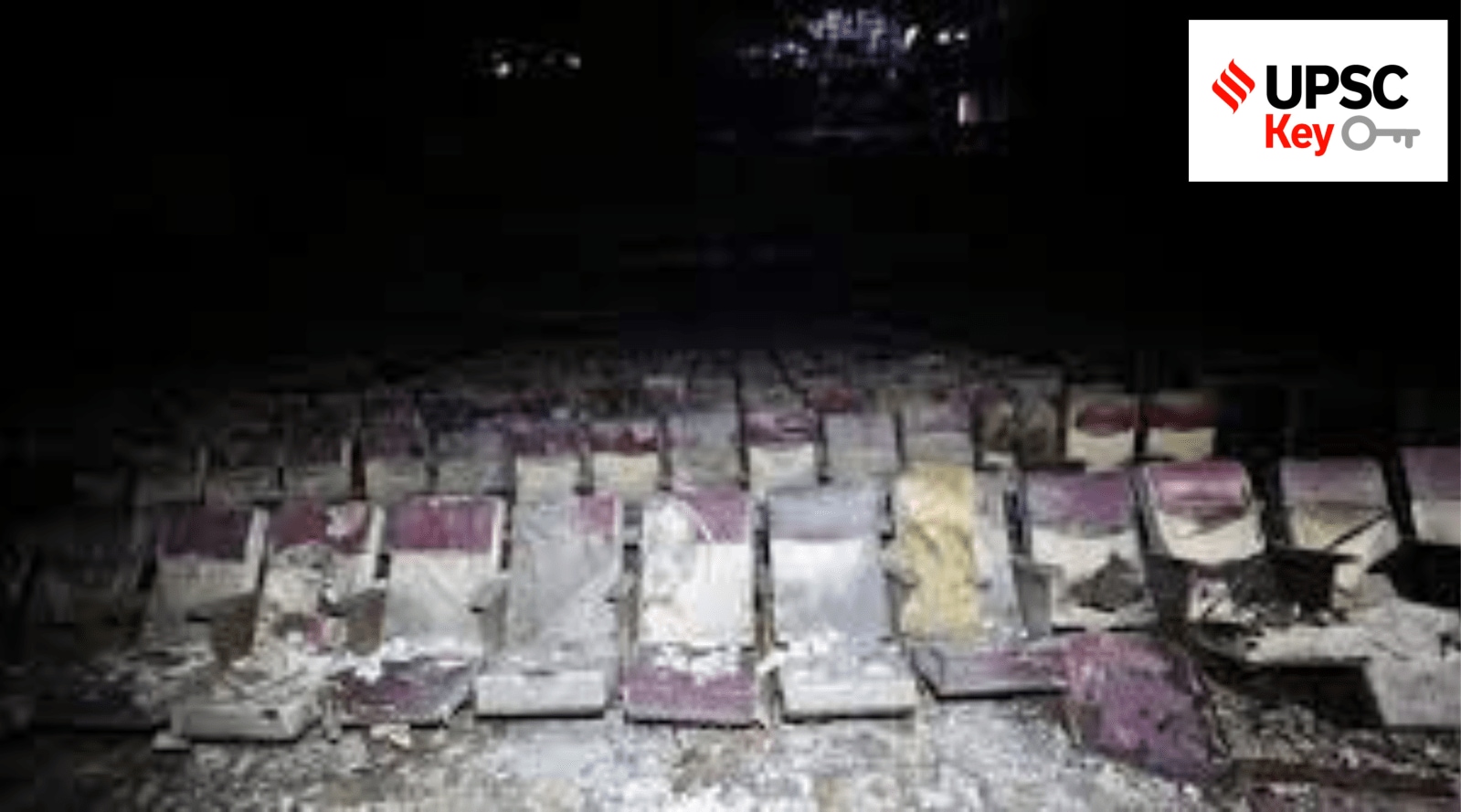
• What’s the ongoing story-A DELHI Court on Wednesday ordered the desealing of the Uphaar Cinema building in Green Park, where 59 people, mostly children, were killed in a fire tragedy — one of the worst in the country — during the screening of the Border film in 1997. The court noted that “no purpose would be served” by keeping the building sealed. The theatre became operational in 1973 on land leased by Green Park Theatres. In 1996, Green Park Theatres was named Ansal Theatres and Clubotels.
• Uphaar Cinema Fire Tragedy-Know the Story so far
• What is Supreme court of India’s verdict on the same?
• For Your Information-In 2004, the Supreme Court directed the sealing of Uphaar Cinema till the conclusion of the criminal trial. In 2007, the directors of Ansal Theatres and Clubotel, Sushil Ansal and Gopal Ansal, were convicted.
• Uphaar Cinema fire tragedy in India – Know the Causes of Fire Accidents in India
• Facts and Data’s given on Fire Safety in India by Ministry of Home Affairs, National Crime Records Bureau (NCRB) and India Risk Surveys-Know the facts
• Fire Services is a State subject or Concurrent Subject or Union Subject?
• What is the key to fire safety?
• National Building Code (NBC) of India, 2016 and Fire and Life Safety-Know the provisions
• Ministry of Urban Development, Model Building by Laws 2016 and Fire Safety-Connect the dot
• What National Disaster Management Authority (NDMA) says on Fire and Fire Safety?
• Supreme Court of India’s Guidelines on Fire Safety-Know in Detail
Other Important Articles Covering the same topic:
📍 Uphaar fire tragedy: Here’s a timeline of what happened in nearly two-decade long case
IN PARLIAMENT
136 arrests, 2 convictions under OSA in 2019-21, Rajya Sabha told
Syllabus:
Preliminary Examination: Indian Polity and Governance-Constitution, Political System, Panchayati Raj, Public Policy, Rights Issues, etc.
Mains Examination: General Studies II: Government policies and interventions for development in various sectors and issues arising out of their design and implementation.
Key Points to Ponder:
• What’s the ongoing story-Between 2019 and 2021, 136 people were arrested under the Official Secrets Act (OSA) and two were convicted, the government told the Rajya Sabha Wednesday. In a written reply to a question by MP and CPI leader Binoy Viswam, Union Minister of State for Home Nityanand Rai said a chargesheet has been filed in 110 cases while trial is pending in 354 cases. The minister said 39 cases were registered in 2019, 39 cases in 2020, and 55 cases in 2021. “Highest cases were registered in Maharashtra where six cases were lodged in 2019, 10 cases in 2020 and 21 cases in 2021. Maharashtra was followed by Punjab where seven cases were lodged in 2019, four cases in 2020 and 8 cases in 2021. In Uttar Pradesh, four cases were registered in 2019, six cases in 2020 and five cases lodged in 2021,” Rai said.
• What is Official Secrets Act?
• For Your Information-The Official Secrets Act, OSA in short, has its roots in the British colonial era. Its predecessor law, The Indian Official Secrets Act, 1904 was enacted during the time of Lord Curzon, Viceroy of India from 1899 to 1905. It was an amended and more stringent version of The Indian Official Secrets Act (Act XIV) of 1889, brought in at a time when a large number of powerful newspapers had emerged in several languages across India. Fearless editors opposed the Raj’s policies on a daily basis, building political consciousness among the people, and facing police crackdowns and prison terms to uphold their mission and convictions. One of the main purposes of the Act was to muzzle the voice of nationalist publications. In April 1923, a newer version of the Official Secrets Act was notified. The Indian Official Secrets Act (Act No XIX of 1923) replaced the earlier Act, and was extended to all matters of secrecy and confidentiality in governance in the country.
• The secrecy law broadly deals with two aspects-What are those?
• How are official documents classified?
• How do the Official Secrets Act and the Right to Information Act square up?
• Between the RTI Act and OSA, which has primacy?
• Has there been any effort to change provisions of OSA?
• What are the major instances when OSA has been invoked?
Other Important Articles Covering the same topic:
📍Delhi journalist arrested under Official Secrets Act: What is this anti-spying law?
📍Explained: India’s Official Secrets Act, its history and use
GOVT & POLITICS
In 2 years, psychiatric cases in paramilitary up by 38%: MHA
Syllabus:
Preliminary Examination: Economic and Social Development-Sustainable Development, Poverty, Inclusion, Demographics, Social Sector Initiatives, etc.
Mains Examination: General Studies II: Government policies and interventions for development in various sectors and issues arising out of their design and implementation.
Key Points to Ponder:
• What’s the ongoing story- The Ministry of Home Affairs informed the Rajya Sabha on Wednesday that the total number of psychiatric patients in the Central Armed Police Forces (CAPFs) has increased from 3,584 in 2020 to 4,940 in 2022, an almost 38 per cent spike in reported psychiatric cases.
• What exactly Ministry of Home Affairs informed the Rajya Sabha?
• Why there is an increase in the psychiatric patients in the Central Armed Police Forces (CAPFs)?
• For Your Information-According to the Ministry of Home Affairs, 3,864 cases were reported in CAPFs in 2021. “There were a total of 1,470 psychiatric patients in CRPF in 2020, 1,506 in 2021 and 1,882 in 2022. In BSF, there were 1,073 patients in 2020, 1,159 in 2021 and 1,327 in 2022, while Assam Rifles had 351 patients in 2020, 509 in 2021 and 530 in 2022. In CISF, there were 289 patients in 2020, 244 in 2021 and 472 in 2022. ITBP had 215 patients in 2020, 300 in 2021 and 417 in 2022. And in SSB, there were 186 patients in 2020, 246 in 2021 and 312 in 2022.
• What factors contribute to the high incidence of mental health issues within paramilitary organisations?
• What are the potential consequences of the increasing prevalence of mental health issues within military personnel?
• What actions has the Government of India implemented to address this issue?
Other Important Articles Covering the same topic:
📍Mental health a concern among the force
📍Suicides, fratricides in CAPFs: Task force report points to discrimination, abuse trauma, bullying
THE IDEAS PAGE
Syllabus:
Preliminary Examination: Indian and World Geography-Physical, Social, Economic Geography of India and the World.
Mains Examination:
• General Studies I: Important Geophysical phenomena such as earthquakes, Tsunami, Volcanic activity, cyclone etc., geographical features and their location-changes in critical geographical features (including water-bodies and ice-caps) and in flora and fauna and the effects of such changes.
• General Studies II: Government policies and interventions for development in various sectors and issues arising out of their design and implementation.
• General Studies III: Disaster and disaster management.
Key Points to Ponder:
• What’s the ongoing story- Shruti Jain Writes: The news of the sinking of Joshimath was widely covered. It evoked fear and anxiety in other Himalayan habitations in and outside Uttarakhand, lest a similar fate befall them. Most Himalayan sites, undergoing similar violative “development” as the Joshimath region, lie khurd-burd, as a Pahari put it — hollowed out and mutilated, and thus, vulnerable to disasters.
• Once again Joshimath is in news-why?
• For Your Information-The sinking of Joshimath has not yet stopped. Newer cracks are appearing in its houses and fields, and older ones are widening. Locals fear that particular stretches of land could slide down in heavy rainfall. Their dharna to demand rehabilitation continued from January till early April, when they were asked to discontinue it before the start of the yatra season, with assurances of prompt action. They are reportedly resuming the protests because they have no option but to stay in their damaged houses in the absence of formulation of a proper rehabilitation plan. The situation warrants serious reflection and raises questions that have relevance for most Himalayan areas.
• Run-of-the-river (RoR) hydropower projects in the Himalayan states-what are the issues and challenges?
• What Ravi Chopra committee which was constituted by the Supreme Court says about the developmental project in Himalayan States
• Do You Know-Research has also shown that these projects have a role in creating and aggravating the disasters like the floods of 2013 and 2021 in Uttarakhand. Expert bodies like the Ravi Chopra committee constituted by the Supreme Court have established this. The committee reasoned that the construction of RoRs, at sediment-rich elevations formed by the receding of glaciers, above the main central thrust — like that of the Joshimath region — is an invitation for disaster.
• “The Tapovan Vishnugad project in Joshimath has been linked to the build-up of socio-ecological problems in the
region since its commencement in 2005”-Discuss
• Why must the locals keep bearing the burden of destruction caused by such a project?
• What is Land subsidence or subsidence of the land?
• Why Joshimath is sinking?
• What are the types of subsidence?
• What is the most common cause of subsidence?
• What is Article 225 of the Constitution?
• Map Work-Joshimath
• The appearance of cracks on many roads and houses across Joshimath, due to land subsidence, is neither a new phenomenon in this region-Why this region is more prone to land subsidence?
• “Today’s situation is a result of a variety of reasons, both natural and man-made,”-Can you tell what are the man-made reasons?
• What M C Mishra committee report said regarding the same?
• What experts says about Joshimath town-planning and construction work?
• ‘Relief and rescue efforts were intensified in Joshimath after it was declared a landslide and subsidence-hit zone’-What happens when a place is declared a landslide and subsidence-hit zone?
• How disaster management is done in the landslide and subsidence-hit zone?
• How do the Centre and state government ensure the safety and rehabilitation of residents?
Other Important Articles Covering the same topic:
Previous year UPSC Mains Question Covering similar theme:
📍 Describe the various causes and the effects of landslides. Mention the important components of the National Landslide Risk Management Strategy. (2021, GS3)
📍 Discuss the recent measures initiated in disaster management by the Government of India departing from the earlier reactive approach. (2020, GS3)
📍Vulnerability is an essential element for defining disaster impacts and its threat to people. How and in what ways can vulnerability to disasters be characterized? Discuss different types of vulnerability with reference to disasters. (2019, GS3)
📍Disaster preparedness is the first step in any disaster management process. Explain how hazard zonation mapping will help disaster mitigation in the case of landslides. (2019, GS3)
📍How important is vulnerability and risk assessment for pre-disaster management? As an administrator, what are key areas that you would focus on in a Disaster Management System? (2013, GS3)
EXPLAINED
As Art 370 hearings begin, question of the ‘temporary’ provision
Syllabus:
Preliminary Examination: Indian Polity and Governance-Constitution, Political System, Panchayati Raj, Public Policy, Rights Issues, etc.
Mains Examination: General Studies II: Indian Constitution—historical underpinnings, evolution, features, amendments, significant provisions and basic structure.
Key Points to Ponder:
• What’s the ongoing story-The Supreme Court on Wednesday (August 2) began hearing the constitutional challenge to the 2019 abrogation of Article 370 of the Constitution which granted special status to Jammu and Kashmir. Outlining the genesis of the accession of Jammu and Kashmir to India, senior advocate Kapil Sibal, who began arguments for the petitioners, spoke on why Article 370 is commonly referred to as a “temporary provision”.
• Was Article 370 a temporary provision?
• Why Article 370 is commonly referred to as a “temporary provision”?
• Article 370 of the Indian Constitution-What you about this article?
• How was Article 370 enacted?
• For Your Information-Petitions challenging the August 2019 decision of the Union government last came up in the Supreme Court on March 2, 2020, when a five-judge bench presided by Justice N V Ramana rejected the prayer to refer the petitions to a larger Bench. The court, however, made it clear that its order “is confined to the limited preliminary issue of whether the matter should be referred to a larger Bench” and “have not considered any issue on the merits of the dispute”. The other members on the Bench were Justices Sanjay Kishan Kaul, R Subhash Reddy, B R Gavai and Surya Kant. Justice Reddy retired in January last year and Justice Ramana retired as Chief Justice of India in August 2022. There are as many as 23 petitions relating to the issue pending before the court. They challenge the Presidential orders of August 5 and 6, 2019 as well as The Jammu and Kashmir Reorganisation Act, 2019. The petitions challenge the Presidential Orders of August 5–6, 2019, as well as The Jammu and Kashmir Reorganisation Act, 2019. The August 5 order titled Constitution (Application to Jammu and Kashmir) Order, 2019, was passed in exercise of the power under Article 370(1)(d) of the Constitution, superseding the 1954 Presidential Order that introduced Article 35A, which empowered the state of J&K to define who is a permanent resident and make special laws for them.
• What specific aspect of Article 370 has been contested before the Supreme Court?
• What exactly Centre has told the Supreme Court in its affidavit?
Other Important Articles Covering the same topic:
📍SC to hear pleas against abrogation of Article 370: Here’s what you need to know
📍Explained: What are Articles 370 and 35A?
📍Explained: What’s changed in Jammu and Kashmir?
Syllabus:
Preliminary Examination: Current events of national and international importance.
Mains Examination: General Studies III: Science and Technology- developments and their applications and effects in everyday life.
Key Points to Ponder:
• What’s the ongoing story-Last week, two South Korean researchers posted two related papers on the internet, not yet peer-reviewed, claiming that a lead-based compound they had developed had shown superconducting properties at room temperature, under normal pressure conditions. While the possible discovery of a room temperature superconductor set the physics community abuzz with discussions, it triggered less excitement and more a sense of déjà vu.
Such a discovery is a sure shot Nobel Prize winner. More than that, it has the potential to revolutionise the technology space, and be one of the most impactful scientific discoveries of this century. Yet such a material has proved to be notoriously elusive.
• What is superconductivity?
• For Your Information-It is a state in which a material shows absolutely zero electrical resistance. While resistance is a property that restricts the flow of electricity, superconductivity allows unhindered flow. Electricity is essentially the movement of free electrons in a conducting material like copper. While the movement of electrons is in one particular direction, it is random and haphazard. They frequently collide with one another, and with other particles in the material, thus offering resistance to the flow of current. The picture is similar to one of messy traffic in a congested urban area. In the process, a lot of electrical energy is lost as heat. Resistance is a measurable quantity, which varies with the material. In a superconducting state, however, the material offers no resistance at all. All the electrons align themselves in a particular direction, and move without any obstruction in a “coherent” manner. It is akin to vehicles moving in an orderly fashion on a superhighway. Because of zero resistance, superconducting materials can save huge amounts of energy, and be used to make highly efficient electrical appliances.
• What current superconductors look like?
• Superconductivity at room temperature-Why it is rare?
• “Room temperature superconductivity is a holy grail of science, and promises instant stardom”-Comment
Other Important Articles Covering the same topic:
📍Simply Put: Promise of a new science
For any queries and feedback, contact priya.shukla@indianexpress.com
The Indian Express UPSC Hub is now on Telegram. Click here to join our channel and stay updated with the latest Updates.

Read UPSC Magazine