Premium
This is an archive article published on November 25, 2024

Between LS and Assembly polls in Jharkhand, surge in women coming out to vote

In state elections held in the wake of the popular Maiyya Samman Yojana of the JMM govt, the gap in polling percentage on gender lines was striking.

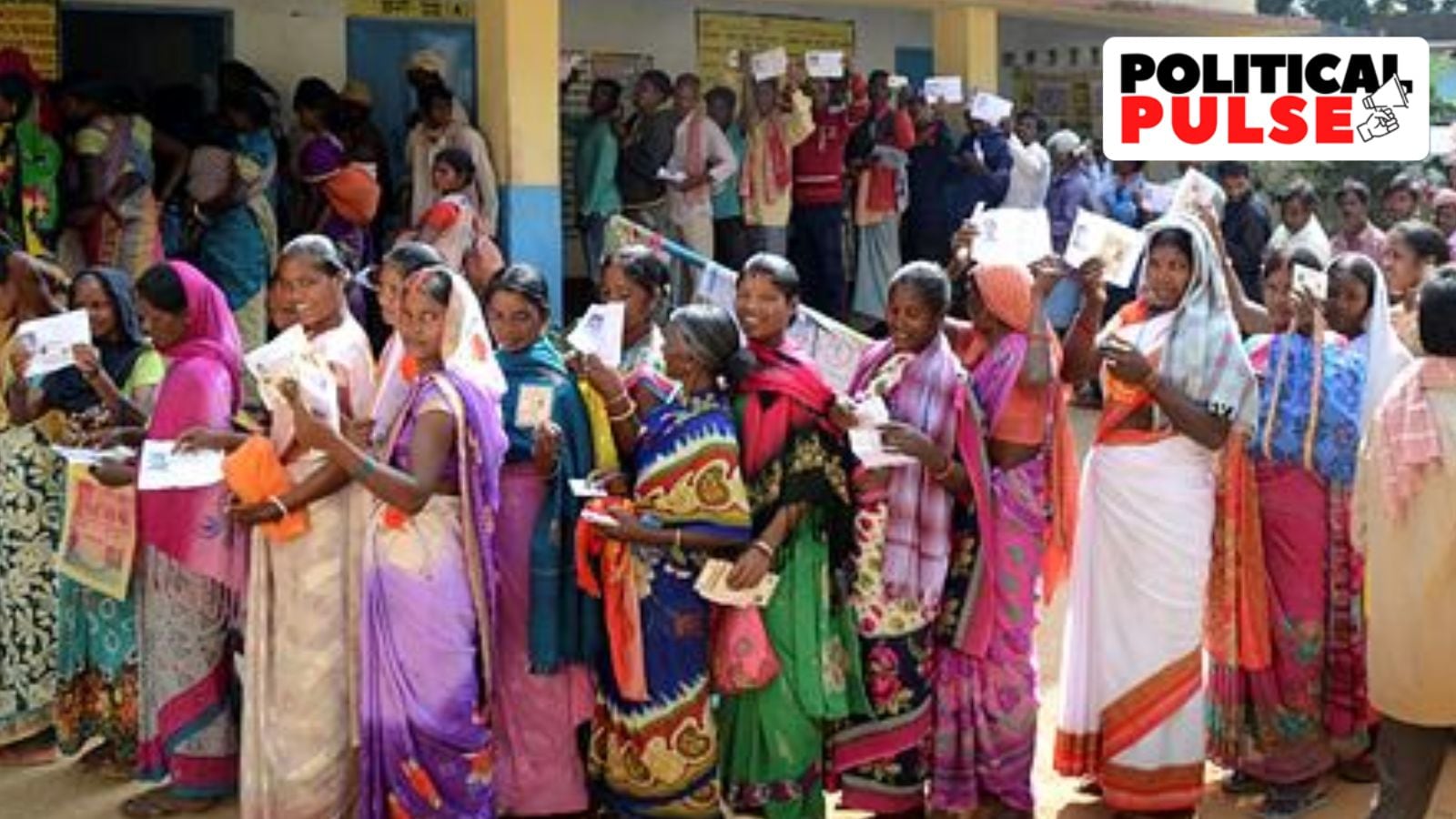
Jharkhand Assembly electionsIn terms of voting, women outnumbered men. (File photo)

With women voters having played a key role in propelling the Hemant Soren-led government to its second consecutive term – a first in the state’s 24-year-old history – women MLAs are likely to get their fair share in the state Cabinet, sources within the Jharkhand Mukti Morcha (JMM) said.

Twelve women MLAs have been elected to the Jharkhand Assembly this time, of whom eight belong to the INDIA bloc (five to the Congress and three to the JMM) and four to the BJP.

Election Commission data shows that the number of women voters in Jharkhand saw a significant jump in the six-month period between the Lok Sabha and Assembly polls. While the increase in the number of male voters was 17,777, around 2.5 lakh women were added to the electoral rolls in the period between the two elections.

“Our base was the 2019 polls, from when around 19 lakh women were added to the electoral rolls. We intended to target that section of the electorate and we succeeded,” sources involved in the formulation of the JMM government’s Maiyya Samman Yojana, which is believed to have proved a winner with women voters, said.

In terms of voting too, women outnumbered men. While 91.16 lakh women cast their votes, the number for men stood nearly 6 lakh behind. In terms of voting percentage, 70.46% of the women voters cast their ballot, while 65% of the men did.

In the Lok Sabha elections held five months ago, where the NDA did well, the gap between women and men voters was much lesser – 87.11 lakh and 83.85 lakh, respectively. Even the gap between how many women and men voters turned out was much lower too, 68.67% for women, and 63.79% for men. The surge in the gap in the Assembly polls was largely because many more women came out to vote this time than in the Lok Sabha elections – in absolute numbers, 7.3 lakh more women voted compared to 1.8 lakh more men.

In fact, women outnumbered men in terms of voting in as many as 72 of the state’s 81 Assembly constituencies this time. Of these, 48 seats were won by the INDIA bloc (29 JMM, 14 Congress, 4 RJD and 1 CPI-ML-L), and 22 by the NDA (BJP 20, AJSU Party 1, LJP (Ram Vilas) 1).

Story continues below this ad

The trend of more women voters also held true for constituencies which saw high polling, for example Nala (80.56%, the highest in the state); ST-reserved Maheshpur (78.92%); Saraikella (70%); and Gandey (67%). While the JMM’s Kalpana Soren and Stephen Marandi won from Gandey and Maheshpur, respectively, the winner in Saraikella was JMM-turned-BJP leader Champai Soren.

In contrast, in Khijri, which saw just 52.46% polling, women voting percentage at 51% was 4 percentage points behind men. The Congress’s Rajesh Kachhap won this seat by over 29,000 votes.

The Maiyya Samman Yojana, introduced this year, provides a monthly assistance of Rs 1,000 to underprivileged women between the 18-50 age group. Months ahead of the polls, the Soren government had approved a hike in the aid to Rs 2,500 from December.

Jatin Anand is an Assistant Editor with the national political bureau of The Indian Express. With over 16 years of experience in mainstream journalism, he is a seasoned expert in national governance, electoral politics, and bureaucratic affairs. Having covered high-stakes beats including the Election Commission of India (ECI), intelligence, and urban development, Jatin provides authoritative analysis of the forces shaping Indian democracy. He is an alumnus of Zakir Husain Delhi College (DU) and the prestigious Asian College of Journalism (ACJ), Chennai, where he specialized in Print Journalism. Expertise High-Stakes Beat Coverage: Throughout his decade-and-a-half career, Jatin has covered some of the most sensitive and influential beats in the country, including: The Election Commission of India (ECI): Monitoring electoral policy, reforms, and the conduct of national and state polls. National Security & Intelligence: Reporting on the internal mechanisms and developments within India's security apparatus. Urban Development: Analyzing the policies and bureaucratic processes driving the transformation of India’s cities. National Political Bureau: In his current role, he tracks the intersection of policy and politics, offering deep-dive reporting on the Union government and national political movements. Academic Credentials: Zakir Husain Delhi College (DU): Alumnus of one of Delhi's premier institutions. Asian College of Journalism (ACJ), Chennai: Specialized in Print Journalism at India's most prestigious journalism school. ... Read More


 

Latest Comment
Post Comment
Read Comments
Advertisement
Advertisement
Advertisement
Advertisement