7 min read
© The Indian Express Pvt Ltd



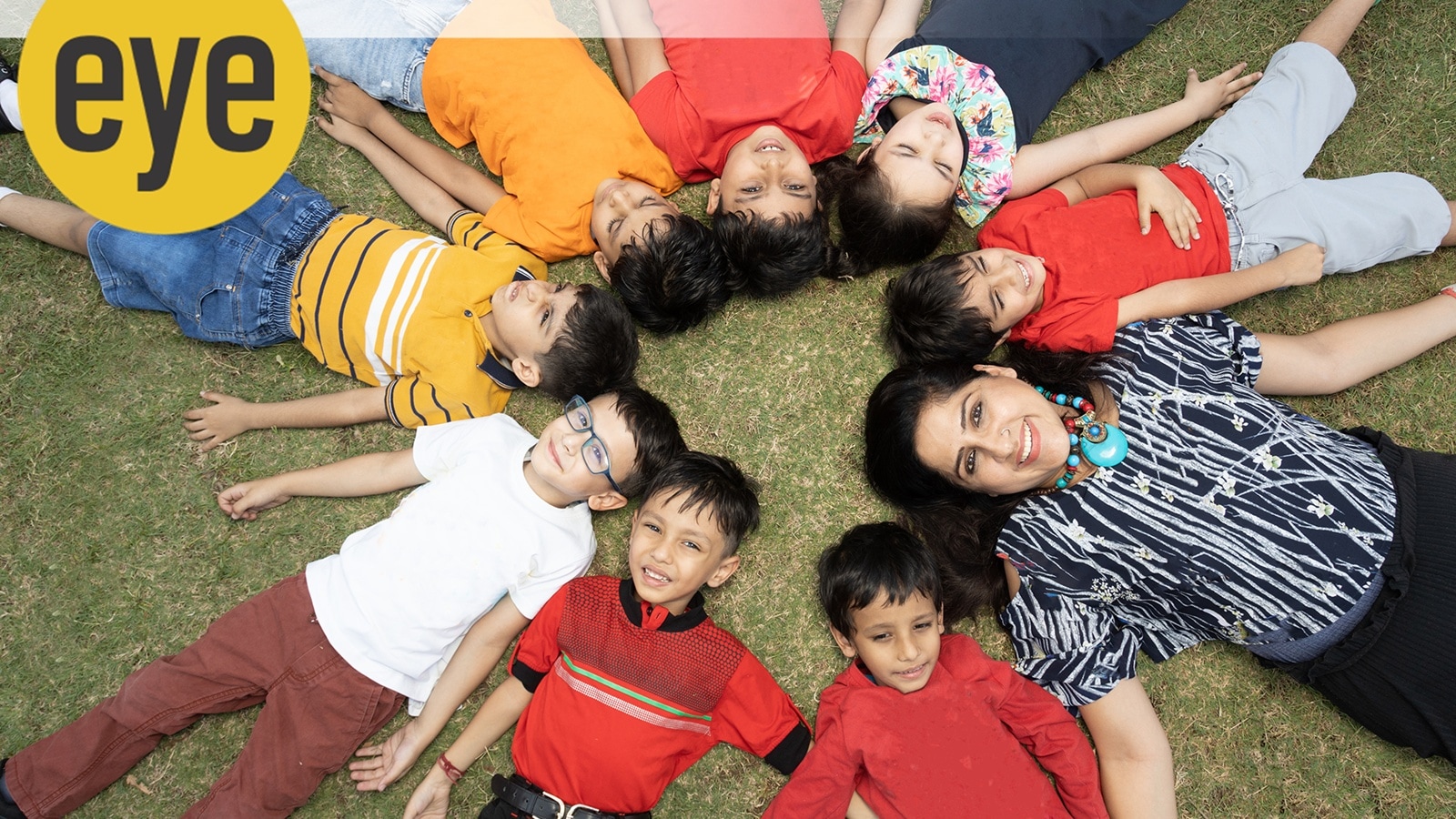 What is most frightening about this “torture in the name of discipline method” is that it
weaponises the very people who can protect the child — peers and parents (Photo: Getty Images)
What is most frightening about this “torture in the name of discipline method” is that it
weaponises the very people who can protect the child — peers and parents (Photo: Getty Images)In the old British times, canaries were sent down coal mining shafts to detect toxic gases. I think our children are metaphorical canaries of our times. Keeping in mind the spate of recent children’s suicides, the youngest being nine years old, I am going to put the spotlight on our schools for this rising toxicity. This is not to blame, but to reflect and take accountability for how we are harming our children.
Schools can perpetuate torture on our children in the name of discipline. From an early age, children start getting branded with labels like “lazy”, “duffer,” “pagal,” “slow”, “nalayak,” “failure,” “good for nothing” and so on. The ones targeted most being generally the most vulnerable. Children with visible and invisible disabilities, those who do not get high grades, who come from low-income, non-savarna families. I have heard stories of children being locked in dark bathrooms, beaten, having their tiffin taken away and not being allowed to go to the toilet until they wet their pants. In the news, we hear of much worse – children being asked to clean toilets; a child dying after being made to do 100 sit-ups; a pen being pressed between tiny fingers; being tied up and beaten; branded with a hot iron; standing on a chair until collapse; being made to stand in the sun in peak summer afternoon.
What is most frightening about this “torture in the name of discipline method” is that it weaponises the very people who can protect the child — peers and parents. Sona grew up in a shelter home for street children. She shared that once her teacher tore up her notebook in class, calling her a “duffer,” and encouraged other children to join in the public humiliation. During the break, she spent hours locked in the toilet to escape her peers. Anand was forced to take off his trousers in class, and the class jeered at him when he started crying. Shahana, studying in Class 10, described it as, “Schools are like Hunger Games. We are pitted against each other and it is survival of the fittest.”
Parents are also recruited into this deadly game by repeated complaints and blame. Again, the ones most targeted are those whose children do not fit the normative ideas of academic success. They are humiliated in the PTMs, in the principals’ offices and in turn, in their desperation, they punish their children.
Children do not suddenly, on a whim, decide that they want to end their lives. They hang on to threads that tie them to life – it could be a loving home, a sense of belonging in school, a feeling of worthiness, knowing that they are active agents in their own lives, and so much more. What if threads were snipped off one at a time until there is nothing but shame, isolation and no hope? Then a little nudge can be a
tipping point. Maybe it was an impulse at that time, but we erase the months and years that led to that moment.
There has been huge outrage at the number of suicides in children in the past couple of weeks. One in Class 4, one in Class 7 and one in Class 10. How can we even make sense of this? I have heard statements like, “Children these days are very fragile”, “They are too impulsive.” These ideas are problematic as they assume that our children are disordered when it is the structural and systemic injustices in our society that are out of order. Canaries cannot be blamed for the toxicity in the mines.
Saving our children’s lives is a civil rights issue. We have to keep their safety at the centre and then think about how we design education around it. Not vice versa. Once we have that clarity, then there are so many innovative ways to reimagine schooling.
The National Education Policy (NEP) has five foundational pillars: access, equity, quality, affordability, and accountability. What if, at the centre of all these, was upholding the dignity of every child? Not just as a vague concept but as clear practice guidelines on language, respect, how to respond to children when they go through difficult times, and ways to build inclusive classrooms, etc. You might
dismiss this as requiring too many resources or time but let’s go back to the principle. We have to keep children’s safety at the centre and then think about how we design education around it. Not vice versa.
Many times, teachers have shared with me that they are aware that some teachers are extremely “cruel” towards students, but they do not want to talk about it because they fear a backlash or, at times, even losing their job. It is the management’s job to ensure accountability is woven into daily practices. We cannot wait for our children to die to start taking action. It also does not help if the action against teachers is punitive. That perpetuates the culture of harm and injustice. Teachers are just replicating what they have learned in the culture they have grown up in. We have to design wholesome systems that include training in compassion as a prerequisite to being a teacher, an early response to transgressions, and a system that prioritises teachers’ wellbeing. Schools that care for their teachers care for their children.
Many times, children find it easier to talk to other children who are non-judgmental and can understand the struggles of being a student. What if, in every school, some senior students were trained as peer mentors who could provide a safe space to listen, understand, or even gently steer them toward an adult they trust, such as a parent, school counsellor, or teacher? I have heard so many stories of children who
have shared their struggles with a peer and felt immense relief that someone “gets it” and “I am not the only one who feels like this.” This approach is impactful when participation is voluntary, and the peer mentors are well-trained and supported by the counselling team.
I remember an instance when a school principal was telling me how particular they were about their “antibullying policy”. Soon after, I saw her berating a teacher harshly in front of me. I was reminded of a young 16-year-old’s words, “Management bullies the principal, the principal bullies the teachers, and then the teachers bully the students. Then they tell the students not to bully others!” When I asked young people, “What will make for safer schools?”, their answers reminded me that the problem might be complex, but the solution does not have to be rocket science. “Let our worth not be defined by our grades” and “Show us that you care.” What they are asking for is simple – understanding without judgment, being curious about what sustains them and keeps them going and standing alongside them, not against them. A fellow therapist shared a statement by a young person who was contemplating suicide, which will stay with me forever: “Don’t try to stop us, try to understand us. When you understand us, together we can try to stop us.”
Schools That Care is an initiative by Children First for building communities of care.