3 min read
📣 For more lifestyle news, click here to join our WhatsApp Channel and also follow us on Instagram
© IE Online Media Services Pvt Ltd



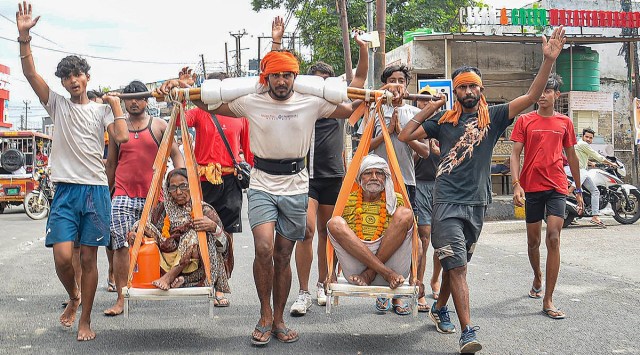 Rahul Saini, a resident of Ghaziabad, with others passes by while carrying his grandparents on shoulder during Kanwar Yatra, in Muzaffarnagar. (PTI Photo)
 With the beginning of the month of Sawan comes the Kanwar Yatra, an annual pilgrimage of the devotees of Lord Shiva. This year, it will start on July 4 and will conclude on July 15.
The yatra derives its name from the word ‘kanwar’ meaning a bamboo pole to which containers of holy water are tied at opposite ends. Lakhs of devotees travel to pilgrimage places like Haridwar, Gaumukh, Gangotri in Uttarakhand, Sultanganj in Bihar, Prayagraj, Ayodhya and Varanasi in Uttar Pradesh, and return by carrying Ganga water in kanwars to seek the blessings of Mahadev. The water is then offered to Shiva temples, including the 13 Jyotirlingas across India. The ritual is known as Jal Abhishek.
The Kanwar yatra commences on the first day of Shravan and culminates on Chaturdashi Tithi, the 14th day during the waning phase of the lunar cycle.
History of Kanwar Yatra
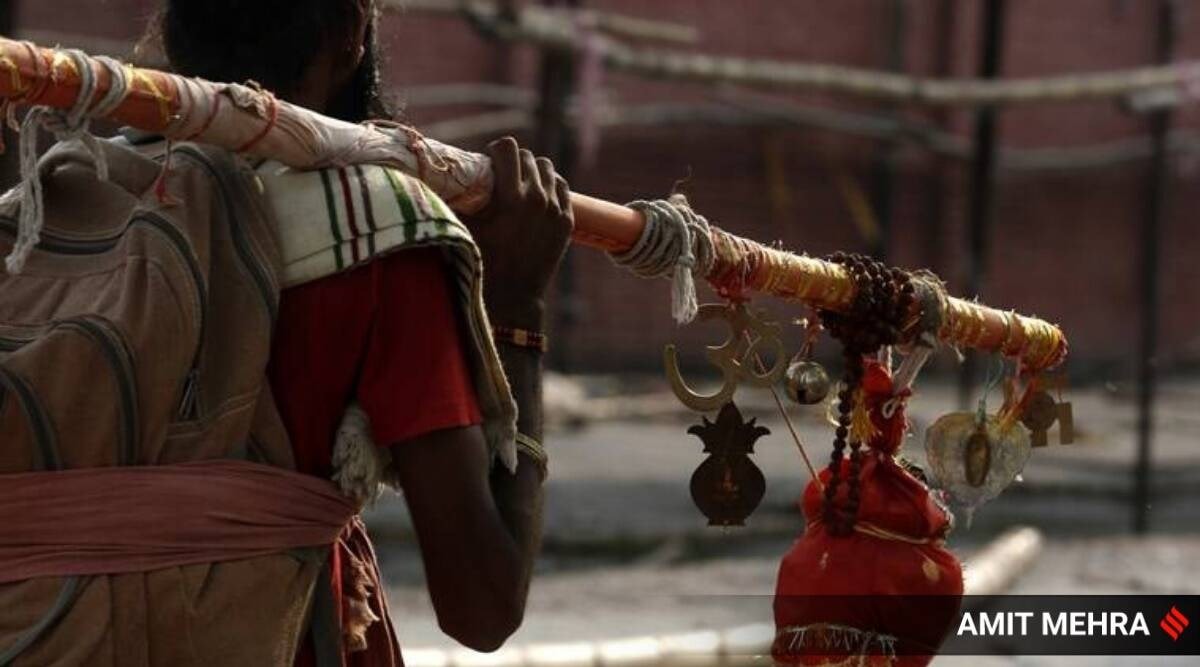 The journey is usually undertaken in the monsoon month of Shravana (between July and August). (Express photo by Amit Mehra)
Ravana is said to be the first Kanwariya. According to mythological beliefs, the churning of the ocean (Samudra Manthan) brought out the poison and the world started burning. To save the world, Lord Shiva accepted to inhale poison because of this he started suffering from the negative energy of poison. In Treta Yuga, Shiva’s devout follower Ravana did meditation. He brought holy water in his kanwar and anointed the Shivling with the same water. This helped Lord Shiva remove the poison from inside him.
In another legend, the first Kanwar Yatra was undertaken by Lord Parshuram, a fervent devotee of Lord Shiv. While passing through Pura in present-day Uttar Pradesh, he decided to lay the foundation for a temple dedicated to the deity. He offered Ganga water every Monday during Shravan for worship.
Significance
As per the Hindu scriptures, Lord Shiva’s blessings can help with every major crisis in life. It is believed that even if someone offers a glass of water to him with complete devotion and genuine emotions, his grace is bestowed on the person. That is the reason, every year devotees take out the Kanwar Yatra to show their devotion to Lord Shiva.
During the whole journey, Kanwars have to make sure that the earthen pots do not touch the ground. While carrying the water, devotees walk barefoot, and some complete the pilgrimage by lying flat on the ground. They are clad in saffron clothing while undertaking the journey. Many observe fasts during the pilgrimage and restrict consumption of food, water and salt.
📣 For more lifestyle news, follow us on Instagram | Twitter | Facebook and don’t miss out on the latest updates!