Premium
This is an archive article published on September 22, 2022

Number of people living with Type 1 diabetes set to almost double by 2040 in India: Lancet study

Non-diagnosis remains a big problem, especially in rural India, where symptoms of Type 1 diabetes may not be recognised or diagnosed. After the onset, people need insulin to survive. Even children with Type 1 diabetes can live for 70 or more years with good health. Hence there should be an equitable distribution of insulin, say experts

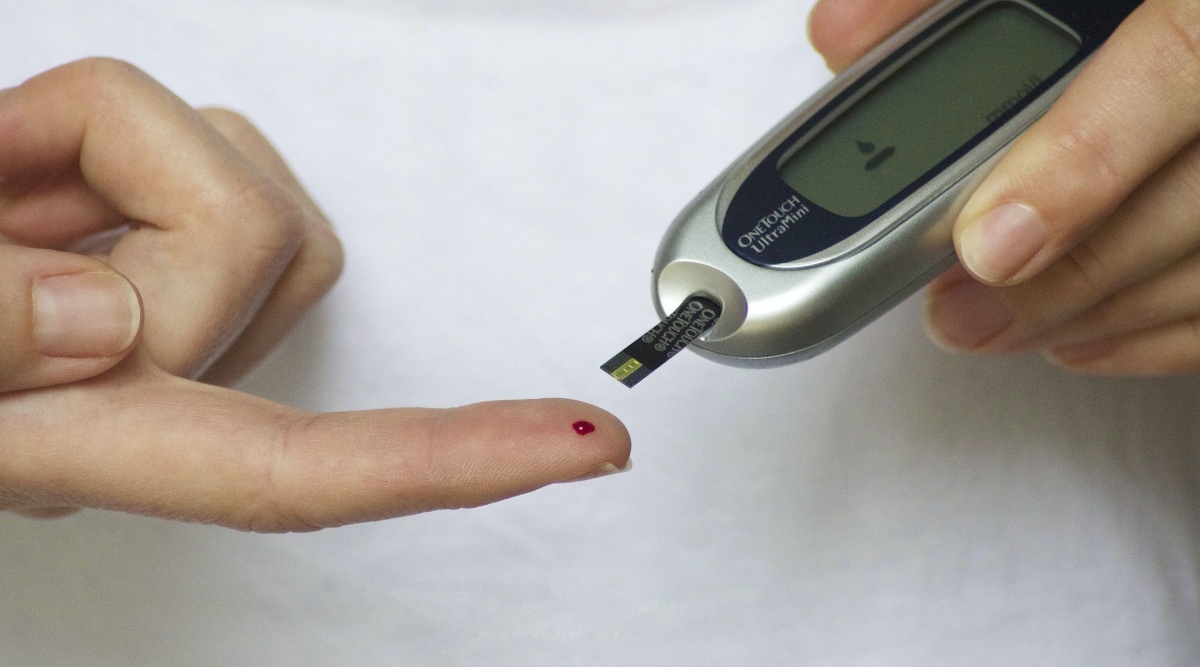
According to the results of a new modelling study published in The Lancet Diabetes and Endocrinology, an estimated 8.4 million people were living with Type 1 diabetes across the globe in 2021. (Representational image: Pixabay)According to the results of a new modelling study published in The Lancet Diabetes and Endocrinology, an estimated 8.4 million people were living with Type 1 diabetes across the globe in 2021. (Representational image: Pixabay)

India is among the high-occurrence countries of people living with Type 1 diabetes that is predicted to see an increase in numbers by 2040. As of today, there are approximately 8.6 lakh people with Type 1 diabetes in India with one in six young people dying without a diagnosis.

According to the results of a new modelling study published in The Lancet Diabetes and Endocrinology, an estimated 8.4 million people were living with Type 1 diabetes across the globe in 2021. This number is predicted to increase to 13.5-17.4 million by 2040. The ten countries with the highest estimated prevalence — USA, India, Brazil, China, Germany, UK, Russia, Canada, Saudi Arabia and Spain — account for 5.08 million or 60 per cent of global cases of Type 1 diabetes.

If India can ensure that everyone with Type 1 diabetes can access stable human insulin as well as test strips to self- monitor blood glucose, 21 of those healthy life years could be restored. “If India can do this by 2023, more than half a million more people will be alive with Type 1 diabetes in 2040,” says Priyanka Rai, Director, Global Policy, Juvenile Diabetes Research Foundation and co-author of the study. The model estimates also suggest that 21 per cent of individuals with Type 1 diabetes live in lower income countries and lower middle income countries.

“Non-diagnosis remains a big problem, especially in rural India, where symptoms of Type 1 diabetes may not be recognised or diagnosed. Type 1 diabetes is frequently misdiagnosed as different conditions, particularly infectious diseases, and without proper education on the signs, health practitioners tend to miss them. After the onset of Type 1 diabetes, people need insulin to survive. The biggest difference to care management then would be enabling access to a stable supply of insulin and test strips, as well as education that enables self-management for people living with Type 1 diabetes. Right now, the prevailing clinical management regime in India tends to be pre-mixed insulin injections (taken once or twice a day), with little or no focus on self-monitoring of blood glucose,” adds Rai. The result is poor glycaemic control and early onset of complications, leading to the average person with Type 1 diabetes in India losing nearly 45 years of his healthy life span to the condition.

Type 1 diabetes is an autoimmune disease targetting pancreatic β-cells that results in life-long absolute insulin deficiency. It is frequently associated with reduced quality of life, serious long-term complications, shortened life expectancy, and substantial costs for individuals and health-care systems, even in high-income countries with access to recent advances in diabetes management.

Dr V Mohan, noted diabetologist and Chairman of Dr Mohan’s Diabetes Specialities Centre, Chennai, says this study is one of the first to look at the global prevalence of Type 1 diabetes. “It is worrying that the numbers of children and adults with Type 1 diabetes is so high in India. The top priority of the government and society is to ensure that every child and adult with Type 1 diabetes has accessibility to insulin and that it is made freely available to all those who need it. For those with Type 1 diabetes, insulin is the elixir of life and the only known treatment. In one of our published studies, we have shown that even children with Type 1 diabetes can live for 70 or more years with good health. There are some who have crossed 85 years and hence there should be an equitable distribution of insulin,” he says.

The management of type 1 diabetes relies heavily on insulin and frequent glucose testing. For low-income families, this is practically unaffordable due to the heavy financial burden. “The society, government, schools and individuals will have to prepare to manage this epidemic more effectively. Philanthropic organisations, including those like the Hinduja foundation, Mukul Madhav foundation and others have helped in several ways over the years. Much more needs to be done in helping overcome the stigma attached to the disease, especially for young girls,” says Dr C S Yajnik, Director, KEM hospital’s diabetes unit and Professor at Danish Diabetes Academy.

Story continues below this ad

Model estimates also place global deaths due to Type 1 diabetes at 1,75,000 in 2021. Of these, 35,000 or 20 per cent were attributed to non-diagnosis, of which 14,500 were in sub-Saharan Africa and 8,700 were in South Asia. The researchers estimate that an extra 3.1 million people would have been alive in 2021 if they hadn’t died prematurely due to sub-optimal care and a further 700,000 people would still be alive if they hadn’t died prematurely due to non-diagnosis.

In 2021, the model estimated that 8.4 million individuals worldwide were living with Type 1 diabetes. Of these individuals, 18 per cent were under 20 years old, 64 per cent were between 20 and 59 years while 19 per cent were over 60 years. Although historically Type 1 diabetes has been a disease associated with onset in childhood, these results reveal that numerically more adults than children are diagnosed every year (316,000 vs 194,000 incident cases worldwide in 2021), with a mean diagnosis age of 32 years. Type 1 diabetes associated mortality in 2021 in South Asia was 42,272.

Researchers modelled data on childhood, adolescent and adult Type 1 diabetes prevalence in 97 countries, along with incidence over time data from 65 countries and mortality data from 37 countries. The estimates were tested for accuracy against real world prevalence data from 15 countries. Authors have said in the report that their findings indicate that the overall footprint of Type 1 diabetes is much larger than previous estimates have indicated, when missing prevalence due to excess mortality is accounted for. “Given that prevalence of people with Type 1 diabetes is projected to increase in all countries to up to 17.5 million cases in 2040, our results provide a warning for substantial negative implications for societies and healthcare systems. There is an opportunity to save millions of lives in the coming decades by raising the standard of care for Type 1 diabetes (including ensuring universal access to insulin and other essential supplies) and increasing awareness of the signs and symptoms of Type 1 diabetes to enable a 100 per cent rate of diagnosis in all countries,” says Prof Graham Ogle, one of the authors of the study, Sydney Medical School, University of Sydney, Australia.

Anuradha Mascarenhas is a Senior Editor at The Indian Express, based in Pune. With a career spanning three decades, she is one of the most respected voices in Indian journalism regarding healthcare, science and environment and research developments. She also takes a keen interest in covering women's issues . Professional Background Education: A gold medalist in Communication and Journalism from Savitribai Phule Pune University and a Master’s degree in Literature. Author: She authored the biography At The Wheel Of Research, which chronicles the life and work of Dr. Soumya Swaminathan, the former Chief Scientist at the WHO. Key Focus: She combines scientific accuracy with storytelling, translating complex medical research into compelling public and human-interest narratives. Awards and Recognition Anuradha has won several awards including the Press Council of India's national award for excellence in journalism under the gender based reporting category in 2019 and the Laadli Media award (gender sensitivity -2024). A recipient of the Lokmat journalism award (gender category-2022), she was also shortlisted for the RedInk awards for excellence in journalism-2021. Her debut book At The Wheel Of Research, an exclusive biography of Dr Soumya Swaminathan the inaugural chief scientist of World Health Organisation was also nominated in the Popular Choice Category of JK Paper AUTHER awards. She has also secured competitive fellowships including the Laadli Media Fellowship (2022), the Survivors Against TB – New Research in TB Media Fellowship (2023) and is part of the prestigious 2025 India Cohort of the WomenLift Health Leadership Journey.” Recent Notable Articles (Late 2025) 1. Cancer & Specialized Medical Care "Tata Memorial finds way to kill drug-resistant cancer cells" (Nov 26, 2025): Reporting on a breakthrough for triple-negative breast cancer, one of the most aggressive forms of the disease. Discipline, diet and purpose; How a 97-year-old professor defies ageing'' (Nov 15, 2025) Report about Prof Gururaj Mutalik, the first Head of Department at Pune's B J Government Medical College who at 97 credits his longevity to healthy habits and a strong sense of purpose. 2. Environmental Health (The "Breathless Pune" Series) Long-term exposure even to 'moderate' air leads to chronic heart, lung, kidney issues" (Nov 26, 2025): Part of an investigative series highlighting that even "safe" pollution levels are damaging to vital organs. "For every 10 µg/m3 increase in PM2.5 level, there was 6-8% jump in medicine sales" (Nov 23, 2025): Using commercial data to prove the direct link between air quality and respiratory illnesses in Pune. 3. Lifestyle & Wellness News "They didn't let cancer, diabetes and heart disease stop them from travelling" (Dec 22, 2025): A collaborative piece featuring survivors who share practical tips for traveling with chronic conditions. At 17, his BP shot up to 200/120 mmHG; Lancet study flags why child and teen hypertension doubled between 2000 and 2020'' (Nov 12,2025)--A report that focusses on 17-year-old-boy's hypertensive crisis and reflects the rising global trend of high blood pressure among children and adolescents. 4. Scientific Recognition & Infrastructure For promoting sci-comm, gender diversity: IUCAA woman prof highlighted in Nature" (Nov 25, 2025): Covering the global recognition of Indian women scientists in gender studies and physics. Pune researchers find a spiral galaxy like the Milky Way from early universe'' (December 3, 2025)- A report on how Indian researchers discovered a massive galaxy that existed when the universe was just 1.5 billion years old , one of the earliest to have been observed so far. Signature Beat: Health, Science & Women in Leadership Anuradha is known for her COVID-19 reportage, where she was one of the first journalists to provide detailed insights into the Covishield and Covaxin trials. She has a dedicated interest in gender diversity in health and science, often profiling women researchers who are breaking the "leaky pipeline" in STEM fields. Her writing style is scrupulous, often featuring interviews with top-tier scientists and health experts from various institutions.   ... Read More


📣 For more lifestyle news, click here to join our WhatsApp Channel and also follow us on Instagram


Latest Comment
Post Comment
Read Comments
Advertisement
Advertisement
Advertisement
Advertisement