Premium
This is an archive article published on January 11, 2022

Explained: Selecting the Covid-19 booster vaccine

Covid-19 booster dose: 'Precautionary' doses for vulnerable groups have begun, using the same vaccine the beneficiaries were previously given. What is the rationale behind this, and the arguments for and against mixing vaccines?

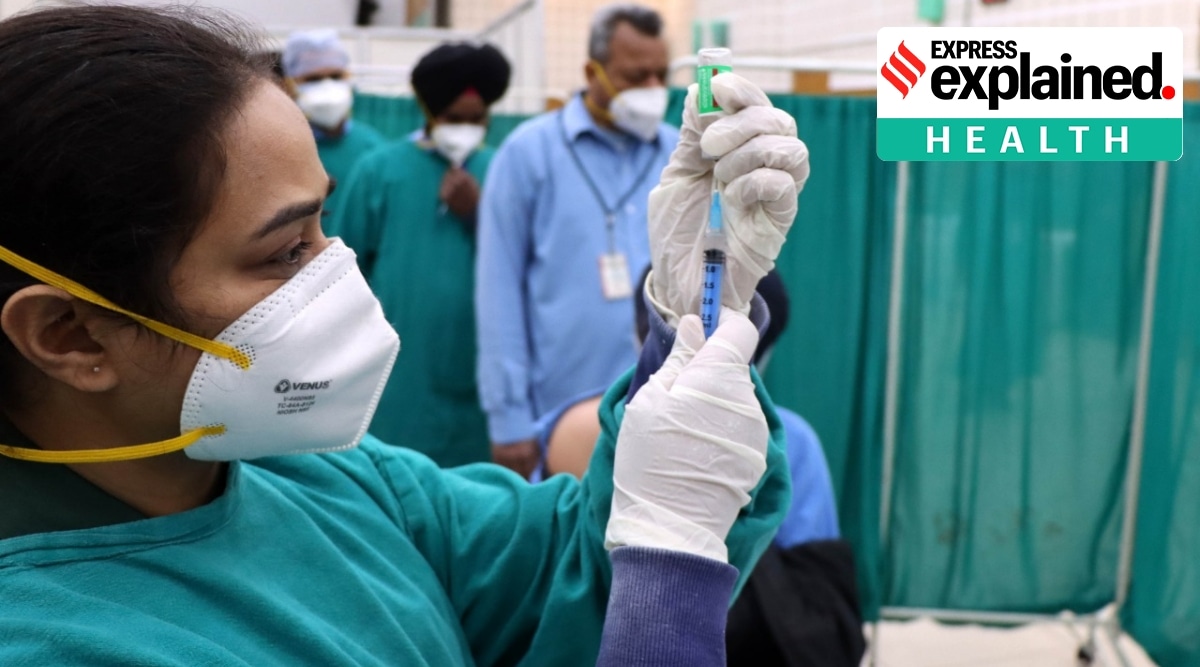
Booster doses are administered at Dayanand Medical College & Hospital in Ludhiana on Monday (Express Photo: Gurmeet Singh)Booster doses are administered at Dayanand Medical College & Hospital in Ludhiana on Monday (Express Photo: Gurmeet Singh)

On Monday, the government began administering an additional “precautionary” dose of the Covid-19 vaccine to vulnerable groups, including those over age 60 and with comorbidities, as well as healthcare and frontline workers. The two main vaccines in India’s immunisation programme, Covishield and Covaxin, are given in two doses, so the “precautionary” or “booster” dose is the third one for those eligible.

Over 63 crore Indians have received both doses of their vaccine until Sunday, out of nearly 150 crore doses administered overall.

For those eligible for the booster, the Centre has not allowed mixing of vaccines as of now: If someone has received two doses of Covishield, she will be given the same vaccine for the third shot, and so also for Covaxin. Once more data is available, a heterologous approach (using a different vaccine for the third jab) will be taken later on, the Centre has said.

What purpose does a boosters serve?

The immunity provided by a regular course of vaccines is known to wane over time. Various studies in India and elsewhere have reported a decline in antibodies of vaccinated people, recorded at various points of time after the last dose. This decline happens not only with antibodies, but even memory T-cells.

A booster dose is given so that people can maintain their level of immunity for longer. In the past, boosters were recommended for smallpox prevention every three to five years. Tetanus toxoid boosters are also recommended today for adults and pregnant women after childhood vaccination.

Regulators in some countries, such as the United States’ Food and Drug Administration (FDA) and the United Kingdom’s Medicines and Healthcare products Regulatory Agency (MHDA), have looked at booster dose data and given approvals based on that.

In India, a recent study found that six months after the second Covaxin dose, a booster using the vaccine as a booster dose led to neutralising T cell and B cell responses. This suggests good immune memory responses and long-term protection from severe disease, manufacturer Bharat Biotech said in a statement.

Story continues below this ad

Why has the Centre chosen to use the same vaccine for all shots?

There are regulatory and clinical aspects. From a regulatory and legal perspective, according to Dr Gagandeep Kang, one of India’s best-known vaccinologists, it makes sense to give the same vaccine as the previous two doses until there is sufficient data to make a policy decision on using a different vaccine as the third dose.

“These vaccines are under emergency use authorization (EUA) which means that they are not fully licensed. For instance, in the national programme on immunisation, we have off-label recommendation for the rotavirus vaccine. The programme itself says it can give the first dose up to 12 months, whereas the manufacturer says can give up to eight months. For the inactivated polio vaccine… the licence is for a full dose given intramuscularly. What this means is that off-label use for products that are licensed is one thing, but the same for ones that are under EUA is another issue,” Dr Kang said.

“We also have to consider the issue of indemnity. What if something goes wrong when you use another vaccine: then who is responsible?” she said.

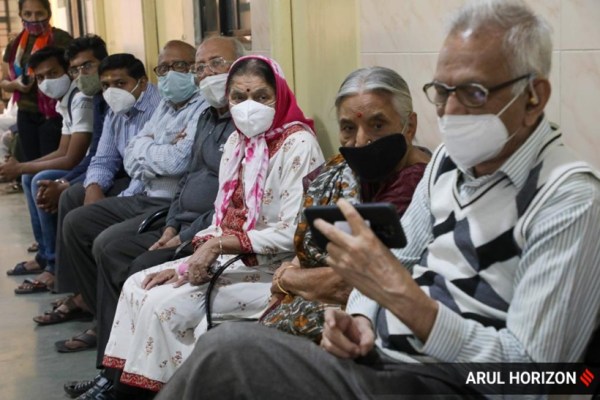
Beneficiaries for ‘precautionary’ doses at Kamala Nehru hospital in Pune on Monday. (Express Photo: Arul Horizon)
From the clinical standpoint, leading virologist Dr V Ravi noted that the fundamental attribute of the immune system is memory. “If you shoot with the same vaccine one will boost the memory. Boosting with a homologous vaccine [the same one given earlier] will also fetch a good response,” Dr Ravi said.

Story continues below this ad

Immunologist Dr Vineeta Bal said many traditional vaccines are used as a second or third dose as the primary vaccination regime followed by a booster of the same a few months or years later. For instance, tetanus toxoid is part of the childhood vaccination programme and is recommended at a later age too, including pregnant women.

What have studies found on the mixing of Covid-19 vaccines?

In India, there is no clear data yet on mixing the two vaccines that make up the bulk of the doses being administered: Covishield and Covaxin.

Efforts being taken up to generate and analyse data. A recent pilot study by the Asian Institute of Gastroenterology (AIG) examined the safety profile of mixing Covishield and Covaxin and also checked antibody response by comparing small homologous and heterologous vaccine groups. It found that mixing vaccines was safe.

Dr D Nageshwar Reddy, Chairman, AIG Hospitals, has said the most important finding of the study was that antibodies neutralising the coronavirus spike protein were significantly in the mixed-vaccine groups than in the same-vaccine groups. “We have communicated details of the study to ICMR (Indian Council of Medical Research),” Dr Reddy has said.

Story continues below this ad
Booster doses for frontline workers and citizens above 60 year at Kamala Nehru hospital in Pune. (Express Photo: Arul Horizon)

Considering that there would be a demand for booster doses, the Christian Medical College in Vellore, too, has taken up a study on the feasibility of the mixing of Covid-19 vaccine doses. The results are likely to be out by February this year.

Though heterologous boosting appears to be safe, data on long-term safety is yet to be generated.

But why look at mixing vaccines as an option?

According to the World Health Organization, homologous vaccine schedules are standard practice based on substantial safety, immunogenicity and efficacy data. The European Centre for Disease Prevention and Control (ECDC) has said that a heterologous booster vaccine strategy may be considered as an alternative strategy to improve vaccine protection and provide flexibility in vaccine supply and availability issues.

Dr Sanjay Pujari, member of the ICMR national Covid-19 task force, referred to immunogenicity studies that have demonstrated higher immune responses with heterologous schedules. However they are limited by short-term data. “Understanding of how immunogenicity data translates into vaccine effectiveness is still evolving and immune correlates for absolute protection are still unclear,” Dr Pujari said.

Story continues below this ad

Dr Bal said noted, however, that in general, in many contexts (including Covid-19), a mix-and-match strategy has been visualised or used. For example, for DNA vaccines, protein-based vaccines were considered in prime-boost situations.

Can there be issues over supply?

Experts have stressed the importance of achieving a right balance between effectiveness and safety concerns and the availability of vaccine platforms and supplies. “Apart from the absence of Indian data in the public domain on how mix-and-match vaccination would benefit, there could be supply chain, vaccine availability issues,” Dr Bal said.

Of the nearly 150 crore vaccine doses given until Sunday, over 130 crore are of Covishield (5 in every 6) and over 19 crore are of Covaxin. Experts noted that since Covaxin is the only one in use for under-18 vaccination, there could be a possibility of a shortage of the vaccine for heterologous boosting of the Indian adult population.

Newsletter | Click to get the day’s best explainers in your inbox

Anuradha Mascarenhas is a Senior Editor at The Indian Express, based in Pune. With a career spanning three decades, she is one of the most respected voices in Indian journalism regarding healthcare, science and environment and research developments. She also takes a keen interest in covering women's issues . Anuradha has won several awards including the Press Council of India's national award for excellence in journalism under the gender based reporting category in 2019 and the Laadli Media award (gender sensitivity -2024). A recipient of the Lokmat journalism award (gender category-2022), she was also shortlisted for the RedInk awards for excellence in journalism-2021. Her debut book At The Wheel Of Research, an exclusive biography of Dr Soumya Swaminathan the inaugural chief scientist of World Health Organisation was also nominated in the Popular Choice Category of JK Paper AUTHER awards. She has also secured competitive fellowships including the Laadli Media Fellowship (2022), the Survivors Against TB – New Research in TB Media Fellowship (2023) and is part of the prestigious 2025 India Cohort of the WomenLift Health Leadership Journey.” Professional Background Education: A gold medalist in Communication and Journalism from Savitribai Phule Pune University and a Master’s degree in Literature. Author: She authored the biography At The Wheel Of Research, which chronicles the life and work of Dr. Soumya Swaminathan, the former Chief Scientist at the WHO. Key Focus: She combines scientific accuracy with storytelling, translating complex medical research into compelling public and human-interest narratives. Recent Notable Articles (Late 2025) 1. Cancer & Specialized Medical Care "Tata Memorial finds way to kill drug-resistant cancer cells" (Nov 26, 2025): Reporting on a breakthrough for triple-negative breast cancer, one of the most aggressive forms of the disease. ``Discipline, diet and purpose; How a 97-year-old professor defies ageing'' (Nov 15, 2025) Report about Prof Gururaj Mutalik, the first Head of Department at Pune's B J Government Medical College who at 97 credits his longevity to healthy habits and a strong sense of purpose. 2. Environmental Health (The "Breathless Pune" Series) "Long-term exposure even to 'moderate' air leads to chronic heart, lung, kidney issues" (Nov 26, 2025): Part of an investigative series highlighting that even "safe" pollution levels are damaging to vital organs. "For every 10 µg/m3 increase in PM2.5 level, there was 6-8% jump in medicine sales" (Nov 23, 2025): Using commercial data to prove the direct link between air quality and respiratory illnesses in Pune. 3. Lifestyle & Wellness News "They didn't let cancer, diabetes and heart disease stop them from travelling" (Dec 22, 2025): A collaborative piece featuring survivors who share practical tips for traveling with chronic conditions. ``At 17, his BP shot up to 200/120 mmHG; Lancet study flags why child and teen hypertension doubled between 2000 and 2020'' (Nov 12,2025)--A report that focusses on 17-year-old-boy's hypertensive crisis and reflects the rising global trend of high blood pressure among children and adolescents. 4. Scientific Recognition & Infrastructure "For promoting sci-comm, gender diversity: IUCAA woman prof highlighted in Nature" (Nov 25, 2025): Covering the global recognition of Indian women scientists in gender studies and physics. ``Pune researchers find a spiral galaxy like the Milky Way from early universe'' (December 3, 2025)- A report on how Indian researchers discovered a massive galaxy that existed when the universe was just 1.5 billion years old , one of the earliest to have been observed so far. Signature Beat: Health, Science & Women in Leadership Anuradha is known for her COVID-19 reportage, where she was one of the first journalists to provide detailed insights into the Covishield and Covaxin trials. She has a dedicated interest in gender diversity in health and science, often profiling women researchers who are breaking the "leaky pipeline" in STEM fields. Her writing style is scrupulous, often featuring interviews with top-tier scientists and health experts from various institutions X (Twitter): @runaanu   ... Read More

 

Latest Comment
Post Comment
Read Comments
Advertisement
Advertisement
Advertisement
Advertisement