2 min read
© IE Online Media Services Pvt Ltd



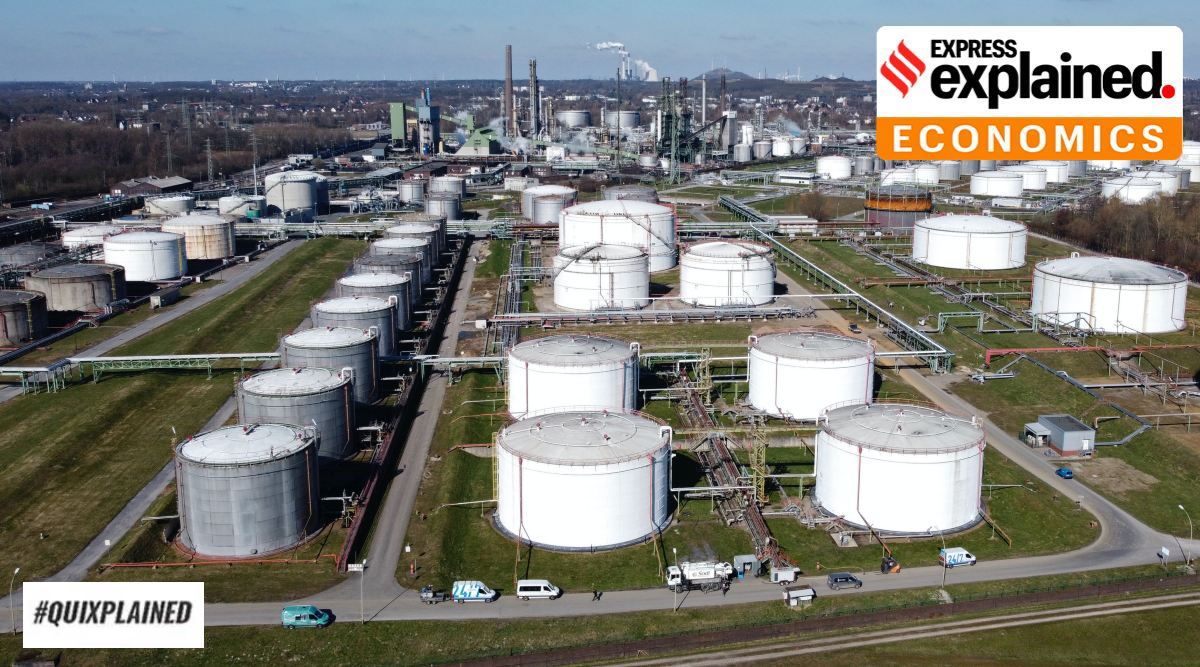 Big tanks are seen at a BP oil refinery in Gelsenkirchen, Germany, Monday, March 7, 2022. (AP Photo/ File)
With the Russia-Ukraine crisis intensifying, United States President Joe Biden has announced a ban on all crude oil and natural gas imports from Russia into the US, while the UK announced that it would phase out imports of Russian oil by the end of this year.
These moves will further increase crude oil prices, which in turn will stoke inflation across the world — particularly in the US and its allied nations in Europe, which are already reeling from inflation rates that are at their highest in decades. That is because Russia is the world’s second-largest producer of oil as well as the second-largest exporter.
Now, can that gap be met? If so, to what extent and how soon? Moreover, unlike the US, Europe is heavily dependent on oil and natural gas imports from Russia. Can a US ban drive a wedge between its own foreign policy goals and those of its allies in Europe?
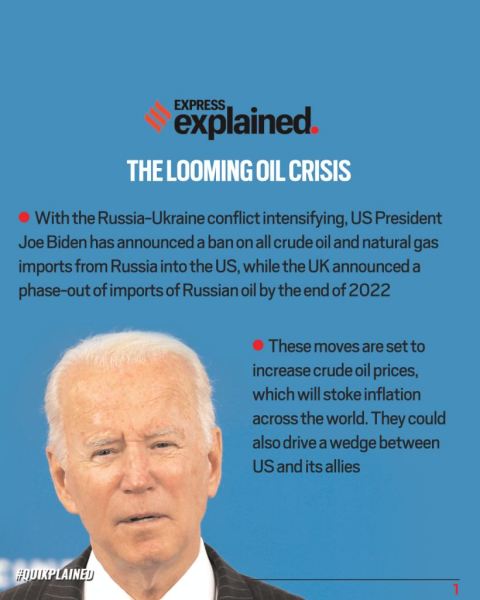 United States President Joe Biden has announced a ban on all crude oil and natural gas imports from Russia into the US.
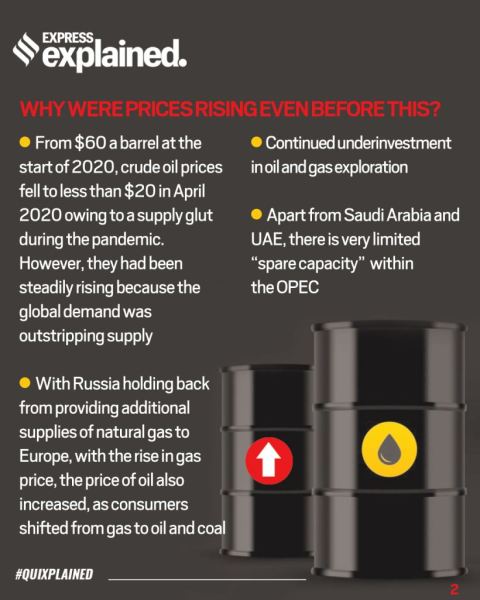 Apart from Saudi Arabia and UAE, there is very limited “spare capacity” within the OPEC.
 Apart from being big player in quantity, Russia also produces the second-cheapesr oil after Saudi Arabia.
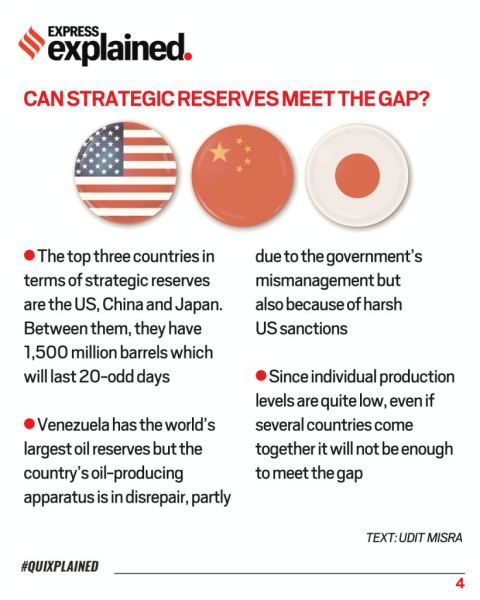 Venezuela has the world’s largest oil reserves but the country’s oil-producing apparatus is in disrepair, partly due to the government’s mismanagement but also because of harsh US sanctions.