3 min readNew DelhiJan 9, 2026 04:46 AM IST
First published on: Jan 8, 2026 at 11:24 AM IST
India is once again in the crosshairs of a proposed US law that could impose 500 per cent tariffs on countries buying Russian oil.
Veteran Republican leader and US Senator Lindsey Graham, chairman of the Senate Budget Committee, said

US President Donald Trump has “greenlit” the Russia sanctions Bill.
“This Bill would give President Trump tremendous leverage against countries like China, India and Brazil to incentivise them to stop buying the cheap Russian oil that provides the financing for (Russian President Vladimir) Putin’s bloodbath against Ukraine,” Graham said.
Titled “The Sanctioning Russia Act of 2025”, the Bill allows the administration to impose secondary tariffs and sanctions on countries that purchase Russia’s oil, gas, uranium and other exports. The legislation proposes a 500 per cent tariff on secondary purchase and reselling of Russian oil. This is meant to cut off the source of financing for much of Russia’s military actions.
The new Bill comes ahead of the US Supreme Court’s expected ruling Friday on the legality of Trump’s sweeping global tariffs. It will decide if the President has overstepped his powers granted under the International Emergency Economic Powers Act (IEEPA). The US District Court for the Northern District of Illinois, the US Court of International Trade (CIT) and the US Court of Appeals for the Federal Circuit have already ruled against the Trump administration on the IEEPA issue.
It also comes ahead of the arrival in India of new US Ambassador Sergio Gor. He is expected to reach India over the weekend and assume charge on January 12.
Earlier this week, Graham said Vinay Kwatra, India’s Ambassador to the US, informed him about Delhi reducing its purchases of Russian oil and asked him to convey to Trump to “relieve the tariff” imposed on India.
Trump said Prime Minister Narendra Modi knew he was not happy with India’s purchase of Russian oil and that Washington could raise tariffs on Delhi “very quickly”.
The successful passage of the Bill could hurt India’s interests the most since it is yet to sign a trade deal with the US. The imposition of 50 per cent tariffs on India last year has impacted exports of labour-intensive sectors such as textiles, footwear and marine products. If the Bill is passed, it will weaken India’s negotiating position and Delhi will come under pressure to diversify goods exports away from the US.
India is negotiating trade pacts with the European Union, the ASEAN, Chile, Peru, Australia, Bahrain, the Gulf Cooperation Council (GCC), the Eurasian Economic Union (EAEU), Canada and the Southern African Customs Union (SACU). A weaker negotiating position typically results in steeper asks by partner countries.

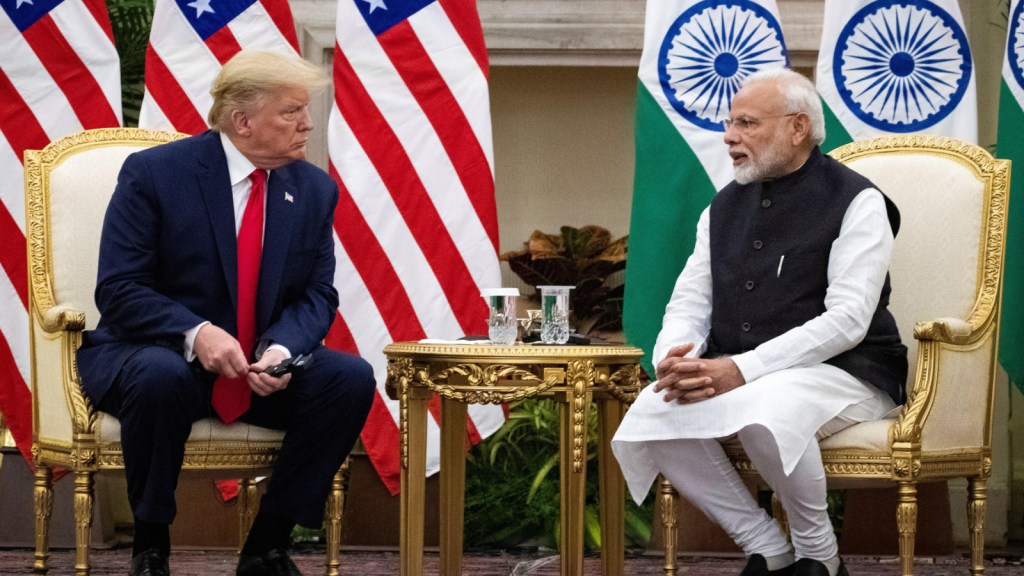 India is facing a total of 50 pc tariffs on its exports to the US and this has dented its exports to one of its top export destinations. (file photo)




 Share


