Premium
This is an archive article published on April 19, 2022

Explained: WHO & traditional medicine

PM Narendra Modi and WHO chief Tedros Ghebreyesus will perform the groundbreaking ceremony of the Global Centre for Traditional Medicine in Jamnagar today. What is it about, and what are WHO's objectives?

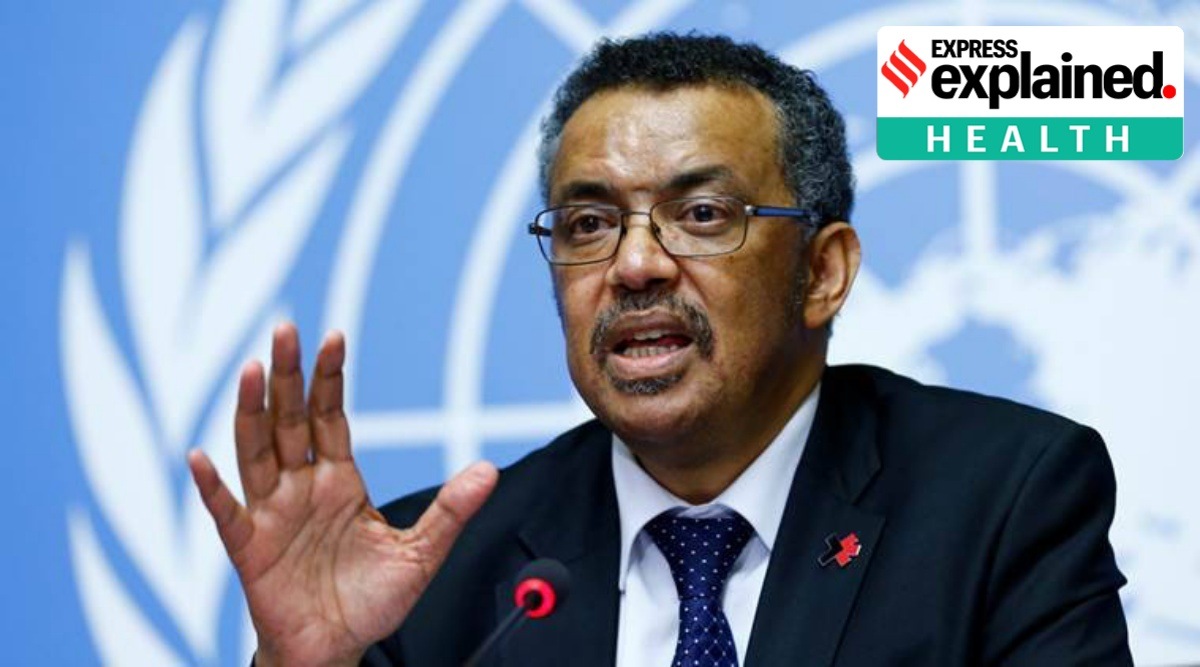
WHO Chief Tedros Ghebreyesus (Reuters Photo/File)WHO Chief Tedros Ghebreyesus (Reuters Photo/File)

On Tuesday, Prime Minister Narendra Modi, along with World Health Organization (WHO) Director-General Dr Tedros Ghebreyesus, will perform the groundbreaking ceremony for the first-of-its-kind WHO Global Centre for Traditional Medicine (GCTM) in Jamnagar, Gujarat. Earlier, the Prime Minister had said the GCTM would go a long way in enhancing wellness in society.

What is traditional medicine?

The WHO describes traditional medicine as the total sum of the “knowledge, skills and practices indigenous and different cultures have used over time to maintain health and prevent, diagnose and treat physical and mental illness”. “Its reach encompasses ancient practices such as acupuncture, ayurvedic medicine and herbal mixtures as well as modern medicines,” the WHO says.

Traditional medicine in India is often defined as including practices and therapies — such as yoga, Ayurveda, Siddha — that have been part of Indian tradition historically, as well as others — such as homeopathy — that became part of Indian tradition over the years. Ayurveda and yoga are practised widely across the country; the Siddha system is followed predominantly in Tamil Nadu and Kerala; the Sowa-Rigpa system is practised mainly in Leh-Ladakh and Himalayan regions such as Sikkim, Arunachal Pradesh, Darjeeling, Lahaul & Spiti.

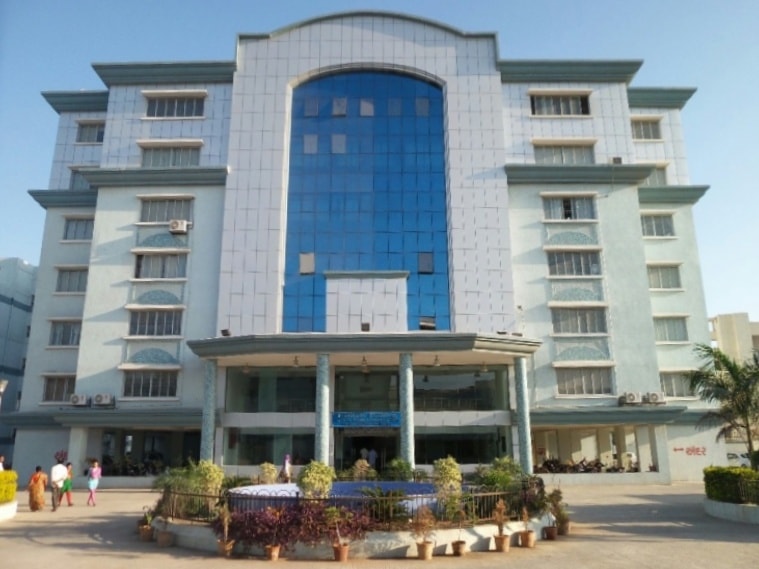
The Institute of Teaching and Research in Ayurveda (ITRA), Jamnagar, will temporarily house the WHO Global Centre for Traditional Medicine. (Source: ITRA)

What will the GCTM be about?

On November 3, 2020, Dr Tedros announced the establishment of the WHO GCTM in India . The Union Cabinet in March this year approved its establishment in Jamnagar with the signing of a host country agreement between the Government of India and the WHO. India has committed an estimated $250 million to support the GCTM’s establishment, infrastructure and operations.

The GCTM will aim to focus on evidence-based research, innovation, and data analysis to optimise the contribution of traditional medicine to global health. Its main focus will to develop norms, standards and guidelines in technical areas relating to traditional medicine.

At press conference on Monday, the Ministry of AYUSH (Ayurveda, Yoga and Naturopathy, Unani, Siddha and Homeopathy) said it will seek to set policies and standards on traditional medicine products and help countries create a comprehensive, safe, and high-quality health system. The GCTM will support efforts to implement the WHO’s Traditional Medicine Strategy (2014-23), which aims to support nations in developing policies & action plans to strengthen the role of traditional medicine in pursuing the goal of universal health coverage. According to WHO estimates, 80% of the world’s population uses traditional medicine.

Why has the WHO felt the need to advance knowledge of traditional medicine?

The WHO says 170 of its 194 WHO Member States have reported the use of traditional medicine, and these member states have asked for its support in creating a body of “reliable evidence and data on traditional medicine practices and products”. It says the Jamnagar centre will serve as the hub, and focus on building a “solid evidence base” for policies and “help countries integrate it as appropriate into their health systems”.

Story continues below this ad

The WHO has flagged many challenges faced by traditional medicine. For instance, national health systems and strategies do not yet fully integrate traditional medicine workers, accredited courses and health facilities.

Second, the WHO has stressed the need to conserve biodiversity and sustainability as about 40% of approved pharmaceutical products today derive from natural substances. “For example, the discovery of aspirin drew on traditional medicine formulations using the bark of the willow tree, the contraceptive pill was developed from the roots of wild yam plants and child cancer treatments have been based on the rosy periwinkle,” the WHO says.

Third, the WHO has referred to modernisation of the ways traditional medicine is being studied. Artificial intelligence is now used to map evidence and trends in traditional medicine. “Functional magnetic resonance imaging is used to study brain activity and the relaxation response that is part of some traditional medicine therapies such as meditation and yoga, which are increasingly drawn on for mental health and well-being in stressful times,” it says.

Fourth, the WHO has said traditional medicine is also being extensively updated by mobile phone apps, online classes, and other technologies. The GCTM will serve as a hub for other countries, and build standards on traditional medicine practices and products.

Story continues below this ad

Has India taken up similar collaborative efforts earlier?

Yes. In 2016, the Ministry of AYUSH signed a project collaboration agreement (PCA) with the WHO in the area of traditional medicine. The aim was to create benchmarks for training in yoga, Ayurveda, Unani and Panchakarma, for traditional medicine practitioners. The collaboration also aimed at promoting the quality and safety of traditional medicine and consumer protection by supporting WHO in the development and implementation of the WHO Traditional and Complementary Medicine Strategy.

At least 32 MoUs for undertaking collaborative research and development of traditional medicine have been signed with institutes, universities and organisations from the US, Germany, UK, Canada, Malaysia, Brazil, Australia, Austria, Tajikistan, Saudi Arabia, Ecuador, Japan, Indonesia, Reunion Island, Korea and Hungary.

A constituent laboratory of the Council of Scientific & Industrial Research — Institute of Himalayan Bio-resource Technology (CSIR-IHBT), Palampur — has signed an MoU with National Research Institute of Chinese Medicine, Ministry of Health and Welfare, Taiwan, to collaborate in areas of mutual interest, which include medicinal plants, bioactive molecules, and, herbal formulations etc.

Also, the CSIR and the Bill & Melinda Gates Foundation have signed an MoU to identify opportunities for scientific and technological research between researchers within and outside India, including collaborations with foundation-funded entities in the areas including traditional medicine as well as beyond.

Story continues below this ad

Why Jamnagar ?

An interim office of the GCTM is planned to be set up at the Institute of Teaching and Research in Ayurveda (ITRA) in Jamnagar. The Central Public Works Department is expected to set up the office by July 31, at an estimated cost of Rs 13.49 crore.

ITRA, supported by the Gujarat government and financed by the central government, is the first university to offer education and training in the field of Ayurveda across the world, according to the Ministry of AYUSH. The university is a WHO collaborating centre for traditional medicines. The WHO and the central government are also aiming at using technology and innovation, such as artificial intelligence, to map traditional medicine trends, innovations and patents, linking to WHO’s Innovation Hub.

Newsletter | Click to get the day’s best explainers in your inbox

As City Editor ( Delhi) at the Indian Express, Kaunain Sheriff  leads city reporting with a sharp focus on accountability journalism, data-driven stories, and ground-level impact. As the National Health Editor he leads the newsroom’s in-depth coverage of pressing health issues. He is the author of Johnson & Johnson Files: The Indian Secrets of a Global Giant, a definitive investigation into the accountability of one of the world’s most powerful pharmaceutical corporations. Areas of Expertise Investigative Reporting: Has deep expertise in investigative reporting spanning public health, regulatory affairs, drug safety, and the criminal justice system. His work sits at the intersection of governance, law, and accountability, with a particular focus on how regulatory failures, institutional lapses, and policy decisions affect citizens’ rights and safety. Data Journalism: Has extensively on big data–driven investigations, including analyses of flagship government schemes and large datasets on criminal trials, uncovering systemic gaps. Global Collaborations Kaunain is a key contributor to major international journalistic projects: The Implant Files: Collaborated with the International Consortium of Investigative Journalists (ICIJ) to expose global malpractices in the medical device industry. Chinese Big-Data Investigation: Uncovered how a foreign data firm monitored thousands of prominent Indian institutions and individuals in real-time. Awards & Recognition His commitment to "Journalism of Courage" has been recognized with the industry's highest honors: Ramnath Goenka Award for Excellence in Journalism SOPA Award (Society of Publishers in Asia) Red Ink Award (Mumbai Press Club) Indian Express Excellence Awards (Triple recipient for investigations into the NSA abuse in UP, Vyapam scam, and the anti-Sikh riots). Education: Studied Mechanical Engineering at Visvesvaraya Technological University (VTU), Bangalore, before moving to Delhi to pursue his passion for journalism. His engineering training informs his analytical approach, enabling him to decode technical, legal, and data-heavy systems with precision. Social media LinkedIn:  linkedin.com/in/kaunain-sheriff-3a00ab99 X ( fromerly Twitter): @kaunain_s ... Read More

Sohini Ghosh is a Senior Correspondent at The Indian Express. Previously based in Ahmedabad covering Gujarat, she recently moved to the New Delhi bureau, where she primarily covers legal developments at the Delhi High Court Professional Profile Background: An alumna of the Asian College of Journalism (ACJ), she previously worked with ET NOW before joining The Indian Express. Core Beats: Her reporting is currently centered on the Delhi High Court, with a focus on high-profile constitutional disputes, disputes over intellectual property, criminal and civil cases, issues of human rights and regulatory law (especially in the areas of technology and healthcare). Earlier Specialty: In Gujarat, she was known for her rigorous coverage in the beats of crime, law and policy, and social justice issues, including the 2002 riot cases, 2008 serial bomb blast case, 2016 flogging of Dalits in Una, among others. She has extensively covered health in the state, including being part of the team that revealed the segregation of wards at the state’s largest government hospital on lines of faith in April 2020. With Ahmedabad being a UNESCO heritage city, she has widely covered urban development and heritage issues, including the redevelopment of the Sabarmati Ashram Recent Notable Articles (Late 2025) Her recent reporting from the Delhi High Court covers major political, constitutional, corporate, and public-interest legal battles: High-Profile Case Coverage She has extensively covered the various legal battles - including for compensation under the aegis of North East Delhi Riots Claims Commission - pertaining to the 2020 northeast Delhi riots, as well as 1984 anti-Sikh riots. She has also led coverage at the intersection of technology and governance, and its impact on the citizenry, from, and beyond courtrooms — such as the government’s stakeholder consultations for framing AI-Deepfake policy. Signature Style Sohini is recognized for her sustained reporting from courtrooms and beyond. She specialises in breaking down dense legal arguments to make legalese accessible for readers. Her transition from Gujarat to Delhi has seen her expand her coverage on regulatory, corporate and intellectual property law, while maintaining a strong commitment to human rights and lacuna in the criminal justice system. X (Twitter): @thanda_ghosh ... Read More


Latest Comment
Post Comment
Read Comments
Advertisement
Loading Taboola...
Advertisement
Advertisement
Advertisement