4 min read

Journalism of Courage



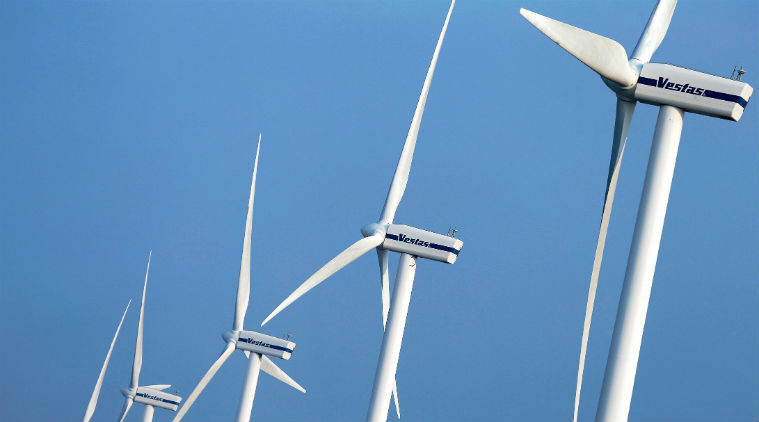 Notably, winds blowing during the Southwest monsoon have been found to be the most potential ones to harness energy. (Representational Image)
A wind assessment study recently conducted by the researchers at the IIT-B has revealed that even as climate change poses a constant threat to future generations, it could also prove to be a boon with increased generation of wind-powered electricity. The study, published in the Meteorological Applications, suggested that power generation from offshore wind turbines, if set up at Rameshwaram and Kanyakumari, off Tamil Nadu coast, and Jakhau along the Gujarat coast, could increase anywhere between 30 and 45 per cent.
At present, India generates power from onshore wind turbines. However, with the union government eyeing an expansion through offshore installations, these can be potential sites for power generation in the future, revealed the study.
As a part of their study, Sumeet Kulkarni from the Risk Management Solutions Department at IIT-B, along with senior scientists M C Deo and Subimal Ghosh from the Department of Civil Engineering, have studied winds in two time-slices — 1979 to 2005 and 2006 to 2032. The results obtained revealed an increase in the wind speeds in the future, thereby confirming the possibility of higher power generation.
Kulkarni said the efficiency of wind potential extraction greatly depends on future climatic conditions too, which are likely to vary due to sustained greenhouse gas emissions. “This, because greenhouse gas emissions have a direct effect on ambient temperature capable of altering air pressure and wind circulations,” he added.
Notably, winds blowing during the Southwest monsoon have been found to be the most potential ones to harness energy. But, this holds true for Jakhau and Kanyakumari, both located along the west coast which experience strong winds during the season, typically between June and September. With only weak pulses of pre-summer and monsoon winds reaching Rameshwaram, situated on the east coast, this site has better potentials during the Northeast monsoon months, underlined the IIT-B team.
However, Kulkarni said, as changing climate is believed to trigger more events like the El Nino (Southern Oscillation (ENSO) in the years ahead, the overall circulation of winds could be affected, which could be used for more power generation.
El Nino usually makes an onset during October, and usually, its cycle lasts for a year, effecting winds during winter and subsequent summer months. Kulkarni said, “It has been found that during El Nino years, the Sea Surface Temperatures (SST) are higher in winter, thus interfering in the wind circulation patterns across the Indian peninsular regions — also the locations where the sites under study are located. The changing behaviours of wind circulation could mean that there can be more power generation possible even during winter months.”
Senior scientist Roxy Mathew Koll of the Indian Institute of Tropical Meteorology (IITM), Pune, who has been appointed as a member of the Inter Panel Committee for Climate Change (IPCC) this year to study oceans reiterated the occurrence of extreme El Nino and La Nina conditions in the years ahead.
Koll said, “It is true that wind circulations are affected by ENSO and has the capacity to alter the overall tele-connections. We will experience El Nino and La Nina, which will be far stronger than those recorded ever,” adding, that the winds blown during Southwest monsoon are much stronger than those during the winter monsoon (Northeast monsoon).
The IIT-B study also derived that wind potential is set to increase substantially over the next three decades, with Rameshwaram topping at 29 per cent higher wind energy generation capacity, followed by Jakhau (24 per cent) and Kanyakumari (19 per cent). Thus, the actual extractable wind energy, the team suggests, will improve by 46 per cent at Rameshwaram, Jakhau (by 40 per cent) and Kanyakumari (by 35 per cent) in the coming decades.
However, Koll is of the opinion that India needs to study and explore more in the area of energy generation using wind power, given the vast coastline it inhabits. “In fact, we can also become the market leaders in the South Asia region and there is definitely huge scope, similar to solar power, for this method of power generation,” he added.