6 min read
Stay updated with the latest - Click here to follow us on Instagram
© IE Online Media Services Pvt Ltd



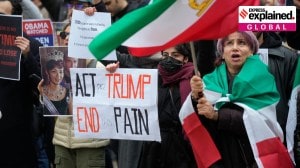
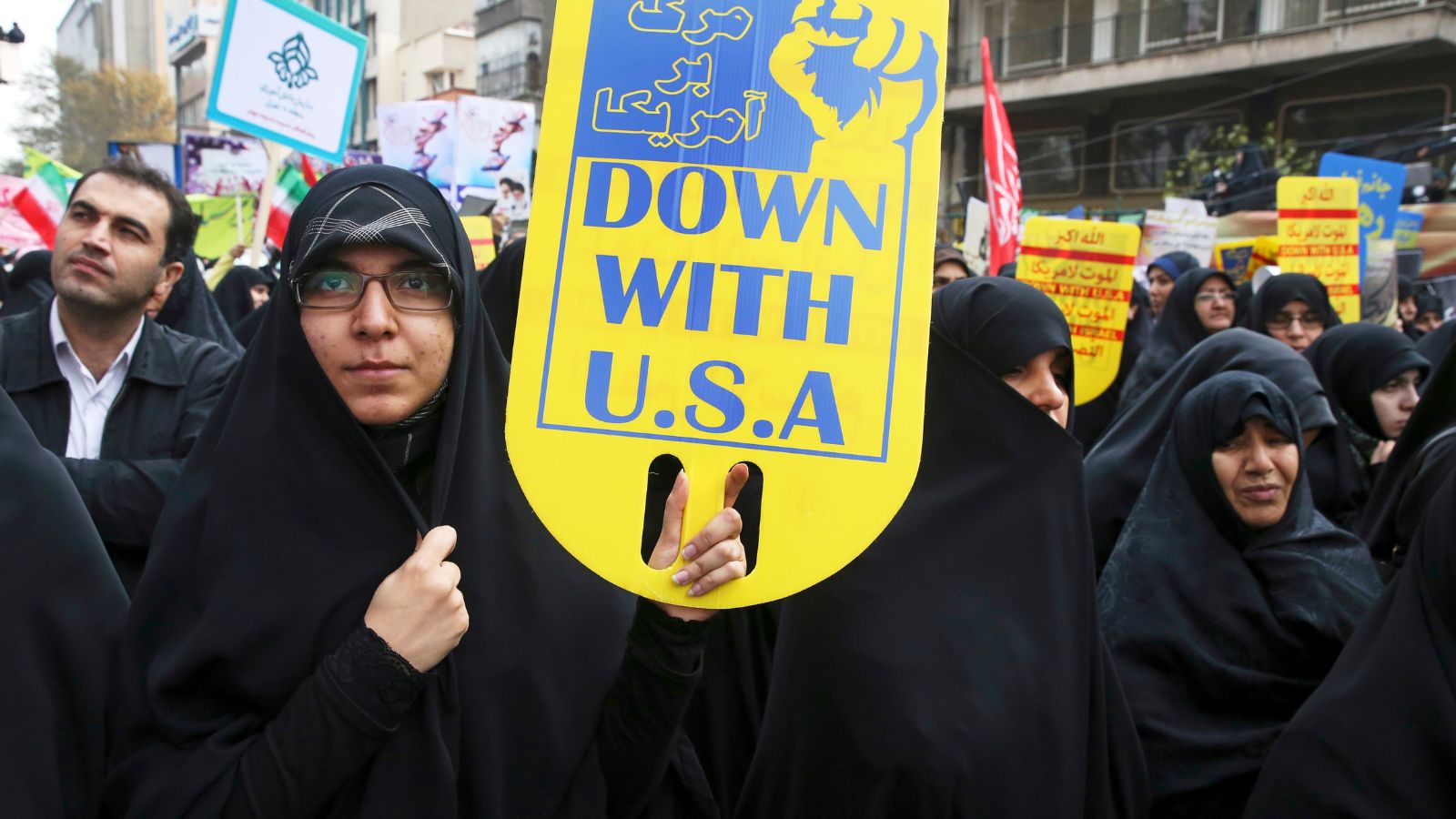 An Iranian demonstrator holds an anti-US sign outside the former US Embassy in Tehran during a 2015 rally marking 36 years since its seizure. (AP Photo)
After decades of hostile rhetoric, proxy clashes, and diplomatic deadlocks, the relationship between the United States and Iran appears to be entering a new and uncertain chapter. This shift follows a dramatic series of events: targeted US airstrikes on Iran’s nuclear development sites, Iran’s limited retaliatory missile attack on a US military base in Qatar, and a ceasefire in the broader Israel-Iran conflict, brokered US President Donald Trump.
Despite Trump’s claim that the US strikes “obliterated” Iran’s nuclear programme, a US intelligence report later found that while the sites sustained serious damage, they were not destroyed entirely. According to officials cited in the report, Iran retains the capacity to rebuild and continue its nuclear ambitions — a contradiction to the president’s earlier statements.
During the ceasefire announcement, Trump posted on social media: “God bless Israel. God bless Iran. God bless the Middle East, America and the world.” However, as sporadic fighting resumed in the region, Trump’s tone shifted. On camera, he vented frustration with both parties: “We basically have two countries that have been fighting so long and so hard that they don’t know what the f— they’re doing.”
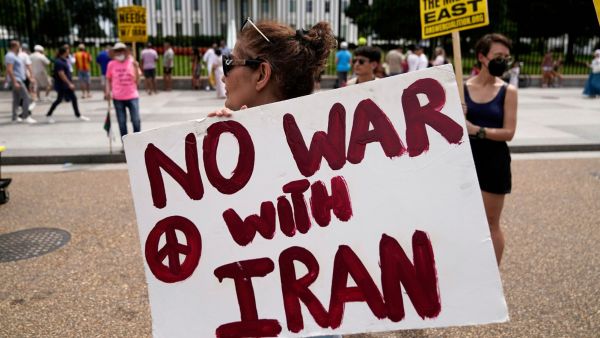 Demonstrators protest the US strike on Iran outside the White House, Washington, June 22, 2025. (AP Photo)
He seemed more critical of Israel, reported AP. And Israel is a longtime US ally.
The US-Iran conflict has deep roots.
Much of the modern tension stems from the 1953 CIA-backed coup known as Operation Ajax. The US and Britain supported the overthrow of Iran’s democratically elected Prime Minister Mohammad Mossadegh and reinstalled the Shah, Mohammad Reza Pahlavi, largely to protect Western oil interests and limit Soviet influence.
The Shah’s regime, though pro-Western, became increasingly autocratic and faced growing domestic opposition.
In 1979, a popular uprising led to the Islamic Revolution, overthrowing the Shah and establishing the Islamic Republic under Ayatollah Ruhollah Khomeini. This revolution radically shifted Iran’s posture toward the US, labelling it the “Great Satan.”
Just months after the revolution, on November 4, 1979, Iranian students seized the US embassy in Tehran, taking 66 Americans hostage. More than 50 were held for 444 days.
President Jimmy Carter’s failed rescue mission, Operation Eagle Claw, ended in disaster with the deaths of eight US servicemen after a helicopter collided with a transport aircraft during a sandstorm in the Iranian desert.
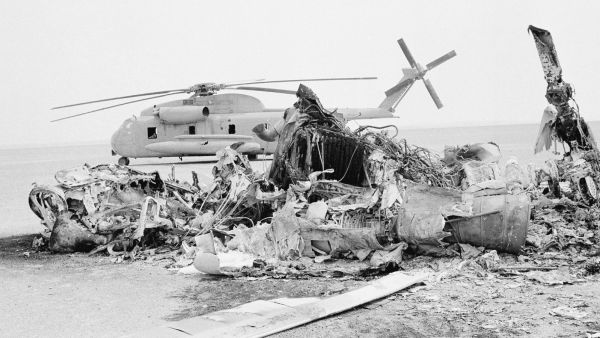 Wreckage of a US helicopter lies in Iran’s desert on April 27, 1980, a day after the failed mission to rescue embassy hostages. (AP Photo)
Iran released the hostages moments after Ronald Reagan took office in January 1981 — a calculated move seen by many as a final blow to Carter’s presidency. The US broke diplomatic ties with Iran in 1980, and they have remained severed ever since.
The US has clashed with Iran directly before.
In April 1988, in retaliation for the mining of the USS Samuel B. Roberts, the US Navy launched Operation Praying Mantis, sinking or damaging several Iranian vessels — its largest surface naval engagement since World War II.
During the 1980–88 Iran-Iraq war, the US unofficially backed Saddam Hussein’s Iraq through intelligence sharing and economic support, hoping to contain Iran’s revolutionary influence.
The war ended in stalemate, with both sides suffering hundreds of thousands of casualties.
In the mid-1980s, it was revealed that senior US officials had secretly sold arms to Iran — despite it being labelled a state sponsor of terrorism. It was to facilitate the release of hostages in Lebanon and fund Contra rebels in Nicaragua. The resulting Iran-Contra scandal engulfed the Reagan administration, though Reagan himself avoided legal fallout.
Iran has remained on the US State Department’s list of state sponsors of terrorism since 1984. President George W. Bush cemented the adversarial tone in 2002 by labelling Iran, along with North Korea and Iraq, as part of an “Axis of Evil.”
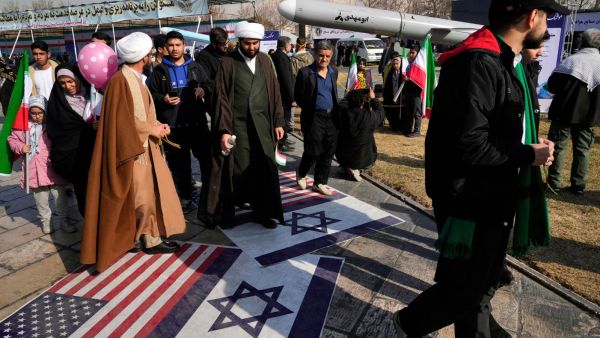 Demonstrators walk over Israeli and US flags during a rally marking the 1979 Islamic Revolution, Tehran, Feb. 11, 2024. (AP Photo)
In turn, Iranian leaders and allied militant groups have referred to their bloc as the “Axis of Resistance,” opposing what they see as US imperialism and Israeli aggression.
Iran’s influence spans the Middle East through support of proxy groups. These include Hezbollah in Lebanon, Hamas in Gaza, Houthi rebels in Yemen, and Shia militias in Iraq. Many of these groups have suffered significant losses in recent Israeli and US strikes. Iran’s support for them continues to be a key source of tension with the US and its allies.
In 2015, President Barack Obama signed the Joint Comprehensive Plan of Action (JCPOA) with Iran and several world powers. The deal required Iran to limit uranium enrichment and allow inspections in exchange for sanctions relief.
In 2018, Trump withdrew the US from the agreement, criticising it as weak and launching a “maximum pressure” campaign of sanctions.
Since then, Iran has restarted its nuclear programme. Inspectors from the International Atomic Energy Agency (IAEA) report that Iran’s stockpile of enriched uranium and centrifuge operations have grown significantly.
In January 2020, a US drone strike killed General Qasem Soleimani, a top Iranian military leader, near Baghdad Airport. Iran vowed revenge.
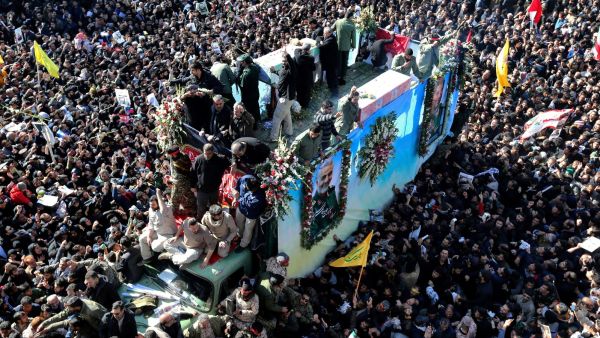 Coffins of Gen. Qassem Soleimani and others killed in a US drone strike are carried through a funeral procession in Kerman, Iran, Jan. 7, 2020. (AP Photo)
In 2024, US officials revealed that Iranian operatives had plotted to assassinate Donald Trump in retaliation, as per AP.
And now, from where we stand, whether the current ceasefire signals the start of cautious diplomacy or merely a pause in hostilities… this remains uncertain.
(With inputs from AP)
Stay updated with the latest - Click here to follow us on Instagram