4 min read
Stay updated with the latest - Click here to follow us on Instagram
© IE Online Media Services Pvt Ltd



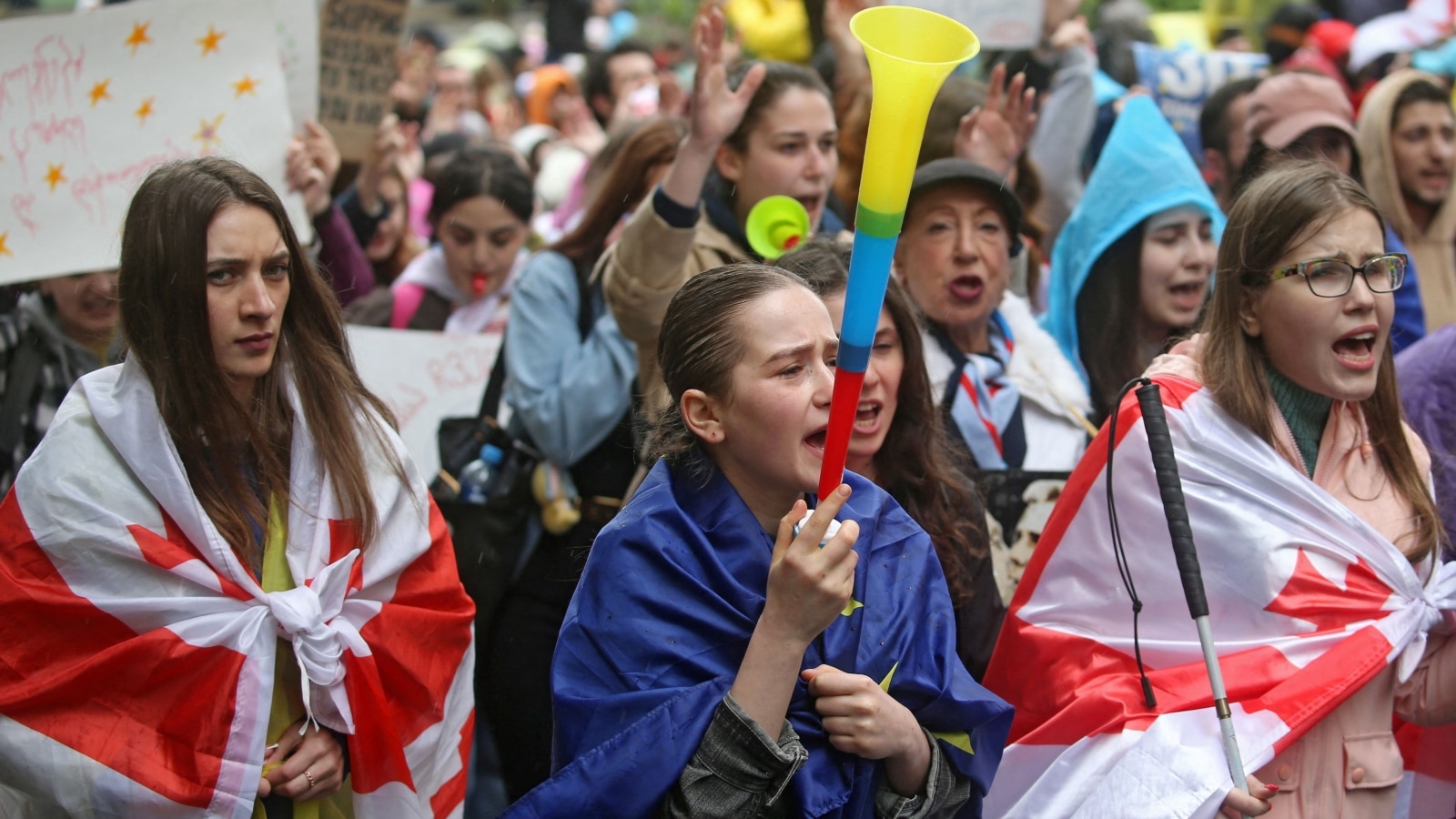 Demonstrators take part in a rally to protest against a bill on "foreign agents" in Tbilisi, Georgia, May 14, 2024. (Photo: REUTERS)
Thousands have taken to streets in Georgia, protesting against the controversial foreign influence bill, which has now become a law after the lawmakers approved it in the parliament on Tuesday.
After weeks of near-nightly protests by the critics of the law, the country saw massive demonstrations on Saturday when huge masses of people marched through European Square in the capital Tbilisi. Protesters wrapped themselves in European and Georgia flags and shouted “Georgia!”
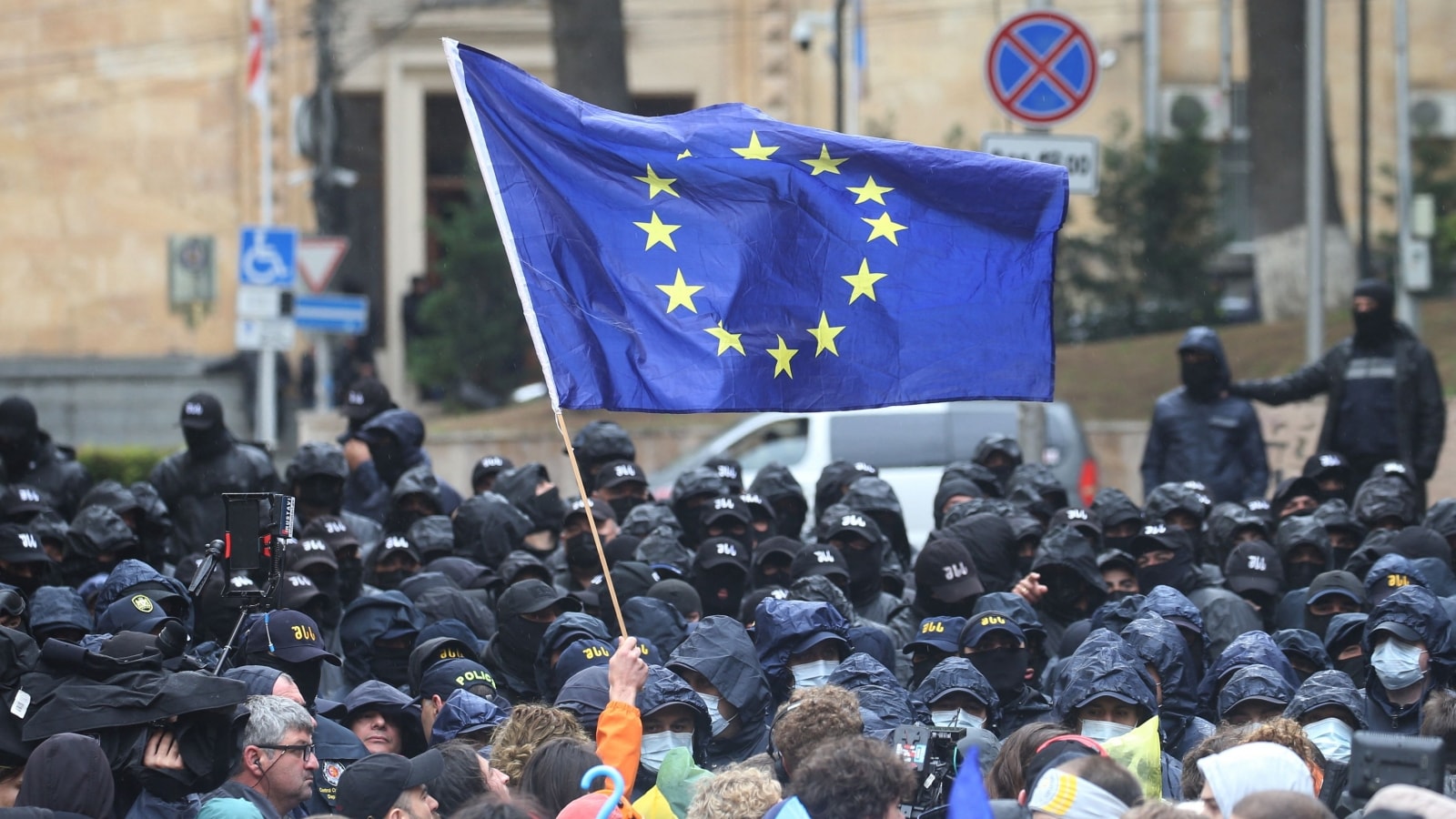 A demonstrator holds a European Union flag in front of law enforcement officers during a rally to protest against a bill on “foreign agents” in Tbilisi, Georgia, May 14, 2024. (Photo: REUTERS)
Protesters assembled in front of the parliament on Sunday for an overnight rally and attempted to block the gates to the building where a lawmakers panel was expected to meet on monday for a discussion on the bill. The police swung into action and dispersed the crowd, leaving just a few hundreds near the parliament in the morning. Around 20 people were arrested in the haul.
Hundreds of students in the universities across Tbilisi walked out of classes on Monday and headed straight to the parliament to voice their dissent to the bill on “foreign agents”.
The proposed foreign influence bill says all non-governmental organisations, media and other nonprofits, that receive more than 20% of their funding from abroad, would need to register as “pursuing the interests of a foreign power”.
The people opposing the bill are concerned that the bill would be used by the government to stifle the voice of its critics.
The EU granted candidate status to Georgia last December and has said the bill threatens Georgia’s chances to join the bloc. The polls show an overwhelming majority of the country’s population are in favour of this accession, hence strengthening the cause of the protests against the bill.
The country’s opposition has compared it with the “Russian law” that Moscow had brought in 2012 to regulate independent media, non-profit organisations and activists with views opposing the Kremlin.
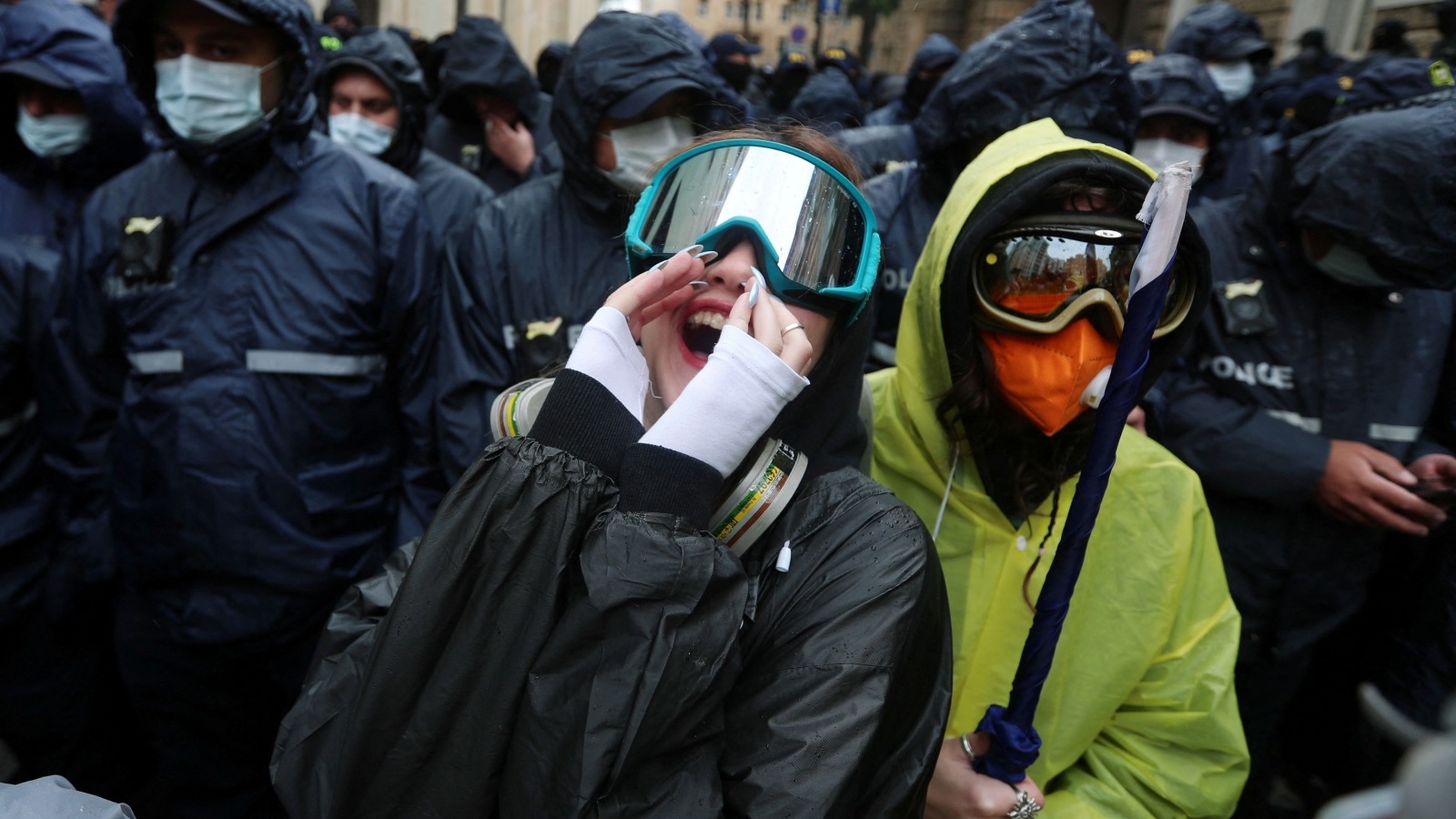 Demonstrators take part in a rally to protest against a bill on “foreign agents” in Tbilisi, Georgia, May 14, 2024. (Photo: REUTERS)
The Russian foreign agent law, with which this bill is being compared to, was implemented in 2012 following protests against Vladimir Putin’s return as the President of Russia. The law requires anyone, receiving aids from overseas or is under influence of any foreign entity, to register themselves as “foreign agents”. They are then subject to additional audits and are obliged to mark all their publications with a disclaimer mentioning that they are being distributed by a “foreign agent”.
The law has been strongly censured both within Russia and abroad for violating human rights and for acting as a tool to suppress the voices of the civil society and press, particularly those critical of Putin.
In 2022, Putin signed a legislation to expand the “foreign agent” term to include anyone deemed to have fallen under “foreign influence”.
Despite extensive protests and widespread criticism, Georgian Prime Minister Irakli Kobakhidze vowed to go ahead with the legislation. The ruling Georgian Dream party says the measure would bring transparency and protect Georgia’s sovereignty.
Georgian President Salome Zourabichvili, who has been at loggerheads with the governing party, had however vowed otherwise: to veto the law. However, Georgian Dream had a majority sufficient to overthrow a presidential rejection, and the bill has now become a law after its passage in the parliament.
— with inputs from agencies
Stay updated with the latest - Click here to follow us on Instagram