5 min read


© The Indian Express Pvt Ltd



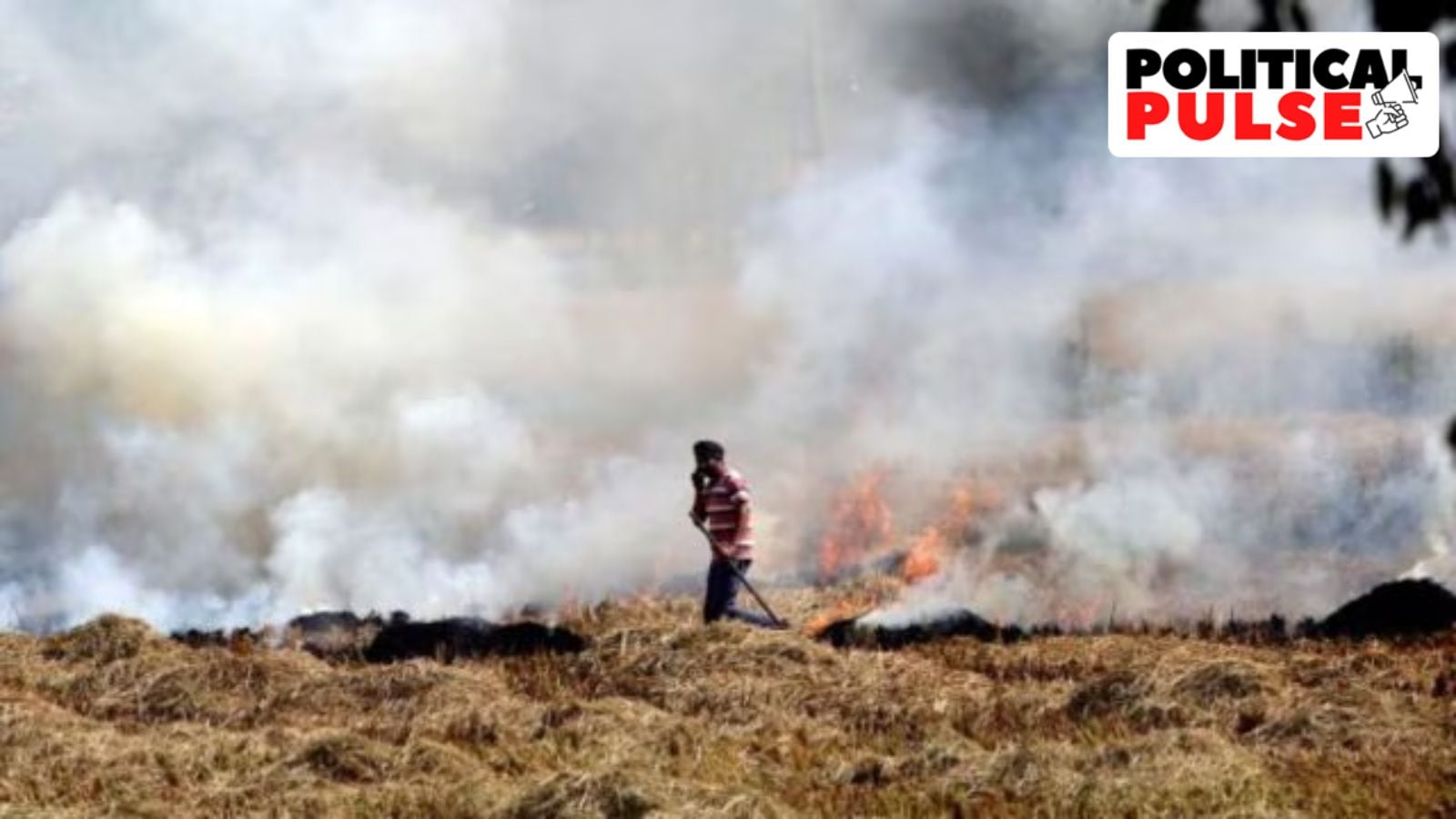 Appealing to farmers not to burn stubble, Saini said Rs 1,000 per acre was being paid to get farmers to opt for crop residue management, apart from subsidy for purchasing instruments and machines required to process crop residue. (File)
Days after the Supreme Court pulled up the governments of Haryana and Punjab for failing to prosecute farmers who burn stubble, contributing to air pollution in the Delhi National Capital Region, police in Haryana’s Kaithal district said Monday they had arrested 18 farmers in the last two days for burning crop residue. Kaithal SP Rajesh Kalia said the farmers were later released on bail.
District administrations across the state have also blacklisted more than 400 farmers for allegedly burning stubble since the season started September 15, barring them from selling their crops at mandis for two years. Congress leaders and farmer organisations have criticised the government, labelling its actions as “Tughlaqi firman”.
Data from the Department of Agriculture and Farmers’ Welfare show 327 farmers have received challans, FIRs have been registered against 93, and a total of Rs 8.32 lakh has been collected in fines. While 689 incidents of stubble burning were recorded after the harvest last year, 655 incidents have been registered this year until Monday.
“Red entry has been put in the farm records of these farmers. This means they will not be able to sell their crops in the mandis for two years,” a senior agriculture department officer told The Indian Express.
In a statement, Hisar Additional Deputy Commissioner C Jayasharadha said the district administration registered 11 FIRs against farmers following complaints from the agriculture department. “An awareness campaign has been launched for the management of crop residue,” she said.
Referring to the directions of the Commission for Air Quality Management (CAQM), the agriculture department on October 17 ordered the Deputy Commissioners of all districts that FIRs should be registered against farmers for burning paddy crop residue during the ongoing season. The department also asked officers to label the records of such farmers on the Meri Fasal-Mera Byora website with a “red entry” to restrict them from selling crops at mandis through the government’s e-kharid website for the next two seasons.
“This entry is mandatory and must be completed promptly for all agricultural fires,” read the order, which came a day after the Supreme Court questioned the “inaction” by Punjab and Haryana on implementing the CAQM’s directions and their “failure” to prosecute farmers who burn stubble.
Last Friday, Chief Minister Nayab Singh denied that such action was being taken against farmers. Multiple sources in the government have now told The Indian Express that authorities have started acting as per the October 17 order. “If officials, including from the police department, fail to comply with the directions on stubble burning, they will face suspension,” a senior officer said.
With the Opposition targeting the government over the arrests and the blacklisting of farmers, Saini on Monday accused the BJP’s rivals of spreading disinformation.
“We did good work on stubble management earlier too and the honourable Supreme Court appreciated that while telling the Aam Aadmi Party (AAP) government (in Punjab), ‘You should learn stubble management from Haryana,’” he said.
Appealing to farmers not to burn stubble, Saini said Rs 1,000 per acre was being paid to get farmers to opt for crop residue management, apart from subsidy for purchasing instruments and machines required to process crop residue.
In the run-up to the elections, BJP leaders had faced protests from several farmers, with the Saini government forced to announce MSP for 10 additional crops if the party returned to power.
Targeting the government, former CM and Congress leader Bhupinder Singh Hooda said, “Farmers take such steps under compulsion. Instead of imposing fines on farmers, filing FIRs against them and red-listing them, the government should work on a solution to this. At present, the machines that the government is talking about providing for the disposal of stubble are not proving to be effective. The number of machines is also very low. Especially small farmers are unable to use them.”
His Congress colleague Randeep Singh Surjewala called the new directions “Tughlaqi firman” and asked if it was a conspiracy to end MSP.
Bhartiya Kisan Mazdoor Union president Suresh Koth said those who do not have machines for crop residue management burn stubble.“We will struggle to ensure procurement of the crops of those farmers who have been banned for two years,” he said.
Senior Bharatiya Kisan Union (BKU) leader Gurnam Singh Chaduni earlier said, “A farmer spends Rs 5,000 per acre if he disposes of the crop residue by making its bundles, while the government gives a compensation of just Rs 1,000 per acre for crop management. It should be at least Rs 3,000 per acre. Then the farmers won’t burn the crop residue.”
On Sunday, Delhi Chief Minister Atishi blamed the BJP’s “dirty politics” for the growing air and water pollution in the Capital. She blamed stubble-burning, diesel buses, and brick kilns in BJP-ruled Haryana while giving a clean chit to Punjab, where the AAP is in power.
In Punjab, police have registered FIRs in 874 cases of stubble-burning in the past few days, Special Director General of Police (Law & Order) Arpit Shukla said on Monday. Penalties worth Rs 10.55 lakh were imposed in 397 cases and “red entries” were made in the revenue records of 394 farmers, he said.