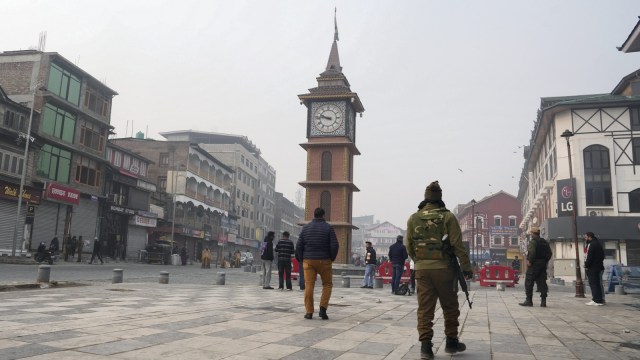

The liquor issue in Jammu and Kashmir (J&K)gained momentum ahead of the maiden budget session of the legislative assembly that commenced on March 3. Growing calls for a blanket ban on the sale and consumption of liquor in the Union Territory (UT) have been advocated by political parties and civil society groups. Recently, posters urging tourists to avoid liquor and substance abuse in Kashmir appeared in Srinagar’s Lal Chowk but were later removed by the police. This move was widely criticised by political leaders across party lines for disregarding the sentiments of the people in the Muslim-majority region.
A reasoned resistance


The liquor trade has accelerated over the years and generated revenues worth crores. Between 2008 and 2010, liquor consumption in the Valley increased from Rs 13.59 crore to Rs 19.39 crore, much of it consumed by tourists from outside. The steep rise in alcohol consumption has driven liquor-generated revenue from Rs 991.50 crore in 2013 to Rs 2,486 crore in 2024.
However, the strong opposition to its promotion in Kashmir is deeply rooted in the people’s belief that the region, revered as “Pir Vear” (abode of saints), embodies sanctity and spiritual heritage. Locals fear that the liquor trade is yet another addition to the ongoing policy changes allegedly aimed at accelerating demographic transformation in the Muslim-majority region. Kashmir’s cultural ethos is quite distinct from that of the rest of India, where the consumption of liquor is a part of social life, barring a few states. However, in Kashmir, culture is considered a sacred entity, and any attempt to undermine it is seen as a violation of that sacredness. The growing demand for liquor ban in Kashmir should be read through its cultural and spiritual heritage. Notably, states like Gujarat, Bihar and Nagaland have declared the sale and consumption of liquor illegal.
The sale and consumption of liquor in the region are regulated by the Jammu and Kashmir Excise Act, 1958 and the Jammu and Kashmir Liquor License and Sales Rules, 1984. These laws prohibit the sale of alcohol to individuals below the age of 21 and also forbid its sale by anyone without a valid license. It is imperative to enforce these regulations to prevent the illegal sale of liquor and prohibit its consumption in public spaces.
Growing political outcry
The People’s Democratic Party (PDP) is leading a campaign to ban the liquor trade in the valley. Three private member bills have been submitted to the Assembly secretariat for consideration during the ongoing session, seeking legal measures to prohibit liquor trade in the region. This significant political shift appears to be aimed at redefining the political landscape in the UT, where political activities have been partially suspended since the imposition of direct central rule following the collapse of the PDP-BJP coalition government after the BJP withdrew from the alliance.
The political turmoil surrounding the liquor issue in Kashmir reflects the changing dynamics in the region since the annulment of Article 370 and the subsequent downgrade of the state to a UT. While the ruling National Conference has shown passive support for the liquor trade, the opposition PDP is firmly against it. This contrast highlights the deeply divided political climate in the valley.
Omar Abdullah’s cautious stance on Article 370 suggests that he is negotiating with the BJP-led central government. However, his keen awareness of the disempowered political system he oversees may lead him to support legislation aimed at banning liquor. The upcoming budget session is expected to be contentious, but it is significant as it will reveal how the new assembly responds to the latest political landscape.
The writer teaches politics at Government Degree College Beerwah, Jammu and Kashmir


