Journalism of Courage
 4 min read



NEHRU AND THE RAILWAYS
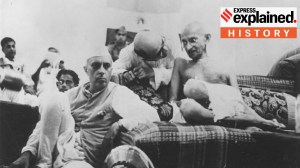
Jawaharlal Nehru, our first Prime Minister, was a man of many parts. Chacha Nehru to the children of the country and Panditji to their parents, he was near and dear to young and old alike. Every aspect of his countrymen and women8217;s endeavors interested him, with the Railways being no exception.
In the tumultuous days following the Second World War and the advent of India8217;s Independence, Nehru was quick to realise the importance of the Railways for movement of people and goods that would result with the country8217;s Independence and imminent partition. He was also aware that the multitude railway systems that crisscrossed the nation would need reorganisation and upgradation. He is known to have written on these subjects to the then Railway Minister a good one and a half months before Independence. As a result, the Railways played a significant role in the mass exodus that followed Partition. The reorganisation of the rail systems that followed soon after is well known and need not be recounted here, except that the man behind it was none other than Panditji.
Nehru8217;s thrust towards self-sufficiency is also well known. One of the first results of this thrust was the establishment of the Chittaranjan Locomotive Works for the manufacture of locomotives, as early as November 1, 1950, when the first steam locomotive manufactured indigenously was flagged off by our then President, Dr. Rajendra Prasad. Nehru himself was on hand to inaugurate the first electric locomotive on October 14, 1961, when Chittaranjan switched from steam locomotives to electric. Earlier, Nehru had inaugurated the first run by an electric locomotive out of Kolkata then Calcutta in 1957, on the newly electrified track, the first time in the eastern part of the country.
Nehru8217;s connections with the railways are too numerous and widespread to be covered in a short write-up. It was only befitting that on June 7, 1964, the urn with the remains of the departed leader were carried from Delhi to Prayag on a special train. It was thus in a Railway coach that the ashes of Pandit Jawaharlal Nehru completed their last journey.
8211; J.L. SINGH, RETIRED RAILWAYMAN
Locomotives in steam-II
The first two railway companies, the East India Railway Company EIR and the Great Indian Peninsula Railway Company GIP were pioneers in development of steam locomotives in India. The first engines ordered by GIP were eight 2-4-0 tender engines from the Vulcan foundry in 1853.
On October 31, 1850 the ceremony of turning the first sod for the Great Indian Peninsula Railway from Bombay to Kalyan was performed by J P Willoughby, Chief Justice of Bombay, at a place near Sion. On February 18, 1852, the first locomotive was witnessed shunting near Byculla flats in Bombay. The engine made its start from a coppice then known as 8216;Phips O8217;art8217; and the scene of its daily shunting became a perfect fair for large crowds of men, women and children. The locomotive was later named 8216;Falkland8217; after Lord Falkland 1848-53. On November 18, 1852, the Company8217;s directors with some of their friends travelled in the first train from Bombay to Thana. The formal inaugural run though happened later on April 16, 1853.
The first day cover released on April 16, 2002 shows an impression of the Byculla railway station while the stamp features the locomotive 8220;Lord Falkland8221;.
8211; VIKAS SINGH, RAIL ENTHUSIAST
Did you know?
JawaharLal Nehru believed that Railways had an important role to play in the development of the nation. Railways, therefore, always got his priority and attention. Integral Coach factory, Perambur, set up to make coaches, was inaugurated by him on October 2, 1955.
Chittranjan locomotive factory was set up to manufacture locomotives indigenously. The first 1500 V DC WCM 5 locomotives named Lokmanya was commissioned by him on October 14, 1961.
Sensing need for railway electrification, liberal grants were made for IR electrification. The first EMU services were inaugurated by Nehru on Howrah-Sheorapalli section on October 14, 1957.
In 1986, when Shyam Benegal made the TV serial 8220;Yatra8221; and later 8220;Bharat ek Khoj8221;, he drew inspiration from Nehru8217;s book- Discovery of India.
8212; Vikas Singh, rail enthusiast